D. W. White
Critical Essay
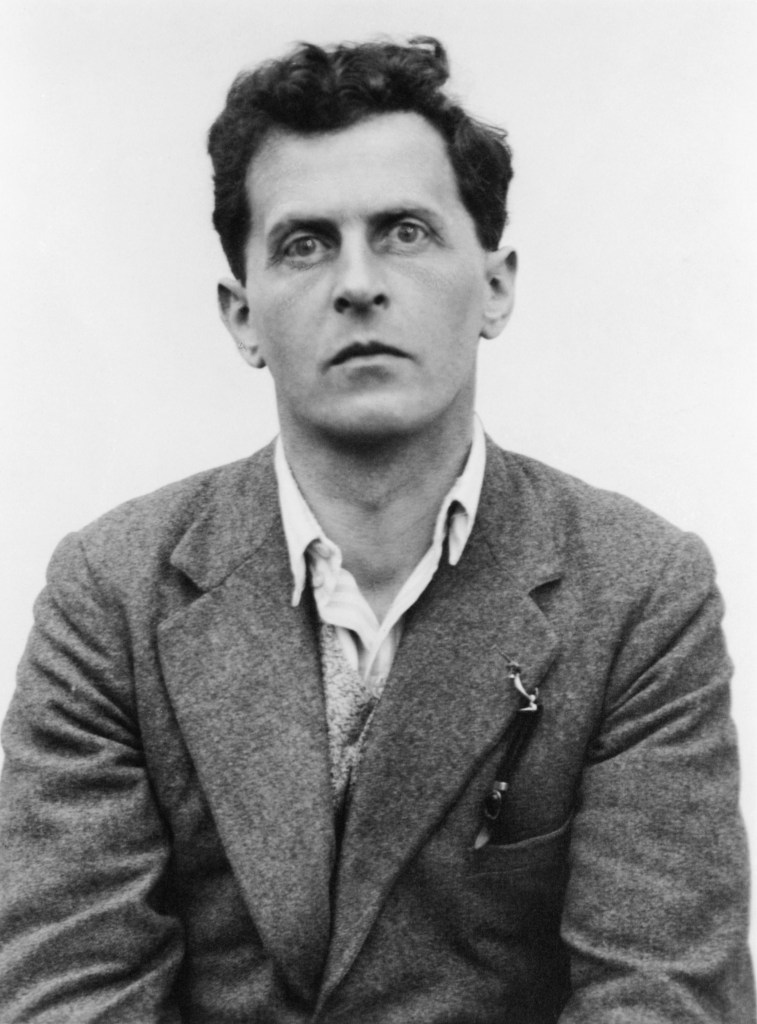
This essay is extracted from a forthcoming book on the novels of Rachel Cusk, The Revolution Comes From Within: Rachel Cusk & the Art of Narration, to be published in November 2026 by Indirect Books.
All night long the rain fell on Arlington Park.
—Rachel Cusk, Arlington Park
Someone who dreaming says ‘I am dreaming,’ even if he speaks audibly in doing so, is no more right than if he said in his dream ‘it is raining,’ while it was in fact raining. Even if his dream were actually connected with the noise of the rain.
—Ludwig Wittgenstein, On Certainty
Here it is the magic of words which return: as if the saying of a word materialized its meaning.
—Stanley Cavell, The Claim of Reason
The first thing, perhaps, to say about this chapter is that it will be sadly incomplete. The ideas under exploration here are ones that have been germinating for quite a while, and all I know with certainty about them is that they are not yet done. So this chapter is a beginning, an initial journey into a certain territory.
The question I’d like to begin asking, if not answering, in this chapter is fairly (deceptively) simple: in what manner might we be able to connect the philosophy of Wittgenstein with thoughts about the form of the novel, what I call narrational theory? This is not unchartered ground, although because I have my own way of thinking about narration and, I suppose, about Wittgenstein, the route taken will perhaps be a new one. Readers of this book by now have come to see what I mean by “narrational theory,” the interest I have in narration as it differs from narrative and serves as the engine for the novel as a literary object, as an artistic endeavor whose properties are bound up in form. Form, that is to say, as the thing-ness of a given novel, the element which makes it this novel and not that novel, and which further (more broadly) makes it a novel and not something else in the world; say, a movie script, or a painting, or an elephant, or a paperweight. A novel is also not an idea, it is a thing, although a novel is a thing full of ideas, which are mediated (made to interact with others; given purchase for its ontology), by its formal properties. Those properties, I contend, mostly and most importantly have to do with narration.
As I said in the Introduction to this book, this all might sound like philosophy by someone who isn’t a philosopher, or theory by someone who isn’t a theorist, and that’s because it is. In the present chapter I feel this the most, and it is only fair to say so at the outset. But I have felt, in reading Wittgenstein and thinking about the form of the novel, that there is, to modify Stein, too much there there to not be something, and here is where I’d like to start figuring out what that something might be.
Another position I might be able to answer for, in this chapter, is my obstinate belief in Arlington Park as not only Rachel Cusk’s finest novel, but one of the two or three most effective novels in the English language1. This, as I have said elsewhere, is not a popular opinion. The reason I hold it has everything (or nearly everything) to do with narration: Cusk’s narration in Arlington Park strikes me as extremely well-conceived and well-executed, and therefore the novel, as a novel, seems to be doing novel-work at just about the highest level I’ve found. I’ve discussed this narration in other work, relating it to some ideas in feminism and French existentialism that seem pertinent, while (hopefully) offering a healthy, if robust, study of the book as a whole. That chapter was the first one written in this book, and while I stand by it, I’ve found that I have even more to say about Arlington Park, and that there is another area of philosophy that, quite simply, will not stop chattering at me when I think about it.
How might the ideas of Ludwig Wittgenstein help us to understand more deeply the inner workings of narration and the novel form? What connection can we draw between his understanding of (both) words and language and the manner in which a novel, as an artistic object, is crafted and designed? How is it that literature seems to meet us where we are, and how do (some) novels seem to communicate something beyond the events of their plots and the particularities of their structure? These are the leading questions that I have taken into this chapter. Wittgenstein’s understanding of language is aimed towards the way it interacts with our lived experiences, its ability to drive right at the heart of how we go about the business of living. That seems also to be true of novels, which have always had to reckon with their inherent dialogicity in positing themselves as works of art. So how does that reckoning take place? How does the novel, as form, orient itself towards its linguistic medium in pursuit of its goals towards both its composition and the world? Those are the questions I’d like to begin asking here.
I. A Day in the Life of Arlington Park
First, let’s locate more firmly our situation. In the interest of expediency, I’ll mostly leave my general thoughts on Arlington Park where they are in the previous chapter; in way this chapter builds on that one. A few things might be useful, however. Arlington Park, in its study of a group of suburban mothers on single, dreary, extra-London Friday, is structured by character (or, we might say, consciousness): each chapter is focused on one of the women, employing an intermediate-range third person narration2. Within each chapter, we know what the given protagonist (perspective character) knows, and we don’t know anything she doesn’t know. The use of idiomatic narrational techniques—principally, free-indirect discourse—allow Cusk to “bend” the worldview “around” the mind of the character, bleeding her way of seeing and thinking about things into the “otherwise neutral” narration. This creates the “basket weave” between interior and exterior that is a fixture of Modernist fiction; the “woven tapestry” of a character encountering the world around her.
A lot of quotation marks there; we’ll be pushing on these terms in this chapter. But the point is that Arlington Park is a novel which quite clearly demarcates its movement between various perspectives and, crucially, uses the same point-of-view in each. Again, a definitional pause is required: “perspective” refers to the character through or with whom we encounter the fictive world, while “point-of-view” refers to the fictive (artistic) technique by which that perspective is realized on the page. These are my own definitions, far from universal, and the reason for them is right here: so that we can isolate and explore the character with whom we’re aligned, on the one hand, and the way the novelist has crafted the narration around that character, on the other. Because the book takes place over a single day, and the women all know and interact with each other, and each character is given a discrete chapter (or two) rendered in the same type of free-indirect driven, interior-focused narration, we as critics (literary dissectionists?) have the opportunity to spotlight something deeper about the linguistic medium than might be possible in a novel with more moving parts, as it were.
In the Introduction I mentioned that this book follows a track hewn by the creative writing graduate workshop, in that it takes language (or rather meaning), as a given; the lens of scrutiny is centered on the artistic choices of the writer, working in the medium of English—and not on the medium itself. This chapter stands in oblique contrast to that emphasis, as something of an exception proving the rule of the book. The question here is about language, and meaning, and the ways in which such a thing as a novel can exist at all.
There is something that happens in Arlington Park that causes each chapter to somehow reflect, or enact, the variation and vagaries of each women’s mind and lived experience even as they live similar lives (in the plot) and are rendered in similar ways (in the narration). What is that something? What we want to begin to understand here is: how is it—by what alchemy of language—does Cusk’s narrational method allow each chapter of Arlington Park to feel different, even when they are, ostensibly, variations on a theme, quite similar in approach and style? This is less a question of Cusk’s technique and more a question of what about language, as a thing that exists in our world, is accessed by that technique; what properties of words qua words make it so that the method Cusk uses achieves for the novel its result?3
The amount of secondary literature flowing from Ludwig Wittgenstein’s philosophy is extensive, to say the least, and runs like an oncoming river into innumerable fields of scholarly and academic thought. This chapter does not pretend to make a survey of all of it, or even much of it. Instead I am interested in Wittgenstein’s writings, along with some interpretations of and responses to it that seem to resonate with the elements of his work that strike me as most pertinent to narration and ideas about the form of the novel. I will mostly be engaging with Stanley Cavell, especially his robust book The Claim of Reason, along with commentators such as Danièle Moyal-Sharrock and Sandra Laugier. With that considerable caveat out of the way, what do we want to say about Wittgenstein and his philosophy as it relates to Arlington Park and narration in the novel form?
To begin, Wittgenstein is interested in the relationship between three things: language, people (ourselves and others), and “the world,” which might mean reality or something else. What strikes me in reading Wittgenstein—across his career—is the certainty he possesses that language has some relationship not only to the world around us but to our (sense of) ourselves, a relationship that inaugurates all sorts of organizing principles to follow. To someone who isn’t invested in the philosophy of language, this idea might not be immediately obvious: why could it not be that language is simply an addition to our lives, something added on over the top of whatever we are and however we arrange ourselves, like clothing or funeral customs or politics? And maybe some feel that it is. But for Wittgenstein, and for our interests here, language is deeper than that, more fundamental. It is a mediating impulse that is inherent to our existence as humans, something we could no more do without than opposable thumbs, or bipedalism, or self-awareness; we would not be human without it. Importantly, Wittgenstein understands language as both emergent from our human state and a modulating force upon it: part of what makes us human is having language, and language in turn (helps to) define what it is to be human and to experience reality as one.
Along these lines we might think of Wittgenstein’s understanding of language as literary: it constitutes the world, as a sort of cosmic background from which everything begins and to which everything recedes. This is, obviously, how a novel works; it is made up of language. This, then, is the relatively narrow scope of what I’d like to say about Wittgenstein’s philosophy and (even) my reading of it: his belief in language propels a philosophical body of work that responds quite nicely to the novel as an art form, and vice-versa.
For both Wittgenstein and The Novel (any novel), language is primordial and, perhaps, urgently ontological—all of Wittgenstein’s metaphysics is bound up in language, and our (in)ability to relate it to our world, while the entirety of a novel’s “metaphysics,” or simple ability to exist, is wholly contained within language4. There is nothing antecedent to language in a novel; there is no place within a novel that can be reached before, or without, accessing language. Of course there might be ideas about a novel—ideas either about what it might be, or about what it might say—that can exist prior to the novel, and become important in it, but it is not a novel until it exists in language. (As we said in the Introduction, regarding the notion of instantiation, there might be drafts or dreams about a novel, there might even be workshop- or thesis- or writing-group-discussions about a novel—but until the novel is written, in language, it doesn’t exist as a novel). This conviction that there can be no bypassing language (or its absence) appears forcefully in Wittgenstein’s thought, and so lies at the crux of what we’d like to begin saying in this chapter. At this stage I’m aware that this line of comparison may seem facile, trite, overdone—in a word, semantic—and I’m hoping that by tracing it for a while we might come to a rather more enlivening destination.
II. The Play’s The Thing
There’s a problem, for the novel, regarding its obligation to exist in language: it tends to be interested in things that, quite possibly, are beyond the capacities of language to express. We saw some of this in our chapter on Second Place, when we discussed the relationship (some) novels have to visual art, and the nervous energy one detects around each medium’s relative ability to capture vagaries of human experience5. The main thing that novels are interested in (good ones anyway) is consciousness. One doesn’t need to have even heard of Wittgenstein to know that interiority is hard to capture in language; all one needs is to have used the expression “oh, it’s hard to explain6.” We’ve all had the experience of trying to tell someone what a certain feeling felt like, or the sensations of a dream, or even a long-running inside joke; we can approach it in language but it seems very hard to actually arrive there. The defining feature of literary fiction, arguably, is its interest in consciousness and the inner lives of characters, sometimes called “psychological realism7.” A personal favorite character of mine (and many others), captures this well; Woolf’s Lily Briscoe, after the war, feels that “she wanted to say not one thing, but everything…For how could one express in words these emotion of the body express that emptiness there? (To the Lighthouse, 165). We have, with Lily, an innate sense that what people think and feel is more defining of them than, say, what they wear or even what job they have; the internal is more rapidly indicative of the self than is the external. This creates the foundational (compositional) tension of literary fiction: how to capture consciousness in words?
This dynamic is also highly propulsive. The reason literary fiction is, essentially, defined as-such by being about characters rather than plots (so, internal more than—or least as much as—external) is because the difficulties of rendering consciousness on the page are so daunting and the opportunities so expansive8. Narration—the way in which a novel is “told”—is at the center of this complexity, as is the somewhat narrower element of point-of-view. How does the narrator (in first person) or the narrating entity (in third) navigate the balance between outer and inner, between scenic description and the conveying of a character’s thoughts or moods or memories? How does the novelist construct their “woven tapestry,” a fixture of literary fiction since at least High Modernism, in which threads (sentences) of the external are woven alongside those of the internal? The engine of literary fiction is the character-centric scene, constructed with this basket-weave technique by which we feel and perceive the room along with one or more of the fictive people in it. For the more interior-focused literary fiction writers—those, broadly, in the long tradition of Modernism—consciousness becomes just as much a feature of these passages as the scene itself, if not more so, and so a method of achieving fluidity of movement and fidelity of depiction is needed. Enter free-indirect style.9
Free-indirect, as readers of this book will surely know (and likely already did), is the central technique for generating verisimilitude in a character-driven scene. We feel to be walking through the world either with or as the character herself, depending on the nuances of the writer’s approach and, maybe, the reader’s constitution. To establish our footing, let’s look back (from the previous chapter) at a few choice moments of free-indirect in Arlington Park, to try and work out how the language in the novel encounters the characters’ internal worlds.
We recall that Juliet has woken up to the sound of rain and a slightly vinous headache, to inaugurate our single novelistic day. Her dreams have been troubling, and their ghosts linger into the morning. By relying fairly heavily on free-indirect style, Cusk seeks to pull Juliet’s inner experience up onto an equal footing with relatively straightforward scenic description:
Apparently, she had been slightly obnoxious. Benedict had told her so on the walk home. She, Juliet, aged thirty-six, mother of two, a teacher at Arlington Park High School for Girls—a person regarded in her youth as somewhat exceptional, a scholarship student and at one time Head Girl—had been slightly obnoxious to their hosts, the Milfords: Matthew Milford, the vilely wealthy owner of an office supplies company in Cheltenham, and his horse-faced, attenuated, raddled wife, Louisa.
She thought of their house, into whose kitchen alone the whole of the Randalls’ shoddy establishment in Guthrie Road would comfortably have fitted. What had they done to deserve such a house? Where was the justice in that? She recalled that Matthew /‘Milford had spoken harshly to her. The lord of the manor had spoken harshly from amidst his spoils, from his unjust throne, to Juliet, his guest. And Benedict called her obnoxious! (10-11)
This early introduction to Juliet is full of the type of idiosyncratic language that communicates more about her as a character than is expressed in the actual recitation of plot events. On one level—that of the story, or the narrative10—we have a character waking up with a bit of a hangover and starting her day, while remembering (with some chagrin) the night before. In other words, the external: if this were a film, we’d be watching Juliet get up and move around her bedroom. But a novel is not a film, and literary fiction is uniquely adept at bringing the internal onto a level with the external11. In the third person, this is achieved via the novel’s having a narration, a thing which is doing the telling of this world, and which can flit between the inner and the outer (more-or-less) at will. That dynamic, and the specific abilities it allows via the technique of free-indirect style, is the great technological change that transformed the novel into the acute tool of psychosocial portraiture it has become.
We can see this quite clearly in the quoted passage. What strikes the reader first is the adjectival treatment to which the Milfords are subjected: Juliet does not like them, and we know this—rather, we feel or see this—via the way they are described, as horse-faced, vile, and attenuated. Simple enough. But there’s more happening here. We can think of the adjectives as Juliet’s, in that they are her descriptions of Milfords. She, however, is not the one speaking them—this isn’t a first person novel, and Juliet does not “know we exist,” in the way that a first person narrator will address her novel to the implied audience12. Rather, the narration—the narrating entity—seems to be pulling Juliet’s feelings from her mind and then translating them into the appropriate language such that we can understand the nature of them. This is the bedrock of free-indirect style, and more broadly of intermediate range third person narration, in which the character’s inner life is threaded into and among the external happenings, such that everything is essentially on the same linguistic-stylistic plane.
There are ripples. Later on in the passage we move “closer” to Juliet and her mind, in that there are questions being presented such that she might (we imagine) be asking herself; she’s annoyed, and these questions are a response, it seems, to her recollection of the night before. We’ve all done this ourselves: a car cuts us off on the freeway, and we say, maybe aloud and maybe “in our heads,” while contemplating vengeance, “what is this guy’s problem!”. The semi-rhetorical questions that appear in the second paragraph of the quoted passage, then, are closer to Juliet’s mind than are the statements in the first paragraph. We cannot imagine Juliet “saying to herself” that she is thirty-six years old, has children, or was at one time regarded as exceptional—we might imagine her feeling those facts (we’ll come to this distinction later) but it’s hard to picture her saying them, maybe slightly under her breath, in the way we can with the questions. Nonetheless the first paragraph feels to be unmistakably of Juliet’s worldview, tethered to her, centered on her mind; however one likes to put it, we are seeing this moment in alignment with (if not always “through the eyes” of) Juliet, and not (obviously) Benedict. The result is that the narration is able to get important character information into the novel quickly, within the first ten pages, while not breaking ranks with the heroine of this first chapter.
Alright. To those with some degree of specialization in (obsession with) the composition of novels, all of this is relatively straightforward: so what does it have to do with Wittgenstein? To move in that direction, let’s first focus in on another Arlington Park character, Amanda, who is likewise starting her day. By doing so, we might gain insight into how precisely language is operating with respect to the people of the novel.
At the end of her chapter, after Amanda has had a group of other mothers over for coffee, she tells her son about the death of her own mother:
Eddie considered this.
“Oh. Poor Granny. Will you tell her I like her?”
“I can’t tell her, because she’s dead. That’s what being dead means. It means you can’t tell people things any more.”
Eddie turned away from the window and looked at her. His clothes were rumpled. His eyes were large and tremulous. His hair stood up in tufts, like grass. He came towards her. In his face she saw the realisation of her own mortality. He seemed to want her to comfort him for the fact that one day she too would die. It was another piece of disorder she was expected to attend to, another thing she was expected to carry; he would slip off the knowledge, slip away from it having handed it to her, and go away lighter. And who carried her own deadly revelations, her ordinary terror? Her mother, sitting in her slippers in Kent, or caravanning, as she was now, in Wales in the rain? (79-80)
Throughout this chapter, coming immediately after Juliet’s, one gets a strong impression of Amanda’s worldview and, as it were, character. She is clinical, matter-of-fact, especially in relation to her car and the way she navigates the trip to the butcher’s shop with Eddie in an earlier scene, which we looked at in depth in the previous chapter of this book. Again, the approach works here on multiple levels: we learn various things about Amanda’s life, as a mother and wife (to use a term she’d certainly dislike, a “homemaker”), and her extended family, and then begin to feel some of her resentment, if that’s not too strong; or at least her acknowledgement of the difficulties that lay therein.
That phrase “begin to feel” leads us towards the other level of interest here: narration, specifically Cusk’s free-indirect style. Placing Juliet and Amanda side-by-side, as it were, we can begin to see the manner by which (eventually) novelistic language works to show what cannot be said: Amanda seems to us more self-assured, more ruthless, than Juliet; who conversely appears more cerebral, perhaps discerning, and with a sense of outrage burning more brightly than Amanda’s. These character traits, the sense we have that we know these people in real life, is emergent from language and, more specifically, word choice; Juliet’s affront at the Milfords feels like Juliet because of the words used, and the way they are indicative of her mind-style via the mechanical device of free-indirect. It is as if the characters’ personalities were water, seeping through the cotton shirt of language that the reader wears; at some point we realized it’s reached the skin. We may be unclear exactly as to when or even how this happened, moving along through the book, but by the end of each chapter, the respective protagonist is realized as clear as rain.
A caveat, somewhat. The parenthetical in the previous paragraph is meant to acknowledge the fact that these specific character traits—angry, disillusioned, confident, introspective—are not exactly “unspeakable”. A writer could, of course, say of her character: “She was thirty-six years old, the mother of two, and angry, disillusioned, confident, and introspective.” But does that sentence actually render the character as those things? To think back to our relationship in this book with the graduate workshop, we might have some notes on such a sentence, challenging the writer to show these attributes rather than tell us. Why is that? This is a common question in response to such feedback, verbalized or not13. The reason is because such a sentence is bloodless and flat; it does nothing to move the abstract into the personal. It has no verisimilitude. It does not feel like anyone we know, because people in life are not ambulatory strings of adjectives, but are human actors who respond in idiosyncratic ways to fluid situations. We might say, “what does it look like for this character to be angry and disillusioned?” That gets us closer to the matter at hand in the present chapter.
We’re speaking here, essentially, of things about a person that are not visible; that is, they’re internal. If we say our character is five-foot-nine with brown hair, we can picture that because we’ve seen the entirety of what that would mean out in the world; it is external. (There is none, or quite little, ambiguity to it). But how do we “picture” someone being angry and disillusioned? Well, we might say, we’d imagine them yelling or rolling their eyes—in other words, we’d imagine them in scene. This is the nature of “showing versus telling,” the idea that we render authentic characters by having them interact with the world, instead of simply describing them in the abstract. For interiority—by which broad term we mean anything happening in one’s head, be it memory, emotion, feelings, or thoughts—the writer must devise a way to do this about character traits that are invisible. The trick is narration, and the various ways it offers of mediating the elusive properties of language such that it evokes a sense of what a person (character) feels like, emergent entirely from the words on the page.
The quoted passages about Juliet and Amanda feel different because of the different words being used. This is the obvious beginning to a larger, more difficult point. Cusk does not say of Juliet, literally, that she is disillusioned or cerebral or what have you14; instead she establishes a scene, puts Juliet in it, and makes use of (primarily) free-indirect style to infuse the passage with a sense of this character; “essence-of-Juliet.” Amanda, in a largely similar scene15 and rendered via the same point-of-view (the free-indirect-heavy intermediate-range third person discussed earlier), has a quite different essence, because there are different words being used to evoke her. So while the use of free-indirect in Arlington Park stays mostly the same, mechanically, across the whole book, the way Cusk varies language around each character makes them feel like the different people they are.
We have, then, sketched out the technique of the novel. The question now—the question that moves the focus this chapter, unlike the rest in this book, backwards towards language itself—is how exactly it is that the use of different words for Amanda and Juliet make them feel so different. How does it work? Why does Juliet appear to us as outraged, while Amanda seems calculating? We said it is because Cusk uses particular words in “applying” her free-indirect style to each of them—but why does that work? What is it about language, qua language, that evokes a specific and delimited feeling? How do words themselves come out and greet us, and what might this phenomenon be able to tell us, perhaps, about novels and about the world itself? These issues will be the focus of the rest of the chapter, wherein we go to speak with Wittgenstein.
III. Towards An Ontology of Words
Within our relatively narrow scope there is nonetheless much to consider. To attempt to wrangle anything like all the thought on Wittgenstein that could be relevant to this chapter, into this chapter, would be impossible. Instead I’d like to focus on a few key issues that seem pertinent to our line of inquiry: what is the nature (what are the properties) of words themselves; what is their relationship to inner lived experience, be it ours in life or characters’ in novels; and how is it that words mean something. All of these questions are vectored through concerns about narration, the form of the novel, and Arlington Park.
In Part II of Philosophical Investigations, Wittgenstein says, “For we want to ask ‘What would you be missing if you did not experience the meaning of a word?’.” What does that mean? What does he mean—and what can we mean—by the notion of experiencing a word, and its meaning? He continues a few lines down, with an example:
Suppose I had agreed on a code with someone; “tower” means bank. I tell him “Now go to the tower”—he understands me and acts accordingly, but he feels the word “tower” to be strange in this use, it has not yet “taken on” the meaning.
So whatever this experience is, it seems to be distinct from the definition of a word; related, perhaps, or friendly with it, but not the same. Cavell, in working through this section of Philosophical Investigations, has further insight. He brings in Wittgenstein’s notion, a few passages earlier in Philosophical Investigations, about “aspect” and “aspect-blindness16”, including our question about “experiencing the meaning of a word.” Cavell ushers around him several of Wittgenstein’s contemplations that occur in this region of Philosophical Investigations: that noting an aspect is to be “struck by a physiognomy,” that words have a parallel property and thus can be dead or alive to us, and that we have relations to words. He then gathers his point to suggest that “the topic of our attachment to our words is allegorical to our attachment to ourselves and to other persons…My words are my expressions of my life; I respond to the words of others as their expressions, i.e., respond not merely to what their words mean but equally to their meaning of them,” the latter being flexible enough to encompass, say, ironic or metaphorical meanings (355).
For both Wittgenstein and Cavell, then, words are dynamic, protean things that form rather strong attachments with those who speak them. They are not simply marks or tools used for a specific purpose (the way numbers might be? Or arrows on a chart?)17, but instead, in these readings at least, words are more personal. We might even say they have histories. On the strength of these ideas we might suggest an ontology of words; words themselves as having their own phenomenological viability (to modify Wittgenstein’s “physiognomy”), a uniqueness which presents itself to the reader—or listener, speaker, writer—immediately, at a surface level encounter that posits a something which is at once bound up within, but distinct (detachable) from what we usually call its definition.
As further evidence to the foregoing, consider: this, to me, seems right. I think of particular words I know, ones I’ve met in the regular business or in some small out of the way place, words some who’ve become friends and some enemies, the many who’ve lapsed into affable indifference and the few who’ve emerged as major players. The common thread is that I know them, the way Horatio knows the Ghost. What can it mean to have (as all writers do), a favorite word? Mine, I think, is peripatetic, a word in five steps, with which I’ve struck up a robust friendship over the years. As seems to often be the case with good friends, I can’t quite remember how we met, peripatetic and I; nevertheless, we stay in good touch18.
What is it that stands out—strikes us—with words? As Wittgenstein indicates, it’s not only their definition; with my friend peripatetic, it has to do with the internal alliteration, the adventure of its staccato rhythm that in some way resonates with its meaning, all of that and more, the more that is at issue here; but the point, for us, is that I don’t feel similarly about (i.e.: I don’t have the same memories with or fondness for), say, “wandering” or “itinerate” or “nomadic.” If in reading I came across a sentence that used “nomadic” instead of “peripatetic” (each other’s first synonym in my at-hand thesaurus), it would have a significantly alerted impact on me as a reader, despite “meaning” more or less the same thing. On one level this is perhaps even a rather basic point: different words feel different (to borrow a similar eloquence from the section above), and strike us in various ways. At one point Cavell puts rather clearly, saying “it is internal to language that its words can be meant in different ways” (337). Again, in a basic way this seems rather uncomplicated. The key point, one that will come into the fore as we return to our consideration of free-indirect style in Arlington Park below, is that these differences seem firmly to encompass something more than their definitions, which, as we shall see, opens up all sort of possibilities for extra-linguistic meaning.
Cavell himself comes quite near this idea later in that same passage, where he continues: “I said just now: “My words are expressions of my life..” Let us ask here, as Wittgenstein asks of sensations (§411): Which words are my words?…The uniqueness in question points not to seem necessary difference between my sensation and yours…but to the necessary difference between being you and being me, the fact that we are two” (355-6). It is not, Cavell argues, that words—or sensations—are different between us, but instead the difference in experience arises simply because we are two people, and not one person. We each read the word peripatetic, and know what it means (know where to find it in the dictionary), but it does something different for each of us; I am friends with peripatetic and you are not19. I’d like to suggest, then, that ultimately we’ve found a private (as idiosyncratic) relationship with public (as grammatical) things, (objects20, entities, occurrences), which here (in the novel) are words, and that this formulation can flit the great public / private divide while also leading us to be able to say something about narration in the novel form.
What might this ontology of words do relative to that form, to the novel as a whole? To think about this we can look earlier in Wittgenstein’s career, at some ideas found in the Tractatus. While he famously moved away from several points raised in that book later in life, there is more congruency with Philosophical Investigations than is often thought; for our purposes, we can especially draw on the notion of language’s ability to enact the world via form. “The world is all that is the case,” Wittgenstein says, to open his treatise21; and then proceeds with an attempt to show what he means, rather than elaborating points in support of an argument. This can be confusing until a reader realizes that Wittgenstein is hoping to enact his argument, rather than, well, argue it. This is especially pointed as his argument is itself that language enacts meaning; this inherent meta-narrative works to reify the Tractatus on the page, even as its obscurity is (therefore) the point22. As Michael Beany points out in his Introduction in the Oxford World’s Classics edition, Wittgenstein sets out to “draw a limit to language (and hence to the expression of thoughts) from within language” (lvii; emphasis original). There’s a resonance here with Modernist approaches to literature (and art more generally), wherein the convention is challenged from within, rather than without. What connects the two is a primary concentration on form, and that’s the route by which we’ll continue to trace Wittgensteinian thought to narrational modes of the novel.
Form itself, however, is literally unspeakable for a novel’s narration (narrating entity, be it in first or third person). To see this more clearly we can look to an insightful analysis of “nonsense” in the Tractatus, made by Danièle Moyal-Sharrock in her paper “The Good Sense of Nonsense,” where she contends that Wittgenstein’s dissertation is not, in fact, “self-defeating,” and that his use of the term “nonsense” is a demarcation, not a slight:
In the light of Wittgenstein’s later explicit references to grammar as nonsense, I take Tractarian sentences to be precursors of rules of grammar. Not part of the language-game, not endowed with sense, but demarcating it, Tractarian sentences form a ladder from which to make sense—a ladder which is neither metaphysical, nor ill-formed, but grammatically elucidatory. (148)
She later elaborates on the “formal role” played by nonsensical sentences in the Tractutus (p163). Likewise in literature: the form of something (a novel) cannot “talk” about itself. A novel’s intertextual rules cannot refer to themselves; the narration must always be silent about itself23. The novel’s form, then, is the animating impulse that remains understood but never said, a point we’ll return to in the final section of this chapter (and one that has been lingering in the shadows of this book throughout).
If language is limited in some capacity, how might we use it to express things? The precise nature of Wittgenstein’s answer to this question in the Tractatus is at issue in the interpretive debate discussed by Beany, but broadly it has to do with a formal mirroring between (the structures of) language and the world. To help us, let’s look at the Introduction to another recent edition, the Penguin Classics Tractatus, where the philosopher and—importantly—poet, Jan Zwikcy, points out the symbiosis between Wittgenstein’s arguments and poetry, contending that the Tractatus employs “lyrics thought” which, like certain poems, “are enactive: how they communicate is what they mean” and eschew exposition for a more free-associative logic (xix; emphasis original). We as readers feel much more than we can point to in isolation, when reading either a great work of art or, perhaps, certain points of philosophy24.
The depth of this connection is more than we can plumb here; Zwicky’s insight—that the Tractatus, in attempting to illustrate how it is that language must “show” rather than “tell” us certain truths, must itself show that illustration—energizes Wittgenstein’s work. Zwicky reproduces in full Ezra Pound’s poem “In The Station Of The Metro” as an example of the type of linguistic operation the Tractatus calls for, and an analog to its own approach. Zwicky then notes that this sort of “poetic” use of language obviates heavy exposition to, instead, “allow listeners or readers to see the connection for themselves; for in such seeing lies the experience of meaning…Rhythm and sonority together all the language of lyric thought to enact its meaning” (xix-xx; emphasis original). We seem to be nearing an idea of what it might mean to “experience the meaning of a word,” as something that operates independently—perhaps cleaved from—whatever lies interred in the dictionary.
Perhaps the most famous claim made in the Tractatus is that some things simply lie beyond the realm of language. Bookending the first proposition, quoted above, is the last: “What cannot be said must be left to silence” (§7).25 A little before this, we come to §6.41, which begins “The sense of the world must lie outside the world.” We have a belief here in unspeakability, that there is both a limit to the possible expression of language and something laying beyond that line: “There are more things in heaven and earth, Horatio,/ Than are dreamt of in your philosophy” (Hamlet, I, 5). In his Foreword, Wittgenstein elaborates this point as a direct framing of his work:
The book intends to draw a limit to thought, or rather — not to thought, but to the expression of thoughts: for to draw a limit to thought, we would have to be able to think on both sides of that boundary (that is, we would have to be able to think what cannot be thought).
The limit can therefore only be drawn in language, and whatever lies beyond that boundary will simply be nonsense26.
This idea, of language’s relationship with the boundaries of sense-able human experience, is one that can survive the later refutation Wittgenstein makes against the Tractatus’ “picturing relation,” wherein the structure of language and the structure of the world mirror each other. Perhaps language does not impose a 1-to-1 analogue of reality, but there is nonetheless a vectoring through language which our experience of the world undergoes. This is quite clearly the case in literature, as we said earlier. In the novel, the world is language: there is no alternative. Beyond that constraint of medium, however, we have the more fundamental concern that human lives—especially inner lives—are made up of much stuff that language cannot directly express. Cusk herself, in an interview about her Outline trilogy asks whether “certain experiences are incommunicable,” and if they might be such that one must “experience them to know them.” While she declines to give a direct answer to her own question, she seems to be posting the affirmative, as a central concern of her artistic process around this stretch of her career27. So again, as we asked in the previous section, what response does the novel have?
In footnote 14, above, I pointed out that it would be possible for ten (or a hundred) readers of Arlington Park to come up with ten, fifty, one hundred distinct sets of adjectives to describe Juliet Randall, if we were each to do so in three words (indeed one feels that the number of possibilities will be limited by the amount of adjectives in English rather than ingenuity of the responders). This seems, if I can say so, obviously true, despite the fact that it is the same character in the same book which we are all reading28. In her Introduction, Bal places subjectivity at the core of her approach to narrative theory; the “basic tenet” of her book. In the next paragraph she connects this idea to meaning, noting that she is in “fundamental agreement” with the theories of “mess meaning-making” emergent from, we might broadly say, poststructuralism (Bal name-checks Bakhtin and Derrida). The point, she says, “is not that meaning can be pinpointed in any simple way. But it is only once we know how a text is structured that the readers’ share — and responsibility — for acting within those constraints can be clearly assessed” (12-13).
I like this section, and the emphasis she places on the concept of “agency” which immediately proceeds it, for its focus on two elements: context (what Bal refers to as the structure of a text) and idiosyncrasy (her notion of messiness) in deriving meaning within a literary text. In turning from the Tractatus back to Philosophical Investigations, and eventually (perhaps) to answer our question, I’d like to think more about the potential idiosyncrasies of meaning in a novel, and interiority, and how they connect to Wittgenstein’s famous friend, the duck-rabbit.
IV. Conversations with a Duck-Rabbit
In the previous section, we left off our establishment of an idiosyncrasy of meaning—using the word peripatetic—by looking at a passage on p356 of The Claim of Reason, which comes in the middle of a forty-odd page stretch from which I could probably quote entire for this chapter. Cavell sees “the fact that we are two” as operative in how we encounter, or use, or understand, a word. We then buzzed by the Tractatus to reaffirm a notion that language has some sort of bounded relationship with the world—even if we’ll discard, along with later Wittgenstein, an insistence upon any isomorphic austerity within that dynamic—along the way picking up an insight into form from Moyal-Sharrock’s paper, to leave ourselves with a conviction that 1) language communicates something about lived experience via something more than the definition of its component parts; 2) this more than is, essentially, form; and 3) those component parts (words, and possibly sentences) are able to be understood idiosyncratically, existing happily in some liminal space wherein they at once have dictionary definitions alongside some “other” property. What I’d like to do now, in closing this chapter, is to offer an understanding of how exactly these elements can be utilized in the novel to express a character’s interiority, that most unspeakable of subjects.
The section of The Claim of Reason we’ve been looking at comes within a larger subsection inaugurated by a consideration of Wittgenstein’s duck-rabbit. The duck-rabbit itself is fairly well-known, very well-known to people interested in this area of thought, and is easily searchable on Google (thus I will assume prior knowledge, or at least a prior glance). It is a drawing that can be seen as either a duck or a rabbit, and the usual course is that you see it once as one, and then after a while you see it as the other one. Cavell gives a long and compelling list of reasons for the beauty and clarity of this image as an example, of something (both he and I will have ideas on precisely what); although he also does not want “to become fixated on the duck-rabbit” (354). A difficult temptation to resist!
The duck-rabbit becomes a potent image, both for Cavell’s reading of Wittgenstein and our understanding of narration in the novel. This efficacy is found in its metaphorical capacity: the fact (and the sheer obviousness of the fact) that one can see it in two ways, equally there but equally refusing the other, keys for Cavell an understanding of the broad epistemological arc he’s been tracing for a few hundred pages—specifically, the ability to know what’s going on in our minds, or the minds of others—while securing for us an essential point regarding the multiplicity of words. “We may say that the rabbit-aspect is hidden from us when we fail to see it. But what hides it is then obviously not the picture (that is what reveals it), but our (prior) way of taking it, namely in its duck-aspect” (369). The word “aspect” here is specifically-chosen, based on Wittgenstein’s notion of “aspect-blindness” we observed earlier, from Philosophical Investigations. We encounter one aspect of the duck-rabbit, and then (or) the other; never at the same time. But maybe you encounter the duck, and I the rabbit. For any reason, for no reason, for every reason, this might be the case; it is the same for why I am friends with peripatetic and you are not: it is because, as Cavell says, we are two, and not one.
The larger point Cavell makes is about the “fantasy” of private language; as he puts it earlier, “Wittgenstein does not say that there can be no private language” (344). This might strike some as controversial, given that one of the main points commonly stated about Wittgenstein’s philosophy is the supposed impossibility of private language. As Cavell argues quite persuasively, however, Wittgenstein’s point is instead to “illuminate something about the publicness of language, something about the depth to which language is agreed in” (344, emphasis original). There is an extended discussion of this question, which incorporates the passages about “experiencing a word” and “My words being expressions of my life,” following the introduction to the duck-rabbit; despite his wish to avoid fixation, Cavell is still talking about it more than ten pages later. The upshot is that the so-called “private language argument” is not about Wittgenstein attempting to hold some position that we don’t have inner thoughts (a rather insane point that, as anyone with a passing knowledge of Wittgenstein’s biography knows, is deeply incongruous to his beliefs), but instead that we’ll never be able to completely capture them in language, and therefore are unable to fully express them. As Cavell puts it:
So the fantasy of a private language, underlying the wish to deny the publicness of language, turns out, so far, to be a fantasy, or fear, either of inexpressiveness, one in which I am not merely unknown, but in which I am powerless to make myself known; or one in which what I express is beyond my control…
Accordingly, the failure of the fantasy signifies: that there is no assignable end to the depth of us to which language reaches; that nevertheless there is no end to our separateness. We are endlessly separate, for no reason…The idea of privacy expressed in the fantasy of a private language fails to express how private we are, metaphysical and practically. (351; 369-70, emphasis original)
What lingers here is the further realization that we have no control over language, or very little. No one person “decides” what a word means, or how to order subjects, objects, and predicates in English versus French. I might use a word in a different way, as a trend-setter (or a failed one), but without the proper context you won’t understand what I mean. As Wittgenstein says in §296 of Part I of Philosophical Investigations, “Only to whom are we telling this [fact or statement]? And on what occasion?” Cavell quotes this passage as well (334), and more generally spends quite a bit of time on this notion, under the rubric of “criteria29” (and indeed made it the subject of his first book, Must We Mean What We Say?), but for our purposes we’ll quickly gloss the argument by compressing two hundred pages into a two-line quote: “We can understand what the words mean apart from understanding why you say them; but apart from understanding the point of your saying them we cannot understand what you mean” (206).
There’s much more we could say here, but suffice to point out that words exist in a context, not only of a sentence or a paragraph, but also of one’s own individual life; to repeat the example for a final time, when you and I both encounter “peripatetic” in a story, we read it in the same place on the page, but come it it from separate personal experiences—and, to take it a step further, I myself am coming to “peripatetic” as a “different person” (i.e. with a new set of experiences) than I was at any earlier time, and now we are friends, peripatetic and I, and so now I read the story in a different way. None of this has in any significant way been under my control (besides, perhaps, a growing affinity for peripatetic which in turn causes me to use it more in my own writing, etc.); I certainly didn’t decide what the word means in the dictionary, and I didn’t write this story, and I didn’t even really control its particular qualities (the alliteration, the five jaunty syllables) striking me in the first place and initiating this fondness. It has simply struck me, and as Wittgenstein suggests, via his recurring interlocutor / persona, “Is being struck thinking + looking? No. Many of our concepts cross here” (Philosophical Investigations II, §245, emphasis original). There is something more happening.
Wittgenstein’s duck-rabbit can be seen two ways; one way precludes the other, much as someone else’s inner life is “there” (because like mine) but cannot be seen by me. A character in a novel has interiority that we seek to access, especially but not exclusively in the third person. A word has a “definition” (a grammatical fit in the context of language); but it also has a “meaning,” as Cavell calls it; perhaps a “texture,” and it might have many of these. These are idiosyncratic and no one—not ourselves or anyone else—can control their own or access others, because what a word “is” to me is different across people and time. This (phenomenological) ontology of a word lies at the center of notions of private language in ordinary language philosophy and narration in the novel form. Let us begin to close this chapter by drawing out this parallel in a bit more depth.
Sandra Laugier, in a paper studying the “forms of life” as discussed in both Wittgenstein and Cavell (along with J. L. Austen), examines the same section of The Claim of Reason we’ve been investigating here:
But following Cavell we may also reverse more radically the investigation of “private language”. The problem is not being unable to express or exteriorize what I have “inside”; to think, or feel something without being able to say it (a problem Wittgenstein dealt with in the Tractatus). The problem is the opposite: not meaning what I say. Here, perhaps, lies one source of the idea of private language: not a difficulty in knowing (it is not, as Wittgenstein repeats, a problem of knowledge), but rather a refusal, even a fear, of meaning; a fear of accessing – or exposing oneself to – the outside. Hence the seductiveness of the idea of a secret: we prefer to think that what is private to us is secret rather than recognize the very nature of this privacy, which is to be bound up in a structure of expression. (66, emphasis original)
As with language itself—and indeed, with a character in a novel—the question is less (or not at all) epistemological but instead ontological; even metaphysical30. We know what we’re thinking and feeling; obviously. This is the point that Cavell wants to hammer again and again in The Claim of Reason: no one in their right mind (to crudely forge a pun) would seriously contend that we humans do not know (or do not have) “inner lives”—and Wittgenstein, too, does not contend this. The problem, as Laguier notes, is one of expression. For our purposes here, we might modify to observe that an author can always “know” what a character is thinking and feeling; she’s “making it up.” (Novelists will tell you it’s more complicated—mystical—than that, but such is where the hard edge cashes out). The issue is creating the character (or her inner life), such that this is expressed. This then brings us back to life; the novel, in its drive towards verisimilitude, wishes to not only faithfully render the psychology of its characters, but also do so in a way that reflects the lived reality of the reader out in the world.
It is the same reason why a novelist works hard to make a living room read like a living room, or a dog a dog: the whole point is to render human experience in an authentic manner that can, thereby, make a claim about that experience, a claim which ushers in the reader. So, with interiority, the problem is twofold: first, interiority is difficult (impossible) to express in language (which, language being the novel’s medium, presents a prima facie difficulty), and second, that conundrum itself is a major aspect of the human experience we wish to render. The novelist is like Odysseus, who narrates his experiences, such as his account of sailing past Scylla and Charybdis. He must navigate the tempestuous waters while also cartographing them, adding to the burden of survival a demand for a story. Wittgenstein approaches this a few lines down from his question about experiencing the meaning of the word, near the end of Philosophical Investigations, when he asks, of himself, “‘When I read a poem or narrative with feeling, surely something goes on in me which does not go on when I merely skim the lines for information.’—What processes am I alluding to?—The sentences have a different ring” (§264). The connection between the emotional resonance of a novel and its construction in various component parts of language hums as if it were a generator beneath the page.
In his essay examining the link between the Tractatus and David Markson’s novel Wittgenstein’s Mistress, David Foster Wallace draws out the literary-artistic potential (“big emotional thing” he calls it) of a / this novel entangling itself, at the worldview level, with certain ideas of ordinary language philosophy:
Because, again, whence and wherefore the all-important ‘facts’ which, for both Wittgenstein & Kate [the novel’s heroine], the world ‘falls apart into’ but does not comprise? Are facts genuine existents intrinsic to the Exterior? admitting of countenance only via the frailties of sense-data & induction? Or, way worse, are they not perhaps perversely deductive, products of the very head that countenances them as Exterior facts & as such genuinely ontic? This latter possibility—if internalized, really believed—is a track that makes stops at skepticism & then solipsism before heading straight into insanity. (227)
Wallace later makes the point that it is in the novel’s composition, as being the mediating impulse to the fictive world, that allows it to utilize this dilemma in a productive (because affecting) manner. So we move ever closer to art.
In Object-Oriented Ontology, Graham Harman offers a simple, powerful definition of “object” in his book’s titular philosophical system; that it must be “irreducible in both directions: an object is more than its pieces and less than its effects” (53, emphasis original). We are prepared to suggest, I think, that a word, in a literary novel, is such an object. Alongside—outside?—this, we are also ready to say that the novel is an object. Consider Donald Barthelme, saying precisely so:
Satisfied with neither the existing world nor the existing literature, Joyce and Stein modify the world by adding to its store of objects the literary object-which is then encountered in the same way as other objects in the world. The question becomes: what is the nature of the new object? Here one can see an immediate result of the shift. Interrogating older works, the question is: what do they say about the world and being in the world? But the literary object is itself “world” and the theoretical advantage is that in asking it questions you are asking questions of the world directly…bumping into something that is there, like a rock or a refrigerator. The question so often asked of modern painting, “What is it?,” contains more than the dull skepticism of the man who is not going to have the wool pulled over his eyes. It speaks of a fundamental placement in relation to the work, that of a voyager in the world coming upon a strange object. The reader reconstitutes the work by his active participation, by approaching the object, tapping it, shaking it, holding it to his ear to hear the roaring within. It is characteristic of the object that it does not declare itself all at once, in a rush of pleasant naïveté…remaining always there, like the landscape surrounding the reader’s home or the buildings bounding the reader’s apartment. (2, emphasis original)
Barthelme doesn’t use the word “ontology” here but he haunts it, spectrally. The novel qua artistic object is some crafted—as in narration, character, plot, setting, detail, dialogue, all those old workshop war horses—internally-coherent compound of further objects, words in sentences, which as the novel progresses (because it is inarguably a linear object d’art, one existing temporally), build its own compositional rules, in essence an idiosyncratic context, wherein words might take on new meanings that resonate precisely, and in that way, via the experience the reader has had of reading everything up until then in the book. “All that we have is what we say, and our agreements in language,” as Langier puts it (69). The agreement, in the novel, is the novel. “The play’s the thing/ Wherein I’ll catch the conscience of the King” (Hamlet, II, 2).
Harman’s “OOO” philosophy has further purchase for our discussion of the literary novel in the rejection he outlines of literal language, using the example of wine tasting—which “for humans resists any precise literal description”—to make the broader argument that “the reality of things is always withdrawn or veiled rather than directly accessible, and therefore any attempt to grasp that reality by direct and literal language will inevitably misfire” (37-8). The connection, by this point, to a character’s inner lived experience (indeed our own), should be clear; language must be used, as it were, creatively, relying on non-literal statements to reach its destination. For Harman (and often for novelists), the most powerful tool is metaphor, which he points out often work “sub-verbally” (81), and gives us “something like the thing [whatever it is we’re looking at] in its own right: the infamous thing-in-itself” (86).
What’s crucial in Harman’s account of OOO and metaphor, for us, is the primacy he places on aesthetics in encountering the world; much of his philosophy is built on art in ordering our relationship with the world. He quotes an essay by José Ortega y Gasset: “a work of art affords the peculiar pleasure we call esthetic by making it seem that the inwardness of things, their executant reality, is opened to us.” 31Like Hamlet, Harman takes exception only to that seem32—he rejects this equivocation in order to claim that a metaphor (or, we can extrapolate, other art objects) embrace us in the creation of a new thing—by “making sense” of the metaphor—which then obviates the “seem” and secure for art its status as an foundational organizing principle in our metaphysics (80-7).
“Art,” Harman asserts, “is not the production of knowledge about things, but [the creation of] new things-in-themselves” (105). Resonant of bumping into Barthelme’s book. The poet Nathaniel Mackey talks about how he tires “to write poems whose words perform on multiple fronts. I’m as attentive, to speak only of two such fronts, to the placement of words on the page…as I am to the rhythms and inflections with which they’re to be read when read aloud” (“Sight-Specific, Sound-Specific…”). The crackling physicality of literary art objects, alongside the words that constitute them, abounds.
For Ortega, and Harman, art’s power is to open up to us the world of real things that otherwise lies veiled behind our flawed senses or systems of thought; that in order to find the “real” we need a new framework for encountering reality, and that “Art is just such a language” (Ortega quoted in Harman, 71). Within the novel, techniques such as free-indirect style—so, more broadly, artistic (novelistic) form—allow writers like Rachel Cusk to render with fidelity and “metaphysic coherence” the inner lived experiences of the characters. In a sense, the novel disregards and remakes a perpetual semiotic, one that operates first and foremost via an internal context. By leveraging the ongoing, ontology of a word (-as-object) and its associated idiosyncratic meaning, set within a specific and self-defining narrational grammar, the literary art is capable of communicating beyond its denotative (literal, definition-based) properties, and depict interiority even while enacting its unspeakably. Free-indirect style in Arlington Park, then (and other techniques in some other novels), inhabits an account of human consciousness that both realizes its essential extra-linguistic status while transcending that barrier in real time. It communicates, that is, not through language but through words.
When Juliet feels her age, as we said earlier, the resonance is achieved—the meaning is reached—via the extra-linguistic properties of the words Cusk employs in her free-indirect style, as it bends around Juliet’s mind rather than, say, Amanda’s. Benedict looks “like a woodcutter, or a shoemaker. She did not want to be touched by a shoemaker from a fairly tale. She was prepared to acknowledge his magical qualities, but she didn’t want him touching her,” indicating Juliet’s specific, textured dislike of her husband: he’s ridiculous, faintly menacing, comical yet imposing, all the addictive and phrases we could associate with the passage of text that describes him (25; supra). Meanwhile Eddie and the Connellys, to Amanda are obstacle laying in the otherwise ordered course of her day:
Soon they would go; she would cause them to go. First, she would cause Eddie to let go of her leg. Then she would package the Connellys up and put them out in the rain, with the red stain remaining as a reminder of this day, this day of her life in which all the other days seemed to be coming together and showing themselves at last.
Then she would cook the mince. (81)
This close to her chapter is thus reflective of Amanda’s own assuredness and cool, calculating personality; even as she’s just as beleaguered and stressed as is Juliet. Compared to the chaotic slant given to Juliet’s chapter by the magic-realist runnings of her disaffected thoughts towards Benedict, the final paragraph of Amanda’s section expresses her with a fitting exactitude: the neat, ordered process by which she plans to handle the situation; the detached tone of the language around her plan to get her young son to stop hugging her; the final coda about the mince as a return to practicalities after the briefest of sojourns into the romantic during the clause about the day itself. Much of the work is being done beyond or around the dictionary definitions of the words used. At these relative inflection points each woman faces vis-à-vis their families and neighbors, we can note the similarities in their positions, even as we can clearly feel the differences in nuance, the varying ways each first understands and then reacts to their respective quotidian, domestic pressures.
In one sense this chapter has simply been about what novelists call “voice,” which is probably the element of fiction that can be taught the least, and therefore the one most closely tied with talent33. One reason that might be the case is its ellipticality; as we’ve hopefully seen in our exploration of ordinary language philosophy and other related schools, the peculiar use of language that we call voice does its novelistic work at a very deep level, exploiting and even forging raw, spontaneous connectives in how we humans encounter our linguistic lives.
There’s another, albeit related, reason: the way voice is ordered into a novelistic architecture, summoned together and wrangled into coherence. This is the element with which we began this book: form. In the case of Arlington Park, it’s not simply that Juliet and Amanda and the rest “sound” different (that is, the narrational voice modulates between chapters), but the way in which the book is structured, the manner that Cusk employs free-indirect style to realize that sense of voice—these are the elements that bring the novel together. For Cavell, one of Wittgenstein’s many parables in Philosophical Investigations stands out for its ability to illustrate something about what we’re calling form. In §297 of Part I, he asks: “Of course, if water boils in a pot, steam comes out of the pot and also pictured steam comes out of the pictured pot. But what if one insisted on saying that there must also be something boiling in the picture of the pot?” As Cavell then remarks, in the middle of an extended excursus about it, “What is the point of Wittgenstein’s parable of the boiling pot?” (333).34
We perhaps are running low on time, in what was once to be a relatively brief chapter, so we’d do better to move quickly. Cavell considers two competing interpretations of this parable (which both, he argues, assume “that there must be a coherent answer to the parable’s question”), before rejecting them both to suggest (rightly, I think) that the “philosophical task posed by Wittgenstein’s parable (not, again, notably unlike a literary task) is to describe what is wrong with the assertion that “something is in the pictured pot” — i.e., to describe the emptiness of that assertion, the momentary madness in the assertion, that is, its failure to amount to an assertion within an insistent sense that it is one” (336; 338, emphasis original).
The aside about a literary task is important; what’s interesting about Cavell’s “empty center” interpretation of the parable of the pot (we might call it), is its capacity to illustrate the ability of literary form to show something about the world or our experience of it. The form—of the parable, the metaphor, the novel—show us, or indeed is, something about life. This strikes me as the thing that the best novels do the best, and the idea we can take away most saliently from the Tractatus. As I’ve been suggesting throughout this book, it’s less about (or not at all about) form being united with content, but instead is that alchemy of form becoming content; of the novel qua art form realizing itself as such. Wittgenstein’s boiling pot—along with Cavell’s understanding of it—does something to reify this notion, and in that way its relevance to us is less about madness than it is about the shape thereof.
Late in Part II of Philosophical Investigations, Wittgenstein arrives at his own metaphor that seems to encapsulate all the ideas we’ve been orbiting in this chapter:
But if a sentence can strike me as like a painting in words, and the very individual word in the sentence as like a picture, then it is no such marvel that a word uttered in isolation and without purpose can seem to carry a particular meaning in itself. (§267)
It is clear that novels have long devised a method of expressing something powerful and verisimilar about the inner lives of its characters, and by extension of our own lived experience. The exact manner of how this is done, or more properly what about language is such that the techniques employed by novelists end up working successfully, is a rather more ephemeral issue. We’ve approached the answer in this chapter, peered at its event horizon, and stepped cautiously away.
Perhaps it is as simple, and unknowable, as that: it is the beyond of art, the fact of art itself, whatever it is that makes something art and not some other thing—this is what’s waiting on the far side of that boundary. Perhaps to go any further would require belief, and not understanding. Art in our age—the literary art as much as any—is too often made to show its work, to account for its conduct instead of its health. Novels, including and in some ways especially those examined in this book, should not (and the best ones do not) answer to anything save their internal requirements, the needs and demands of their own composition. As her career has progressed, Rachel Cusk has discovered this dynamic and made it her business to continue within its scope. This book has attempted, in turn, to realize some measure of that result.
The world is art’s subject, and not its master, and in working that strange magic of comprehension the novel navigates a relationship with language that perpetually drives new and urgent expression. It is, again and always, a matter of form. The mystery was there from the beginning, and remains. As Wittgenstein asks, of us or somebody, at the end of Part II of his Philosophical Investigations, §271: “Does the same experience accompany the word both times—are you sure?” Couldn’t have said it better myself.
- For the record, if pressed I’d put Mrs Dalloway and Ulysses on that list, two choices that perhaps will label me as basic and clichéd to the extent that Arlington Park’s inclusion marks me as a performative iconoclast. Covering my bases! ↩︎
- My term; a narratologist such as Gérard Genette might call this “external single-fixed focalization,” while in workshop it would usually be, simply, “close third.” I call it intermediate because there are much closer third persons out there.
It refers to a heterodiegetic narration that’s neither at a great remove from its characters—Tolstoy maybe—nor way down in the “stream of consciousness” (à la moments in Joyce, perhaps). Rather it’s someplace in between; intermediate. Free-indirect is one common technique used in this narration style.
↩︎ - In a way, then, this chapter is less about Cusk and her narration than it is about language itself, or various thoughts about it; “ordinary language philosophy.” ↩︎
- I mean this in the literal, simple sense that a novel is made up of words and sentences and other elements of language, the way a painting’s “metaphysics” would be generated by paint (or color and shape). There’s also another sense lurking here, something to do with what a novel or a painting’s philosophy might be (what metaphysical claims it might make), which we will come to. ↩︎
- That is, the novel wondering if it really counts as art, like the protagonist of a children’s parable seeking to belong. ↩︎
- Probably complete with a shrugging wave of the hand that hints at some extra-linguistic realm of communication. Fans of Wittgenstein will know about his encountering of an obscene gesture as a turning point in his philosophizing. ↩︎
- I’ve left the word in the sentence, but I’m not sure how arguable this point is. Literary fiction is extremely invested in the rendering of consciousness, even when it doesn’t look like Joyce or whomever. ↩︎
- What’s usually called “genre fiction” doesn’t really need to worry about this in the same way—the robust plots and world-building of genre writing is relatively straightforward to depict in language, for a writer skilled at description. Of course the opportunities for inventive stylistic choices are more limited in those books too. ↩︎
- Free-indirect is, nearly always, a third-person technique; although we saw an exception in our discussion of Outline. The reasons for that, as discussed, can get complicated; but essentially it is because in first person the switch between a character telling us what is going on in the room and telling us (a biased version of) what is going on her mind is fairly natural—after all, she’s been talking to us this whole time. That ease also limits the range of first person, which can be either a help or a hindrance, as we’ve seen throughout this book. ↩︎
- There are several terms for the concepts of “events of the plot” and / versus “how the novel is written.” Often these are presented as a duality; fabula / syzget or historie / discours. Mieke Bal has an insightful three-level system of “narrative, story, and fabula,” which takes into further account the medium used (Narratology, 5-7). In this respect her approach seems to manifest an interest in how narratives come to be, as a cultural artifact; a level of focus, as noted earlier, towards which this chapter moves as well. An emphasis on the properties of the novel as a form remain, however, and the binary “narrative” and “narration” is an attempt to isolate the artistic choices made; for example, free-indirect style. ↩︎
- In a film we’d have to guess at what Juliet was thinking, or infer it from her (the actress’) facial expressions, etc. In a play, there might be a soliloquy directed at the audience which does some of this work (a film can have a voiceover, slightly inelegantly, too). Along these lines, a play is “between” a novel and a film, vis-à-vis interiority. I’m mostly referring here to literary fiction, precisely for this reason; sometimes the publishing world seems to be forgetting that novels and films are different things, which is sets the comparison on terms that a book will never win. ↩︎
- To use Wayne Booth’s term, which has become somewhat standardized. ↩︎
- The end of this section will not devolve into an excursus on the creative writing workshop. Promise.
↩︎ - In fact—and as a key supporting point to this analysis—some readers may have different words entirely to describe Juliet. Maybe you don’t think she is disillusioned, and that my use of that term is unfair. (This kind of thing happens in workshop all the time). The fact that we could disagree on such a thing is evidence of something working in the novel to realize the specifics of her character in a way that goes beyond the strictly linguistic, or the dictionary definitions of words. ↩︎
- As mentioned above, one thing that makes Arlington Park work well for this chapter’s investigation is the fact that all the characters are embedded in thunderously domestic situations, on the same day, with largely the same concerns and situations around them. ↩︎
- A quick gloss: Wittgenstein’s idea here is to imagine a person who has “aspect-blindness,” such that he can’t see something as a certain shape. Wittgenstein gives a few examples between §254 and §260, before getting to the moment quoted above. Another example I could add, which might illustrate the point under the aegis of expediency, would be the familiar experience of making out shapes (animals, countries) in clouds. We’ll get to the duck-rabbit later. The essential point for Wittgenstein—and us—is that is has to do with one’s will (§256 and elsewhere), which in turn means it is idiosyncratic. ↩︎
- At the risk of preempting the below, I’d say that numbers seem to be somewhat (maybe quite a bit) less imbued with this “capacity for personal connection” that are words, and figures such as arrows or crosses much less so than that, perhaps near zero. ↩︎
- I feel I should address, at least briefly, Derrida, who is similarly interested in the importance of context in an individual word’s achieving meaning. However, his belief in a “purity” of language requires that there can never be an exact context through which we might get a discrete meaning of a word (such as with French idioms); whereas here I argue, in effect, the opposite: within a novel’s narrational (compositional) system, there will always be an internal context which makes the word mean this thing and not that, or any other. Derrida’s interest in the French phrase “il faut” is, perhaps, intriguingly similar to how I feel about “peripatetic.”
See the Stanford Encyclopedia of Philosophy discussion on “il y va d’un certain pas”; Cf. Harman’s critique of Of Grammatology, p198-209.
↩︎ - It’s the same as with human friends, isn’t it? We’re at a bar and your ex-girlfriend comes in, a woman with whom I’ve always gotten along. She’s the same person, but we have different responses to seeing her. The difference does not arise because of her being literally two different people, but because we each feel differently about her. ↩︎
- Later in this chapter I’ll have the occasion to say something about the connection between this idea and the field of “object-oriented ontology,” wherein we might say that a word is an “object,” and affix ourselves to that school’s primacy of the aesthetic. (Cf Harman, Object-Oriented Ontology, esp. Chapter 2: “Aesthetics is the Root of all Philosophy”) ↩︎
- Depending on one’s translation that is. In my copies I also find “The world is all that happens to be the case” and “The world is everything that is the case.” I prefer the classic version, quoted above.
↩︎ - There is a stringent debate around interpretation the Tractatus which we cannot get into here, specially about how seriously Wittgenstein meant it to be read. For a good, quick, summary of the respective positions, as well as a sensible via media offering, see §5 of Beany’s Oxford Introduction, lv-lviii. ↩︎
- I can anticipate some push-back over the type of meta-narrative done in the hysterical realist, systems novels of late 20th / 21st century postmodernism (and/or, perhaps, autofiction). There, however, there is always something outside the frame of the text which is that frame; the “weakest” novel (to use Lucy Ives’ term) still has some “strength” in its status—positing-of-itself—as a novel. Even in the most playfully discursive books, ones that seem to reach out and poke the reader—such as, say, 2666, Austerlitz, or Life is Everywhere—there remains a narrational grammar that, literally, cannot be referred to by the narration itself. In moments where it is (attempted to be) referenced, that frame simply (and necessarily) moves “back” a level, ad infinitum. ↩︎
- I can anticipate some push-back over the type of meta-narrative done in the hysterical realist, systems novels of late 20th / 21st century postmodernism (and/or, perhaps, autofiction). There, however, there is always something outside the frame of the text which is that frame; the “weakest” novel (to use Lucy Ives’ term) still has some “strength” in its status—positing-of-itself—as a novel. Even in the most playfully discursive books, ones that seem to reach out and poke the reader—such as, say, 2666, Austerlitz, or Life is Everywhere—there remains a narrational grammar that, literally, cannot be referred to by the narration itself. In moments where it is (attempted to be) referenced, that frame simply (and necessarily) moves “back” a level, ad infinitum. ↩︎
- I can anticipate some push-back over the type of meta-narrative done in the hysterical realist, systems novels of late 20th / 21st century postmodernism (and/or, perhaps, autofiction). There, however, there is always something outside the frame of the text which is that frame; the “weakest” novel (to use Lucy Ives’ term) still has some “strength” in its status—positing-of-itself—as a novel. Even in the most playfully discursive books, ones that seem to reach out and poke the reader—such as, say, 2666, Austerlitz, or Life is Everywhere—there remains a narrational grammar that, literally, cannot be referred to by the narration itself. In moments where it is (attempted to be) referenced, that frame simply (and necessarily) moves “back” a level, ad infinitum. ↩︎
- This is the Penguin translation; the Oxford is virtually identical save for the intriguing substitution of “thinking” for “thought.” ↩︎
- The specific moment in the interview was as much about A Life’s Work, her memoir on motherhood, as it was Outline. The point seems to be applicable to her work as a whole; the fact that she uses the word “incommunicable” to talk about “the heart of what she’s trying to do” in the book strikes me as, if not dispositive, then at least suggestive of this issue of the extra-linguistic being one Cusk herself has contemplated in her writing. “Meet The Author: Rachel Cusk,” 18:00-20:00. ↩︎
- This is true of any art, of course. We can move beyond art: ask a dozen people to describe the taste of the same brand of bubble gum and note the range of replies. Or, in a less silly example, a bottle of wine.
In her paper “Words as Deeds,” Moyal-Sharrock uses the example of preferring a Burgundy to a Bordeaux as part of an illuminating discussion of Wittgenstein’s “spontaneous utterances,” making the case that these specific types of speech acts are closer to actions—“deeds”—that measured discourse. ↩︎ - For a bit more on this see S. Langier, “Voice As Form of Life and Life Form,” 69.
↩︎ - “Metaphysical” as meaning, perhaps, a larger system—such as the internal composition of a novel—compared with ontological. ↩︎
- Ortega, “An Essay in Esthetics by Way of Preface.” Quoted in Harman, 71, emphasis original.
↩︎ - ““Seems,” madam? Nay, it is. I know not “seems.”” I, 2. The connection here has some depth to it; that quick speech of Hamlet’s, in response to Gertrude (and Claudius) badgering him about being upset over his father’s death, focuses the incongruity between appearance and reality—the “trappings” of grief versus the actual emotion—much in the way that Harman and Ortega locate art as bridging that same gap. Hamlet himself would probably agree with this account of art, as well. ↩︎
- Unless one wanted to make an argument for something like “artistic vision,” the pure dreaming-up of ideas for books, etc. ↩︎
- These amusing asides that pepper Cavell’s work are both engaging and playfully synchronous to Wittgenstein’s own much-discussed pseudo-interlocutory style. In the spirit of carrying on the tradition, my personal favorite comes in the middle of the private language discussion we’ve been studying here: “If I am dead, then neither of us will ever know” (346). ↩︎
References
Bal, Meike. Narratology: Introduction to the Theory of Narrative. 3rd edition. Toronto, ON: University of Toronto Press. 2009.
Barthelme, Donald. “After Joyce.” In Not-Knowing: The Essays and Interviews of Donald Barthelme. New York: Random House, 1997.
Cusk, Rachel. Arlington Park. New York: Picador, 2008.
——. “Meet The Author.” Interview with Julia Kerninon, Passa Porta. 2022. https://youtu.be/oulbarWviC4?si=kOUZIkSJvaymlkAF
Laugier, Sandra. “Voice as Form of Life and Life Form.” Nordic Wittgenstein Review Special Issue: Wittgenstein and Forms of Life (2015): 63-81.
Harman, Graham. Object-Oriented Ontology: A New Theory of Everything London:Pelican Books. 2018.
Mackey, Nathaniel. “Sight Specific, Sound Specific.” Poetry. 2012. https://www.poetryfoundation.org/articles/69529/sight-specific-sound-specific-.
Moyal-Sharrock, Danièle. “The Good Sense of Nonsense: A Reading of Wittgenstein’s Tractatus as Nonself-Repudiating.” Philosophy 82, no. 319 (2007): 147–77.
——. “Words as Deeds: Wittgenstein’s “spontaneous utterances” and the dissolution of the explanatory gap.” Philosophical Psychology 13.3 (September 2000), 355-72.
Wallace, David Foster. “The Empty Plenum: David Markson’s Wittgenstein’s Mistress.” The Review of Contemporary Fiction 8.3 (1998).
——. Tractatus Logico-Philosophicus. Translated by D. F. Pears and B. F. McGuinness. London: Routledge. 2001. [1921].
Wittgenstein, Ludwig. Philosophical Investigations. Translated by G. E. M. Anscombe, P. M. S. Hacker, and Joachim Schulte. 4th edition. New York: Macmillan. 2009 [1953].
Woolf, Virginia. To the Lighthouse. London; Harper Press. 2013 [1927].
Dan White is the Founding Editor of L’Esprit Literary Review and the Publisher of Indirect Books. He received his Ph.D. from the Program for Writers at the University of Illinois-Chicago and is currently a faculty member in the MFA Program at Roosevelt University in Chicago, where he teaches graduate seminars on the novel form and directs student theses. His first book of criticism, Rachel Cusk and The Art of Narration, will be published in November by Indirect Books. He lives once again in Long Beach, California.
Photo Credit: Moritz Nähr, “Ludwig Wittgenstein: Portrait for the conferment of the Trinity College scholarship 1929,” 1928/29. Public Domain.

