Chance Freihaut
Fiction
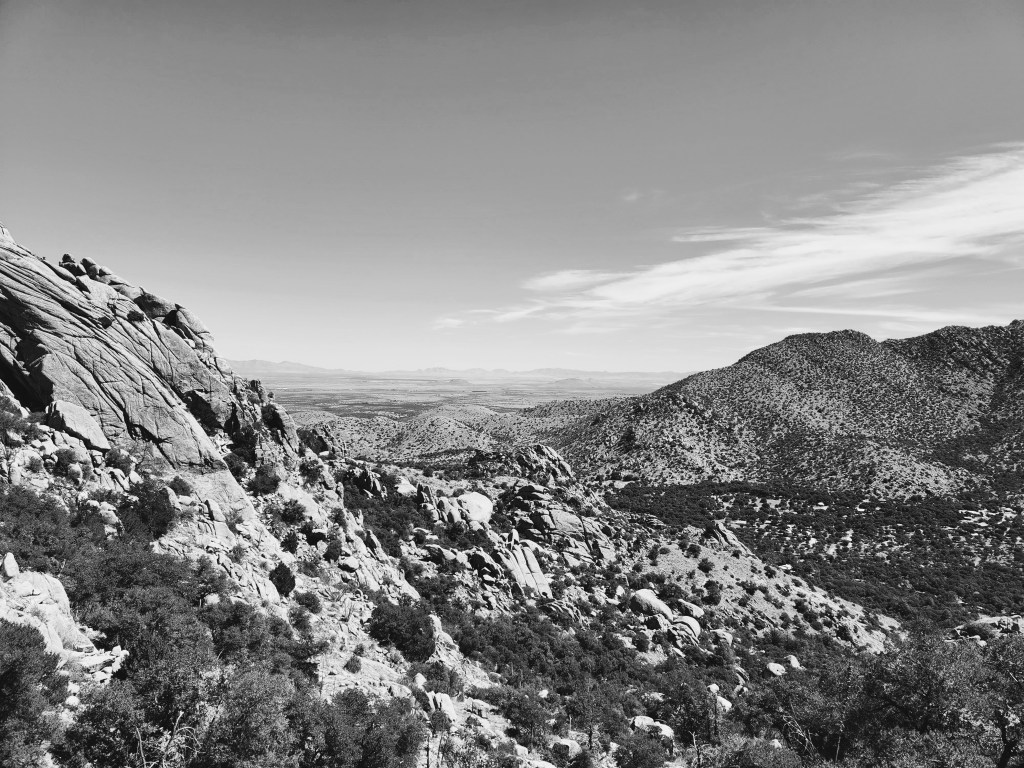
Salvo was named a finalist in the 2026 Leopold Bloom Prize for Innovative Narration, judged by Michael Nath.
Michael’s Comments:
A really powerful and affecting short story (with a Namibian, or is it North African, setting?). The activation of memory by the wisp of smoke from the final cigarette before the narrator’s execution is marked by an arresting skill in description and action, as we hear of a clandestine expedition to obtain cigarettes from a railway-station booth. In the course of this adventure, the bond between father and son is developed with a love that compensates for the pseudo-father/son relationship of priest and narrator at the story’s opening. And the moment of death is postponed by the movement deep into memory and past time: a Proustian success that is punctuated, but perhaps not broken, by the closing salvo of shots (three). This story held my attention throughout.
They were waiting for the sun to pass the serrated peaks of Kharas Mountain before they would execute me. This is what the priest said. He had come the night before on the National Rail Service. Our town had a church but no priest, and you needed a priest for this sort of thing. He wore thick cotton robes and was already sweating. I was sweating too. He asked me my name, and I told him, but he went on calling me son, as was his right. The morning was still early enough to be black. The priest—whom I asked if it was alright if I did not call him father for each man had but one—said that he could not read me my last rites until the soldiers were ready to fire.
“Any questions?” He asked.
“Why don’t they talk?”
He looked at the soldiers cloistered under a swollen olive tree, wiping the barrels of their rifles with a dark rag that they passed from one to the other like wine.
“It is the law. No speaking on the day of execution, between each other or to the condemned.”
“And you?”
“I am the priest. I am always speaking to those about to die.”
The sand was coming to life beneath my feet like little grains of smoking coal. A fig tree stood barren on the other side of the unfinished brick wall that I was placed against. My hands were tied in front of me; in case I wanted to adjust the blindfold soon to come. The cool wind that ran across my arms in the back of the open truck had been snuffed out by the creeping heat. The whole world was being pulled taut over an opening flame.
One of the soldiers, clean-shaven and wrinkleless beneath the eyes, practiced his stance and aim on me. Rifle across his waist, one hand on the angled grip, the other on the forestock. A single fluid motion and it was set into his shoulder. He cycled the bolt and squeezed a phantom trigger, his waxed haired miraging beneath the fading moon.
The priest waved him off and took out cigarettes from a fold in his robes. He offered me one and my mind wisped away with the smoke.
§
My father devoured several packs a day and had eroded his voice into a weak husk of noise. The town doctor himself, Melich, came and ransacked our house for every pack and carton of Camels, Winstons, and Marlboros. Dr. Melich then drafted a notice with my father’s full name and our address. He signed it and had my little sister Sira make nine copies on the thick white paper he carried with him in a leather fold—one for each store in town that sold cigarettes.
Dr. Melich told my father that cancer was no way for a Captain to go, to which my father forced a smile and shook Dr. Melich’s hand before seeing him off to his Mercedes.
My mother was the one who called the doctor and for her sake my father stopped. He made it just nine days before he woke me in the night and said we were going for a drive. I was too sleepy to protest. I asked if Sira and mother were coming but he said nothing. He carried me into our little green jeep and wrapped me in a heavy wool blanket stitched with a military insignia. In the back seat was a large metal jug with a fat cork stopper.
He kept the headlights off and drove with great care. Both hands on the wheel and much slower than normal. He told me once that he felt himself a sand viper when he drove without light. That he was seeing the desert how it wanted to be seen, needed to be seen. That this was the closest he could get to gliding over the wave-like dunes. His seriousness bled into the seats, the metal, the half windshield. I tried to inhale it with the wind, to make myself a soldier, a man called out into the night for an operation, a mission, a God-given decree.
When we passed the crumbling brick walls and left town behind, only deep blue sands stretched before us. I couldn’t sleep and told my father so.
“Look for lights, son. Watch the dark desert and look for lights.”
The sky was littered with stars. Great dunes cut up the horizon on either side of the jeep. We were leaving Mother and Sira and everything that was not wild behind us. I pointed ahead to six vibrant white dots on the side of the road.
“Wolves,” he said.
As we drew closer with our headlights off, I could make out their raw-boned bodies, their sleeked heads. They stood their ground as we rolled by then slunk off into the empty belly of the night.
“If you ever hear a whip or a crack while you’re sleeping, that means they got too close to town.”
I could not picture them dead, only swallowing bullet after bullet, gorging themselves on the lead cores. An hour later, I saw a bottle green sign backlit by hot tungsten bulbs. It was the closest National Rail Station in our province. From there, you could only reach town by horse, camel, or car.
The platform was about the length of two train cars and as wide as one. Wood pallets taken from shipping boats were pressed together and held in place by thin planks of wood that never rotted for lack of rain. At the centre of the platform stood a ticket booth with enough space for a stool and a small register. The door on the front was cut in half with a flat counter built on top of it. Spread across the empty space above was a retractable metal lattice fastened to the wall with a padlock.
Shoulder to hip with my father, we scrutinized the lock. He tried to slide his hands through the little gap between the counter and the gate, but his hairy forearms were too thick. He cursed quietly and kicked the door. It was more solid than it looked. He sat on the edge of the platform, ran his fingers through his short, officer-approved hair, then closed his eyes in what I imagined was prayer.
He stayed like that a while, so I searched for wolves. I could only see the muted sands, the packed tracks of the road, each running to the edge of the earth and falling off.
“Stay right there and watch the road for lights.”
He picked me up by the shoulders and twisted me north to face the direction of town. Nothing but trains and sandstorms ever came from the south. I occupied myself with the subtleties of night. Where black swallowed grey then spat up something blue and grainy. The desiccated wind that conquered endless space and moaned across the inky vista and fell so hard against my small body. How the sky, lacking in texture, lacked in weight too, and how that made everything above the sands, even my father, even me, weightless.
Maybe this is No Man’s Land, I thought. That place in war I’d heard mentioned by my father and his comrades when they had dinners at the house and retreated to the courtyard for tobacco and arak. I wondered if it belonged to no one because there was nothing to claim or if the nothing with its sound and colour and midnight chill was everything except material. Claimless by nature. I began to understand why men wanted it so much. That indomitable opposition. How a king could see all this and feel so affronted by its independence. The compulsion to rule is like a curdling of the soul. I didn’t even know if I believed in a soul, yet it seemed like the only thing to be sacrificed in exchange for power over the endless desert.
My father dug around the back of the jeep and returned with a hammer and creamy, calf-skin gloves.
“Plug your ears,” he said.
The lock broke on the fourth swing. I couldn’t hear the wind anymore for my father kept repeating yes, yes, yes to himself like a solemn vow. He pulled a thin flashlight from the breast pocket of his field coat and told me to stand close and light up the back wall. It was lined with cigarettes. Alphabetical packs from top to bottom and extra cartons stacked on a little shelf above them. To the left of the ticket master’s stool was a chart with train schedules and a topographic map of snaking lines throughout the country. To the right a few boxes of gum, black licorice, colourful hard candies.
He compressed the gate, unlocked and opened the little door, and scanned the packs from left to right with a rigid index finger. He stuffed his jacket with Camels and Lucky Strikes, then rolled the Marlboros into his shirtsleeves. He was breathing heavy and moving fast. I looked behind us to find nothing but open desert and our car sunken deep into the scene. He looked at the cartons on top and paused. I tapped the back of his leg and he turned, his thin face red and sweaty, eyes wide and colourless. I had folded my blanket in half and held it across my arms. The teeth in his smile were brighter than the moon.
“Good boy,” he said.
Wordlessly he stacked eight cartons onto the blanket, and I took them to the jeep and tucked them into the back seat.
“Bring the water, leave it at the end of the platform,” he called out.
The air was still sharp and cold, but I left the blanket in the car. I was warmed with strength. It took both hands and all of my legs to carry the water jug for less than twenty steps. I set it down while sweat beaded on my neck.
“Come here,” he said.
He retrieved some banknotes and coins from inside his coat then stepped out of the booth, shut the door, locked it, and placed three bills on the counter.
“For the cigarettes,” he said.
Then another three bills.
“For the lock.”
He reached inside and snatched up a packet of licorice from the wall and a handful of candies. He stuffed them into my trouser pockets then mussed up my hair. He put two coins on the countertop next to the bills.
“And for the candy.”
He sat on his haunches and put his hands on my shoulders. They were warm and damp and very still.
“I am not a thief,” he said. “We were here, our hands touched everything. We can’t erase it, you understand? A life is made of stains. But Mother and Sira must never know.”
I nodded and he took my hand and led me to the car where he removed the packs from his clothes and then his clothes too. His birdcage ribs were pressed against his skin like a full sail. He stuck three cigarettes between his fingers and palmed a chrome lighter.
“Wait here. Enjoy your candy while I enjoy mine.”
He walked away from the car and the station, far enough for his blued body to turn into a black figure at the limits of my vision. Then came a clink of metal. A flame. A quivering red dot. I sucked down my licorice like rechta and followed the gossamer smoke rise then disappear. He took his time and inhaled all three before handing me his lighter and grabbing a little bar of soap from under the driver’s seat.
The water mixed with the moon and made him shimmer like a sinking coin. He scrubbed himself hard. Winking white crescents cutting across lean muscle. The wind picked up, and flecks of sand stuck to the back of my neck. After he rinsed himself, he put on his uniform and secured his bounty underneath the seats. When everything was ready, he got into the car and started the engine. He looked at the platform, the ticket booth, the sprawling desert. My eyes were a part of that desert now. His wet hair and stubbled cheeks sparkled silver.
He was shivering.
I pulled out the blanket from the back seat and draped it around his shoulders, making sure to tuck it close under his chin before bunching the excess on his lap where at last I rested myself and he turned the jeep around, one hand on the wheel, the other stroking my hair, fingers fragrant with oil and ash. I made a promise to myself that I would not sleep, that I would sink into him and be his glowing sun until the morning came and relieved me. We drove beneath a now starless firmament, and our silence was rented by a sharp crack. And then another, and then another. But my father said nothing, and his heavy hand did not falter in my hair, so we rode on through the dark, and like a date palm seed to the earth I sunk and found that I could not open my eyes.
Chance Freihaut is a writer living on Vancouver Island. His work explores the relationship between identity, memory, time, and death. His fiction has appeared in This Side of West and The Imagist, and he has been a finalist for The Writer’s Union of Canada Short Prose Competition and Exile Quarterly’s Best Canadian Short Story. In 2024, he won PRISM international’s Grouse Grind Lit Prize for V. Short Forms. He is currently pursuing a degree in writing and philosophy at the University of Victoria.
Photo Credit: Rebecca Anderson is a writer, visual artist, self-employed mental health clinician, and local elected official who works from her small farm in central Maine. She completed her MFA at Mississippi University for Women’s low-residency creative writing program, where she completed full-length manuscripts in poetry, fiction, creative nonfiction, and playwriting. Rebecca was nominated for Best American Short Stories 2019 and the 2024 Pushcart Prize. She was a 2025 Bread Loaf Writers’ Conference participant in poetry. IG: @rebeccatellsstories

