Richard Reise & Lillian Taylor
Fiction
This is how Lucy thinks of herself: Warily the girl sits on her bed; carefully the girl with the pretty blond hair considers the few numbers in her phone—whether she should trust Amy, if maybe she should text Rich—for every error in judgment upsets everyone, and every lapse in reason ruins everything for days. No antidepressants, no painkillers, no pot, no beer, no liquor, no cigarettes – nothing that excites, revives, or rests her. Only the Internet and a little anonymous conversation, voices without inflection, asexual, in acronyms with their melted meanings she speaks (as a girl speaks who for years has been beaten and sexually abused and finally believes she has found someone to trust).
After work, Lucy walks the hall to the little, narrow, sparsely furnished bedroom where endless drawings, sketches, charcoal etchings, and watercolors are piled upon her dresser, her bookshelf, but no posters, no adornments, only the one photograph inserted inside the frame of a mirror.
The made bed.
The pillowcase covering her window.
Over in a corner folded neatly on a chair her work uniform, and beneath the chair her work shoes, one white sneaker set beside the other, the toes smudged with dirt. Beside the door is her bag. Otherwise only drawings and etchings, and beneath her bed the tubes and the bottles and the containers and the sprays and the sandwich bags which she uses against the headaches, against the swirling nausea, against cramps in her abdomen, against the nosebleeds, against it all. A terrifying arsenal of aerosol and cement, yet the only assistance against the ringing silence of this empty room in which she never rests. In jeans and a t-shirt—the thermostat is broken at seventy-five degrees and heat pumps forever into the room—her face flushed, her glasses pressed close to the paper, with one leg pulled beneath her she draws. She draws what she has drawn before.
Waves.
Giant, fantastic waves her tired eyes can scarcely admire. For hours she sits like this and her eyes burn and she draws.
This is the outline, and this does not change. But her drawings reveal another element, for they are beautiful and mysterious. Yet the meaning of her drawings will never be discovered. Often they are really less drawings than manic manifestations of the conversations she holds with herself. Now a yet yawning gulf, now a sullen white surf so violently beat against its sides that Fucked up is not too severe a conclusion for a counselor to draw (she is not in therapy) and yet the feeling of her own inadequacy, evident even in her earliest work, is unclear even if anyone saw to see.
Convinced that those surrounding her have no clue who she is, and customarily accepting of her hateful and misguided peers, Lucy feels often and acutely that those who should understand her know her no better than strangers, people she might pass on the street. Impossible to provoke, it is just as impossible to petition her impervious sense of self, to awaken the notion that she should stand up for herself, defy those in her life – her boss, the other girls – who assume, however abstractly, positions of power.
No, Lucy is not remarkable. Nor is she noticed.
This is how Lucy remembers high school: Try as they might, her teachers see little but subsidized housing; a cute round head; furrowed brow; thick blond hair pulled into a fat ponytail; two pale bright eyes set beneath all but the faintest semblance of eyebrows, every feature of this sorrowful countenance taut with the gaunt conviction of a convict.
Yes.
This was the likeness given to her.
Like a second Andrea Yates her eyes lent a stare at once vacant and wild, as if opening upon some frightful and unknown dimension. It is thus that her teachers feel no choice but to portray her, a modern-day martyr – a Pandora exposed – hoping to subject the girl to no more scrutiny than necessary from children absent faith, devoid of religion, who, disturbed by years of television and endless hours of Internet, are incapable of perceiving pathos unless it is produced and packaged as a show, a commercial, something to be consumed.
Regents Exams?
As Lucy escapes high school without failing a pregnancy test, her teachers will consider Lucy’s five years in the building a success.
So it is no wonder that the robbery becomes the most dramatic moment of her life. Not because of the drama.
The violence. She was twenty-two years old. Statutory rape was not altogether interesting. Nothing else had happened.
Lucy stood in line. The man before her bent at the waist and she could not see what was happening.
Considering his movements, she thought he might be in pain. He dropped something. A sack. Frustrated, he kicked the sack to the side. When he stood up he was wearing a ski mask. He was holding a small gun.
So that was it.
A robbery.
This seemed like a terrible decision. He had been on camera for something like, what? Five minutes? She had not seen him enter Endwell Liquors, though. Maybe he knew something Lucy didn’t.
The armed robber shouted at Eddie. Eddie, hands raised, failed to move. The masked man shouted longer, and louder, sentences and phrases laced with profanity as wild and colorful as some endangered species. (When, later, the police, guns drawn, side-stepped into the liquor store and issued the same – or similar – diction, and this with the same, crazed force, this was considered ‘tactical profanity.’)
This guy, though.
Clearly high on something – even if it was only adrenaline (it wasn’t) – he shouted insensibly. If he stumbled across a swear word, so be it. This was a man who did not have much diction at his disposal.
The register was open. Green and silver with cash and coins. The armed robber pointed with his gun. First at Eddie and then at the register. He screamed. What he said was baffling, and, in Lucy’s opinion, unnecessary: Listen up everyone! My name is Duane, and this is a stick-up.
There was no need to shout, Lucy wanted to tell him. Also: It’s pretty obvious what you’re about. And providing your name? That was a …. Choice. Worse, though, he was upsetting Eddie. While many in the store were uncomfortable, Lucy didn’t get the sense that anyone was terrified. A young woman sensibly opened her bottle of Stoli and took a slug. More than one customer looked at their wine bottles with regret.
Excuse me, Lucy said. Duane?
The man turned and stared at Lucy. Startled, Lucy took a step forward. His eyes were so blue. His mask – navy blue – was thin, and she made the contours of his face. Six foot, trim in his black outfit and white Nikes, he was, she could tell, incredibly handsome. Pretty, even. Like that scene from Pride and Prejudice. The one with Kiera Knightley. The robber was Mr. Darcy. Instead of a tree, Lucy was backed against an obese woman shouldering two boxes of wine. Was she swooning? Lucy could not say. What she wanted, though, was to lean in for a kiss.
Shut up, he said. And then, bright eyes blanking, How do you know my name?
You just shouted it, Duane.
The man leaned back his head. Fuck.
Oh, don’t worry about that, Lucy said. Duane Shmame. Who cares? Listen, though. It’s just that I know him. The clerk. He’s an addict. Leaning around the masked man, she said, Sorry, dude. And then, to the man, she added, My point, though? You’re scaring him. So just, like, ask Eddie – his name’s Eddie – for the money. He won’t care, and he’ll respond much differently. I can promise you that. Or take it. Or, here, she took a step around the man. I’ll grab it for you.
You fucking little bitch, the man said. He grabbed Lucy by the shoulder, swung her around, and punched her in the forehead. She fell to the ground. Had she not landed on her purse, she would have injured her hip. On the other hand, she sprained her wrist, and cracked a rib. He said, This is my job.
There was some noise. There was a general din of consternation. People saw so much violence online, and on TV, that real, actual violence, right there in a liquor store in front of you, arrived as performance, almost impossible to process. The woman with the vodka drank from her bottle. She sighed. She ran the back of her hand across her mouth. Capping the bottle, she set the Stoli on the ground, turned, and left.
Where the fuck do you think you’re going? the robber said.
He swung the gun in her direction. Those in line ducked. A man might have screamed. (Looking back, Lucy found this unlikely.) Duane instinctively pulled the trigger. He had forgotten to remove the safety. Good thing.
Lucy, arms behind her, palms flush with the sticky floor, head back, took a deep breath. The robber wore a ring. Blood pooled like a bindi. Resting her forearms across her knees, Lucy lowered her chin against her chest. Strands of long blond hair fanned about her face. Warm blood threaded across her forehead, down the side of her nose, settled atop the tip of her lip, and fell to the floor. The Outsiders. That was it. A book she read in high school. That one Soc. Bob Sheldon. He wore madras, drove a tuff Mustang, and wore rings. Because of this, Johnny Cade was never the same. Bob was the reason Johnny carried a blade. Lucy sucked air and freed her purse from beneath her. Where was Randy Adderson when you needed him?
That’s who the armed robber looked like. That’s why she was having these thoughts. Matt Dillon. The actor who played Dallas Winston. And not just because Dally holds up a convenience store. Dillon and Duane had the same eyes. Cool. Ice. Blazing blue. Her English teacher, Mr. Littel, made her write a paper discussing the importance of a character’s eye color and shape throughout the novel. She chose Pony. She focused on the color gray, but could not remember her thesis. What the point was.
Where? Eddie said. I don’t see it, sir.
Don’t fuck with me, Duane said. He leaned against the counter and made to shove the pistol beneath Eddie’s chin. What happened was difficult for Lucy to register. Basically, Duane missed, and he sort of fell across the counter. There. That right there was the perfect opportunity. For Eddie to grab a bottle of Jim Beam and smash the robber on the back of the head. For Eddie to duck, turn, and flee. But Eddie was neither hero nor coward.
Duane straightened. Seems what happened was this: While Lucy watched blood splash between her feet, the men had arrived at an unfortunate impasse. Eddie was genuinely confused. Duane wasn’t. Convinced Eddy had his canvas bag and refused to hand over the money, he was manic. Cool? Lost completely. Things didn’t look good. All wasn’t lost, though. The good news was that Eddie was in no mood to get shot, and Duane wasn’t a killer. There was a solution.
Dude, Lucy said. She ignored the others telling her to shut up. That she was going to get them all killed. Dude, she repeated. Calm down, man. Your bag is on the floor. And then, Don’t worry, don’t worry. She raised a hand. I’m not moving. But Eddie doesn’t have your bag. He doesn’t care about the money as much as you do. None of us do. It’s yours, if you can pull yourself together.
For real, Eddie said.
Duane did not calm down. He swung on Lucy and said, You. Get up.
Lucy slowly pushed up from the floor. Her wrist hurt, but what hurt more was breathing.
Hand it over.
Hand what over?
Duane pointed the gun at her purse. What the fuck do you think? Your money.
Lucy gritted her teeth. She grabbed her purse and handed it to the man.
The money, Duane said. Just give me the fucking money, okay? He was tiring. Things could be going better.
Uh, well, Lucy said.
Are you fucking retarded? someone said. Open your purse, take out your wallet, and give the man his money.
Yeah, Duane said, nodding. Take out your purse, open up your wallet and give me your money.
Right, right, Lucy said. Well, that’s the thing. She turned and glowered at the man who insulted her. She winced. She opened her purse and freed a scratch-off ticket. One of the big ones. That cost more than twenty dollars. Lucy wasn’t exactly retarded (her IQ was greater than 70), but the test results, administered by high school guidance counselor Mr. Cantanzerite—who, himself, would never be mistaken for a genius—were suspect. For years Lucy blithely lived through the present of her own created history. Those who didn’t know her considered her happy. Then again, no one really knew her.
Life certainly would have been better (or not so fast) had she been born a few points dumber—scoring, say, somewhere in the low 60s—and enjoyed the luxury of less self-awareness. If she had a fetish for sock puppets, masturbated with different food products, and lived in a group home with others like her (considering it a coup to escape from the communal kitchen with a stick of butter), she would have existed in a state of nirvana.
But no.
Instead, she was thin, had an impressive chest, and was pretty. The sort of pretty that men with a few drinks in them found irresistible. High school. What a horror. She spent most of each school day in the Resource Room. Once, before Senior-Skip Day, someone taped a sign to the classroom’s door. It read:
Wal-Mart Needs Greeters Too.
Lucy agreed, and didn’t understand why her teachers were so angry. She suffered from PTSD. Post Traumatic School Days. There was so much commentary on commentary. Now that’s myth. Now that’s real. She never understood what anyone meant. What meant so much to everyone was not real. Then or now. Not really, anyways. Once, some speaker dude came to their class. He had one handout. He had few words. There, he said, is your dropout. There. He tapped his copy of the handout. That’s your student with a degree. He spoke plainly. He did not use fancy words. Take it or leave it. The choice is yours. Get a degree and you make a lot more money.
And that’s if you don’t have children, Mrs. Roser chipped in.
Duh.
Mrs. Roser. Duane stared at her like a teacher. Like she was stupid and small. She couldn’t believe she had considered kissing him.
What the fuck is that? he said.
A thousand dollars.
What? Duane rubbed his chin. He forgot about his mask and momentarily blinded himself.
Really? A man in line leaned around for a closer look. A golf pencil poked from his fanny pack.
A winner, Lucy said. Like, the reason I’m even here? I never win. I was going to have a celebration, but go ahead. Take it, take it. You obviously want it more than me.
Duane snatched the ticket. He stared around the store as if it had not been his decision to be here. The customers looked on. They could not contain their interest.
Duane smiled a thin blue smile. He turned to Eddie. Here, he said. You heard her. A thousand. Now.
Eddie hung his head. Just do it.
What?
Shoot me, man. You’re not going to believe me. He put his hands on the counter and looked up. It doesn’t work that way.
What?
Anything over six-hundred. You can’t cash that, here.
What? Lucy said.
He’s right, the man with the fanny pack said. You can take it to a casino though. That’s what I do. Put it in the mail? He laughed. Yeah. Fucking right.
Opportunity created confusion. Everyone was quiet. Still. In the distance, not terribly loud but certainly getting louder, sirens.
Ah, fuck, Eddie said.
Who called the cops? someone said.
Cops? Duane said.
Soon there was red and there was blue. Soon, the inside of the store flickered white and purple.
Duane stepped to Lucy and grabbed her arm so tight her fingers tingled.
Ow.
He shoved his gun against her ribs.
Seriously?
Outside, the police set up their perimeter. Like most, Lucy over-watched Law & Order. The ‘Law’ part, or the first half of the show, bored her. She was more interested in the ‘Order.’ The district attorney and their strange dilemmas. The jury. The verdict. The best episodes were when Lucy was not surprised the defendant won. Satisfied, sitting back on her sofa, Lucy reached for her phone. Only there was no one to text. With no one was there anyone to share, and she sat there, motionless, at her most alone.
Duane nodded. He said, You’re coming with me.
They made eye contact. Lucy was confused. Duane’s eyes were not blue, but brown. Like Sodapop’s, Ponyboy’s brother, they were dancing. Lively. But they were lively like a fly was alive. Dance-wise, they were Moonwalking.
Don’t fucking move.
Oh, Lucy moved, alright. She had been inside Endwell Liquor a hundred times. She knew where things were. More importantly, she knew of things and where they were in relation to her body. With a hip she bumped a wine display. Bottles of Bully Hill white and red wobbled. The wine tipped and toppled, glass crashing to the floor. The floor went red, like blood. This time, a man did scream.
Duane jumped. He pointed his gun at the bottles. He took a deep breath. Like a baby, Lucy expected him to cry.
What followed was unexpected. It went, more or less, like this:
Police officers—who can say how many—pushed open the door. Others, like crabs with guns instead of pinchers, scuttled in. They splashed through the wine, screaming, a torrent of curse words that crashed like bad poetry. No one moved. Not even Duane, who, at some point, had removed his mask and pocketed his gun.
I’ll take that, Lucy said. She took the lottery ticket from Duane’s hand.
He blinked. Once again, his eyes were blue.
Lucy didn’t wish she was back in school. That would be taking things a bit too far. But if she was? If she had to write a paper on a character’s eye color and shape? And how these were symbols, key features—Hinton’s choices—representing a character’s personality on a deeper level? She knew just what she would write. She knew how it would begin. It would go like this:
This is how Lucy thinks of herself…
Richard Reise writes and teaches outside Ithaca, NY. A Perry Morgan Fellow from Old Dominion University’s MFA program, and recipient of the David Scott Stuelan Memorial Scholarship, his debut novel, Being Dead, was published fall, 2023. His short story, “Of Ducks,” was selected fro 2025’s Best Microfiction Anthology. His second novel, the award-winning Dry The Rain, was released by Picket Fire Press in October, 2025, to critical acclaim. His third novel, DYING MAN IN LIVING ROOM, is forthcoming from ELJ Editions (2027). A three-year Teacher of the Year recipient, he is @coy_harlingen on Twitter.
Lillian Taylor grew up in Croatia. Now living among the vineyards of New York’s Finger Lakes, she spends time tending vines, trying new recipes in the kitchen, and writing stories.
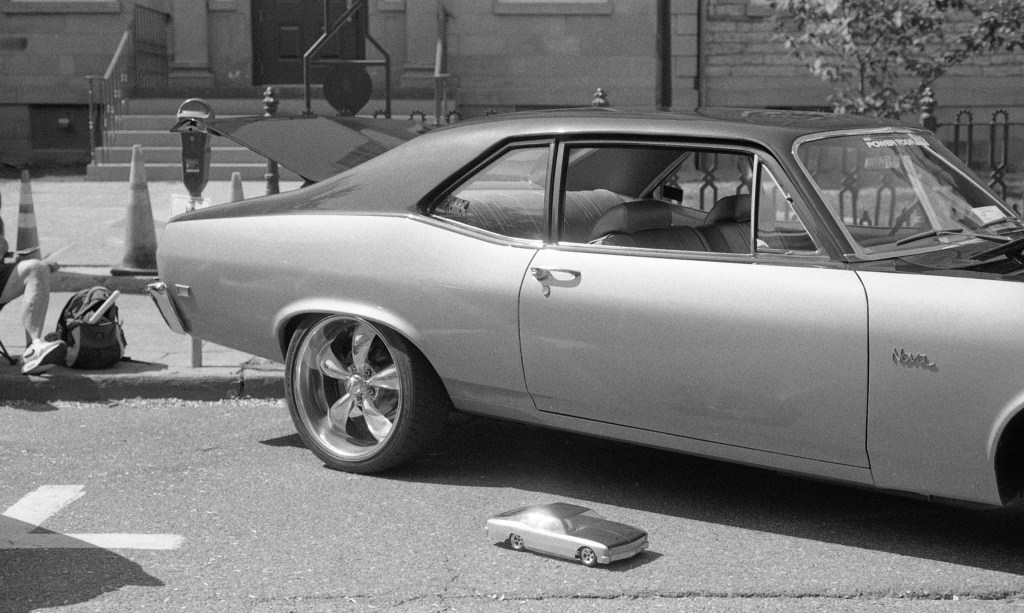
Photo Credit: Norma Barksdale a writer, editor, and photographer from Oxford, Mississippi. She has her MFA from the University of Montana. Her fiction has been published in The Ekphrastic Review.


One response to “Lucy”
a stream of consciousness that keeps you on your toes as you learn bits and pieces of Lucy, who you suspect has had worse days then this one. fearless, she engages w Duane as though she doesn’t have a second thought. Although she is trapped within paintings and sketches and unconnected moments rattling in her head, there is an awareness of what’s going on around her. Her emotions are guided by ego and id with insight into her super ego. You root for Lucy, imagining someday the puzzle pieces will fit together for her
LikeLike