Jessica Faulkner
Fiction
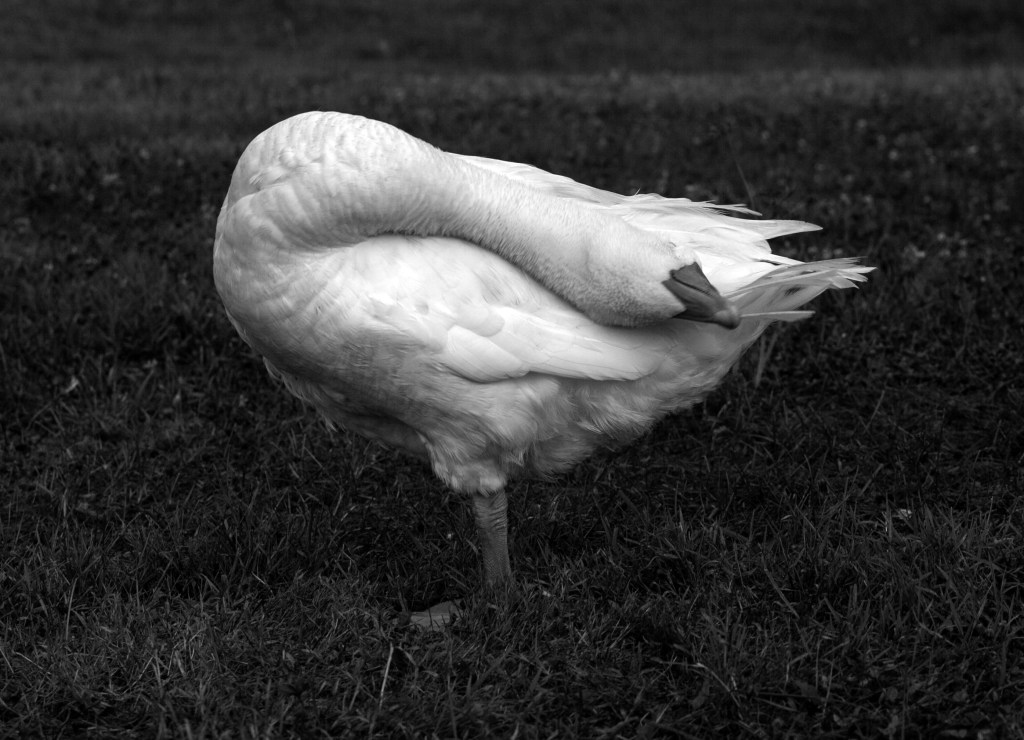
Lady Macbeth in Universe X was named a finalist in the 2026 Leopold Bloom Prize for Innovative Narration, judged by Michael Nath.
Michael’s comments:
This is a bold and inventive experiment in the ontological independence of a fictional/dramatic character (Lady Macbeth). Situating Lady Macbeth in a series of possible universes, it imagines other possibilities for Shakespeare’s character. The second element of the story is the narrator’s struggle to become a writer herself (after the gentle discouragement of Mrs McPhee). So, in each possible universe, the narrator re-imagines Lady Macbeth’s circumstances (in plausible and interesting ways); at the same time, the narrator renders the conditions of each universe in ways that are often really novel and arresting. As she does so, the reader’s sense grows that she is writing herself away from Lady Macbeth, as she becomes the writer she has long hoped to be. Certainly, as I read, my attention became fixed on the details of the various universes, along with the narrator’s voice, rather than on the altered circumstances of Shakespeare’s character. And the satisfying effect of the story is the emerging independence of the narrator (though this seemed to be undercut in the final lines?).
I wondered if LC Knight’ essay ‘How Many Children Had Lady Macbeth’ (1933) provided a grain of inspiration? Shakespearean ‘theory’ made rather cheap fun of this essay; but it was well defended by that excellent exercise in ‘soft formalism’, A New Mimesis: Shakespeare & The Representation of Reality (1983), by AD Nuttall.
a)
In the universe that we call ours, Lady Macbeth is best played by Marion Cotillard. Her depiction is lush and then bare. The director has added a child and then taken it from her. It is her fault that the others are possible because she taught me how to be haunted. And so, here, I cast myself in the role of the narrator.
I first saw her when I was sixteen, on a television in my English classroom, the friend I would soon fall out with hiding her eyes against my shoulder whenever she got scared. But I had loved Macbeth for a long time by then, since I was a little girl. There was a copy of ‘The Witches’ Chant’ in my children’s poetry book, and I recited it for my class when I was six years old. My mother gave me her cooking pot and I pretended it was my cauldron.
In this universe, I am a writer. Or rather, I want to be. Very much. I have seen others try to capture Lady Macbeth using the written word, and it has almost always upset me. No matter how clever they are, there are too many possibilities. To choose one is to take a sword to the others. I will not do that, lest I sentence myself to a grief that should not make sense, but is felt between the bones of my chest and turns my body to a fish. Tickled and then plucked from the ocean. Instead, I want to offer her existence in many imagined forms. She is more than her narrative, just as we surpass our flesh and bones. To take a knife and carve her from her husband’s story is an act – my act – of love. I must risk breaking her open if I am to set her free.
b)
In Universe B – the first unreality – Lady Macbeth spends her final scene crying. It is hard for the actor to get her words out, and so it is common practice for directors to request this scene at auditions. They are to stand on the third or thirtieth floor of an office building, wipe off the make-up they applied meticulously that morning, as if preparing their own body for burial, and cry. The substance of it all does not matter, only that it is convincing. The actors think about their exes, about family they have loved and lost or the failures they will be – or rather, they feel they will be – if they are not successful in capturing the great Lady Macbeth. Often, it is only once the director tells them they are dismissed that the tears, a witch’s brew, are summoned, move forward and start to fall.
I read Macbeth for the first time as a high school student. My teacher was a woman, forty-two years old when she taught me. Her name was Mrs McPhee. Mrs McPhee encouraged my love of literature. She wrote down long lists of novels she thought I would enjoy. Sometimes, if I behaved myself – and I almost always did – she would lend them to me, let me take them home and read them over the weekend as long as I promised to submit my essay on time. Neither of us knew why she added that clause. My words have never been late. Not in any of my lives.
Mrs McPhee tells me that my examination of the English language is exemplary, but that I should stop trying to replicate it, stop trying to craft something of my own. I can dissect a simile and its purpose. I can use my pen as an axe to chop and fell a metaphor. Paragraphs are pulp by the time I’m through with them. But I cannot create, she says. The stories I present to her are tired, reductive. They are inspired by something else – an historical event I found puzzling or confronting, a fairytale I have turned upside down and started to shake. None of them are my own.
When she tells me to bring her something original, I cannibalise my own life. I anaesthetise myself, turn my body into a body of work. I write about the scar that stretches across my knee, given to me, at age six, by a pitbull who must have known I would need a story someday. I write about my grandmother, pretty clichés about how we must be made from the same stars. I write about how I will never be able to have children. Not here. Not in this body. Not in this body of work.
Mrs McPhee smiles, hands back my words, still warm from the printer. “It’s alright,” she says, palm on my shoulder. “You don’t have to be good at everything.”
Reading hurts; I make it my life’s work.
c)
Here, in Universe C, Lady Macbeth and her husband are the one character, played by the same actor. Their scenes become soliloquy and they are no longer two halves of one whole, but rather, the same piece of flesh. Here, this is what makes the play a tragedy. Corruption of one’s own self. The ending is not different, but it feels different to those who know.
In this world, on this Earth, democracy is a concept that arises in a philosophy class in 1984. The theory gets picked up by mainstream media. Soon, volunteers join together on a commune to test its practice. I am one of them, and for our work, I sacrifice the chance to write, because, for our first law we are all in agreement: no one will hear from us again.
d)
In modern times, Lady Macbeth speaks exclusively in whispers, but she is the only character to wear a microphone, so she is still the loudest of them all.
In this universe, snow is pale pink, rather than white, and strawberries take the place of chocolate. It is a crime to let fruit rot, punishable by a fine of five-hundred-and-two dollars, unless you are a farmer and let it remain on the tree. Everyone wears long skirts and sings as they walk down the street.
Lady Macbeth scares me here. Startles me, as if one of us is an animal with fur and claws. A small, bleating heart. I am still fascinated by her. I walk towards her over and over again in my mind. She turns away from me but extends her hand.
e)
In this version, Lady Macbeth holds a baby in her arms. It is sleeping – played, perhaps, by a doll – and none of the other characters acknowledge that it is there. No one knows if it is hers. Even so, the actor playing Lady Macbeth feels its weight in her arms and that, thinks the audience, is enough.
Here, the camera was never invented. Everyone reads books, goes to the theatre and there is no such thing as a television. Every ten years, we must have our portraits painted by a state appointed artist. Sessions are fast, but precise, and you are reimbursed for your time if it takes longer than three hours. Most finish in two. There are still motorcars, but their engines are quieter, and it is widely accepted that a passenger’s job is to sleep.
I am an actor here. I try to turn myself into her, feel her blood and bones as my own. Every time I finish a performance I eat a steak, rare, served dripping and carved by my butcher’s hands.
f)
For this performance, Lady Macbeth is depicted by the same actor cast as the first of the witches. Some directors instruct Macbeth to recognise his wife in the beginning, to be puzzled by her and, perhaps, reach out in an attempt to take her hand. Others decide it is best to keep this obscure, to have the actor watch his counterpart and then decide that he is dreaming, or that the prophecy is more important. Either way, in this version, everything is not only inevitable, but the pieces fall at the tap of her hand.
I think that here I would be born a starfish, and I would not be able to see Macbeth unless they cast the stars of Cassiopeia and used the darkness as the curtains.
g)
In this version, Lady Macbeth is not a wife, but rather, a mother to a daughter. Perhaps Macbeth is renamed, or perhaps it does not matter, but she is a woman now. A woman who feels, like all of us, that she will never be enough. And so, she turns to magic. At first, the audience is jealous, but then we see her start to fall. We feel it between the bones of our chests. A strange sort of grief that turns our bodies to fish. Taunted and then plucked from the sea.
Here, it rains almost every day and no one has ever seen smoke.
h)
In this world, Lady Macbeth is the same, but no one has ever thought to bring her from stage to screen.
The only difference here is that peaches are grown without their pits. Children can bite into them with their baby teeth and smile as the juice runs down their chins. No one has to chop them carefully, holding them with one hand, spinning them around. They are rinsed, and then the knife slices cleanly through their flesh.
i)
This society has decided that Shakespeare can be a profession. The actor who plays Lady Macbeth is also Desdemona, Portia, Ophelia. And so, her resonance depends on what the audience has seen earlier; whether this is their first time sitting before the work of the Bard, or whether they have grieved her face before, and can feel the ghosts of their tears pricking their eyes. Small and unwanted embroidery.
As a director, I refuse to exhibit Shakespeare indoors. Lady Macbeth exists outside, at night, and I make the audience hold candles to see her face.
Here, bees do not make honey. They make another elixir. Something dark and green that tastes like blackberries turned even more sour. The forests bloom and there are two more species of bluebird. Butterflies live up to ten days longer and caterpillars aren’t afraid anymore. When a tree falls in the forest, all the animals stop to listen, and so it doesn’t matter if any of us are there to hear it.
j)
Here, the actor who plays Lady Macbeth is never seen, but her voice reverberates around the theatre’s speakers, sometimes so loud that the audience must place their hands over their ears. When it comes time to clean her hands, no one sees her fail.
People do not celebrate birthdays here, except to pluck one flower from the garden and place it in a vase to wilt. Children are allowed to name themselves, once they’ve turned sixteen. I hope I would still let my mother choose my name, because it is the first gift she ever gave me. But I suspect I would see it differently, having grown up in the knowledge of choice. Juliet, I think I’d be called.
k)
Universe K brings a play that was never a play at all. It is a novel, told in verse, that teenagers do not like to study in school. Well, most of them, anyway. They all imagine her differently, wearing long black dresses or carrying a knife behind her back. In every version, she is smiling, and in every version, she does not mean it.
Here, I have studied to be a doctor. I am still squeamish, but I have learned to overcome it, because there are more important things than being comfortable. I specialise in neurology and the only music I listen to is classical. Vivaldi is my favourite. Winter. Always Winter.
l)
In this world, Lady Macbeth has a death scene. The audience sees her silently raise the knife to her throat and fall to the ground. The actor must be carried away, so that they do not break character. Some directors use fake blood, but most let the audience imagine, because this, they have realised, is almost always worse.
This world is perhaps the greatest: they have created a cure for violence. It must be taken within a week of your eighteenth birthday. No exceptions. The side effects are often unpleasant. It is not uncommon to take to your bed for almost a month, dream feverishly and cry out in the night. Not everyone agrees that the mandate is worth it, but the dissenters shy away when asked which of their loved ones they would allow to face the axe.
m)
Minimalist. M and Lady M. Costumes and set are bare. The actors do not look at each other, but recite their lines for the audience, without blinking or turning away.
Here, I want to be an astronaut. This world is not enough for me, and so dying in outer space is not as scary. Others, it would seem, agree, because thousands have gone before and there are colonies on Mars, Venus and Gliese 12b. The universe cannot be minimalised and this is why we love it. Most news outlets do not show footage of unsuccessful missions. They do not show the flames and the falling, the pieces of metal becoming warped by our own world and floating off, final. And so, instead, we are left to imagine it, and this is almost always worse.
n)
In this world, Lady Macbeth is dead before she steps onto stage. She is written as a ghost who haunts Macbeth, but is unable to interact with the other characters. Sometimes, her lines become his. It is impossible to tell whether she is lending him her voice, or he is lending her his.
Here, if you kill someone, or hurt them gravely enough, their family is allowed to take a needle and thread to your lips and sew them shut. They are to leave enough room for a small straw, so that you can breathe, drink water and take a liquid diet. They do not have to do it themselves, but if unable or unwilling, they must appoint a representative to sew on their behalf. These people must act voluntarily and cannot be paid. It is seen as an act of love, and of sacrifice, because your dreams are never the same afterward, and they cannot really be called dreams anymore.
o)
This Lady Macbeth must always be played by a circus performer, because she is tasked with swallowing fire, during the scene directly after Duncan has been killed. Seventeen actors have tried to take the role, but they know that, if they get the stunt wrong and burn their mouths, their voices will never be the same again, which usually scares them into the wings.
Here, in 2021, NASA sent up seventeen space bubbles between our planet and the sun. They made a shield for us from silicon, and now everything is cooling. Tourists sail to Antarctica to watch the ice caps re-forming. They are disappointed, when they get there, that it does not happen faster, and some call the cruise companies as soon as they have service to ask for their money back. The territory of polar bears grows, and soon there is a new, smaller species forming. Scavengers that feed from garbage bins, or whatever has already been killed. Soon, there are more of them than the original species, who are rounded up and kept in zoos, so that we can look after them as we did the Tasmanian Tiger. The greatest predators in the world.
p)
In this universe, Lady Macbeth carries a dog close to her chest. It is usually small – a dachshund or a miniature poodle, something that will not get too heavy or try to leap from the stage – but sometimes, if the director is feeling bold or her actor advocates for it, she will hold the leash of something larger. A dog more clearly descended from wolves. No matter the breed, it must be trained not to bark. If it does, it is punished, offstage, in the wings. Its replacement is made to watch.
Here, I have a twin sister I do not like, because she is almost exactly the same as me. I refuse to look in a mirror unless absolutely necessary. I still eat meat. When I am fourteen, my mother sits me down and tells me that I need to be kinder to Rebecca – that, I think, would be her name. She talks about the strength of our blood and of the womb, and although I do not believe her, I love her enough to try. When we are seventeen, Rebecca drowns in a lake. I jump in to try to save her. I drag her out and try to restart her heart, to feel its rhythm once again matching mine.
Every time it rains, it is hard to keep from crying.
q)
In Universe Q, Lady Macbeth spends half the play atop Medea’s chariot, cardboard dragons leaping across the stage before her. Whenever her husband interacts with her, he must climb up the steps and sit beside her, their bodies turned towards the audience so we can see. She climbs down eventually, to interact with the guests and come closer to the crown, which is always displayed downstage. Left or right – that part is the director’s choice. It does not matter, as long as it is far away from her, and closest to the audience.
Here, humans need a minimum of twelve hours sleep per night. We sleep deeply, so that it is almost impossible to wake us. Children sit on their parents’ chests in the morning, driving toy cars over the terrains of their bodies, or laying out puzzles and solving them across their bellies. The workdays are shorter, but the hours of darkness are the same.
Some nights, the moon shines duller, out of respect or deference. Some nights, the moon shines brighter, and no-one knows if this is payment or penance.
r)
Universe R: Lady Macbeth is played by an actor at least twenty years younger than her husband’s. Shakespeare thought that it would make her cunning, nuanced, unexpected, but, almost five-hundred years after his death, there is a different term for gold-digger. To marry for money is to become a Lady M. Her cunning is the same as it has always been: brittle and built up, hacking away at the smile that holds them, little ferocities joining together, becoming one until one day it kills her. The fatal flaw was never ambition. But rather, ambition in place of all else.
Here, I have grown up and become another kind of doctor. A surgeon, actually. I am not scared of blood or muscles, bodies unspooling themselves across an operating table, eyes that stare blankly into the ceiling, pupils black and dilated, ready to see another galaxy. I work long shifts and I tire; I sleep and wake and refresh myself by cutting my patients’ fingernails after they have died. A task that is simple and important to me, but that does not really matter. I do not make the nurses watch.
s)
Lady Macbeth keeps her eyes on the ground, never once looking at her husband or the audience. Her lines are the same, reverberating from her chest as if they are fishbones she is trying, unsuccessfully, to cough up.
I tire easily here. I sleep often, even during the day. All my dreams are lucid. In them, I go swimming and paint the stars across the bottom of the ocean. Tiny, nocturnal predators. I hold my breath and try to reach them. They exhale and try to reach me. I have seen Lady Macbeth. Loved her, fleetingly. But I cannot understand her position in the story, how she pushed husband forward as a voyeur for herself. I want to pry the crown from dead Macbeth’s hands and place it atop her grave.
At last, I have somewhere to weep.
t)
In Universe T, Lady Macbeth sits at the corner of the stage for all the scenes in which she would not otherwise appear. She wears a sheer sheet of tulle over her face. A veil. It covers every inch of her body and she only takes it off when it is time to speak.
In this universe, we do not have a word for death, because we know we cannot understand it, at least not until the very end. People grieve in public and by planting seeds in their gardens. At funerals, everyone wears white. When it is time to bury the body in the ground, the family are the ones who must dig, almost superstitiously, because if their clothes remain clean, everyone will believe they did not really love whoever is gone. Here, it is common for children to play in cemeteries, to stand with their backs to the grave of a loved one, make a wish and throw in a coin.
u)
Here, Lady Macbeth sits in the first row of the audience. She delivers her lines from a velvet-lined chair, and shouts so that her husband can hear her. She becomes one of us, and, in doing so, makes us complicit. The audience leaves the theatre whispering and gleeful, hiding our secrets behind cardboard cartons of popcorn. The play has never been captured on film, but no one seems to mind. We go to the theatre habitually, on Sundays, the way other universes send their people to church.
In this universe, I am trying to raise three children. Their names are Hanna, Gus and Arie. I love them very much, but they scare me. Their hands reach for mine in the darkness of night and, as I peer across the room, there are moments when I do not want to tell them apart. I can, as their mother, but the world would be easier if they were one and I could hold them indistinguishably to my chest, proof that my strength is enough.
When they grow up, Hanna becomes a translator and has three children of her own. She pretends to be happy, for all our sake, but twice a year she lies down in a field of poppies and plays at Dorothy. I wish I could carry her home, but instead I know I must wake her. Gus becomes a firefighter. As the world tips and turns to flame, he is needed more than any of us. He sleeps with the volume of his phone set to one hundred. I set mine to match his, so that I can walk across the street and take care of his daughter whenever he is sent to weave something from falling ash and patch over the world. Arie, wide-eyed and short-haired, covers her eyes whenever there is a shooting star. I try and get her to look, to drop her jaw and sigh in awe but alas, wise and undying child, she knows to fear the falling. She trains in acting, but her heart fails and we bury her in the ground before she can become anyone else.
v)
In Universe V, Lady Macbeth does not take her own life; she dies at the hand of her husband. The act takes place offstage. Afterward, Macbeth returns and recounts her death for us, the audience. He claims that she had gone mad, that she had been unable to wash the blood from her hands and that, in the end, she begged him for mercy. As he speaks, he tries to wash the red and dripping remnants of his wife from his own hands. He is successful, except for the fact that the audience remembers. Although he never describes what it was like, he tells us that, in her last moments, she was sleeping, and so we know she could not have begged.
Here, through the mirror, we never got away. My mother and I languish on my father’s doorstep, our jackets fluffy and old against the morning frost. There is nip in the air, melting icebergs carried across a thousand breaths from distant Antarctica. We are waiting for the slap. For the sound of flesh meeting flesh. The feeling of it too. There is a moment, I think, before the pain kicks in, so that your mind can adjust its frequency, tell your heart to quicken and steel itself, mistake your blood for gasoline. Easier to set alight. Soon, he comes to the doorstep, barks at us to get inside. I have no hope of being a writer here, because here, hope is something that must be bottled and preserved, eked out not for when it starts to rain, but for when the thunder arrives suddenly and is so close it cackles over your shoulder as you run out to the clothesline, unpeg his shorts and shirts and hustle the basket inside, lest the world let there be lightning. I like to think we will leave, still, someday.
Quick, charge against the beating of your heart.
w)
Lady Macbeth is a siren. Born not from the sea, but from the lake painted in the backdrop during the witches’ scenes. No one has to say that they conjured her, but this, alarmingly, is true. Although it is not clear whether she loves her husband, Lady Macbeth wants more for him, as she always does. Only, in this universe, her wanting becomes something preternatural, something she feasts upon, dining on the spurs of her own body and the scales that flake from the space behind her knees. They taste of salt and sugar – each in equal measure. The props department make them from caramel and paint them blue. They are sold to the audience too, and sometimes, during the performance, you can hear us crunching on her skin.
Here, bodies are fluid, moody, nettled. They see what surrounds them and absorb it, turning evergreen, growing their own moss and then shedding it, serpentine, upon hearing the fable of something called frost. Beauty is different. Conceptually, theoretically, and in the way we unspool our veins. Tired little universes are contained beneath our skin. Soon, we will grow sick from all the expanding and contracting. We have tried everything. Now, it is time to give the world back. Mother Nature will belong to Herself.
We choose butterflies, because they are beautiful and quick to die, so we do not think it will hurt.
Our extinction begins on a Sunday, at first light.
x)
Lady Macbeth in Universe X is not a character, but a person who lived alongside Shakespeare, who married him in place of Anne, summoned greatness and then lay its body at her husband’s feet, a sacrifice or a feast.
I have had my DNA tested to see if I am related to her; I know before the results are back that I will be disappointed. Still, I love her strangely, ferociously, the way you love someone who catches a frog and then shows you how to cook it, boiling the water with its heart still beating, handing out its fate so that, even before the first foot touches the water, you cannot truly say it is still alive.
In the end, you love them because you are hungry. You love them because you need to eat. Because their kill is now a part of you, and although you do not want to, they taught you how to hunt.
y)
In Universe Y, Lady Macbeth is the main character of the play, and it is named for her. Macbeth does not die any earlier, but we do not see his death, nor do we learn his fate. It does not matter. No one is left unsatisfied (Or, at least, if they are, they are quiet about it, their dislike festering silently, the way fungus grows and conquers).
Here, modern women are dissuaded from having children. Through science, we have found a way to lay eggs, to incubate them in a chamber with the record of a heartbeat playing on an old speaker, and we women can return, silently as a man, to watch the child crack through the surface in their first tiny triumph. We are still called mothers. We still know how to love, but love exists differently, bluntly, because the whetstone of our fear is hidden somewhere backstage.
z)
Lady Macbeth in Universe Z is only ever made of ink. She was written and then discarded, old-world paper balled up and thrown into the Thames, her character replaced by one of the witches, their magic brighter, darker, but never greater.
In this universe, I know I am missing something. The truth, I think, is that I can be without her, but that I do not want to be without her, and so perhaps I do exist. My flesh shall be taken by the current of our galaxies, but my mind remains. An immovable beast, it surrenders to her, and to all it does not know. Blood – mine, theirs, ours – lingers on my hands, drips around my wrists until it is thick enough to be mistaken for rope. It sentences me, the way it sentenced her. I fear we have the same ending, the same flesh that pulses towards it.
In this universe, I will lay myself at your feet, rare and dripping, a sacrifice or a feast. Perhaps you can pick at me, salvage my bones and paint black feathers across our bodies. That is my gift, I think.
Here, I hope we are all made of ink.
Jessica Faulkner is an emerging writer living and working in lutruwita/Tasmania (Australia). She is proud to hold both a Bachelor of Arts and a Master of Creative Writing, Publishing and Editing from the University of Melbourne. Her short fiction, poetry and creative nonfiction have appeared in TEXT Journal, Farrago, Antithesis, Verandah and SWAMP. In 2022, her short story, ‘Rattle’ received Farrago’s Fitzpatrick Award for Best Creative Prose. In 2023, she was awarded the Melbourne Writers Festival Creative Writing Prize, a scholarship offered to the University of Melbourne’s highest achieving third-year creative writing student who pursues further study. Her short story, ‘The Lemon Grove’ received an Honourable Mention in CRAFT’s 2024 Short Story Competition. Most recently, she received Verandah Journal’s Editors’ Choice Award for her poem, ‘Under the Sun’. She is currently writing her first novel with support from the University of Melbourne’s Felix Meyer Scholarship.
Photo Credit: Marcia K. Bilyk is an essayist, photographer, and retired pastor. She lives in rural New Jersey with her husband and two dogs. Her photos have appeared in The Sun, Gothamist, Brevity, Humana Obscura, Adirondack Review, Split Rock Review, Burning Wood Literary Journal, Tiferet Journal, Adirondack Review, Brevity, and elsewhere.

