Colm O’Shea
Short Fiction
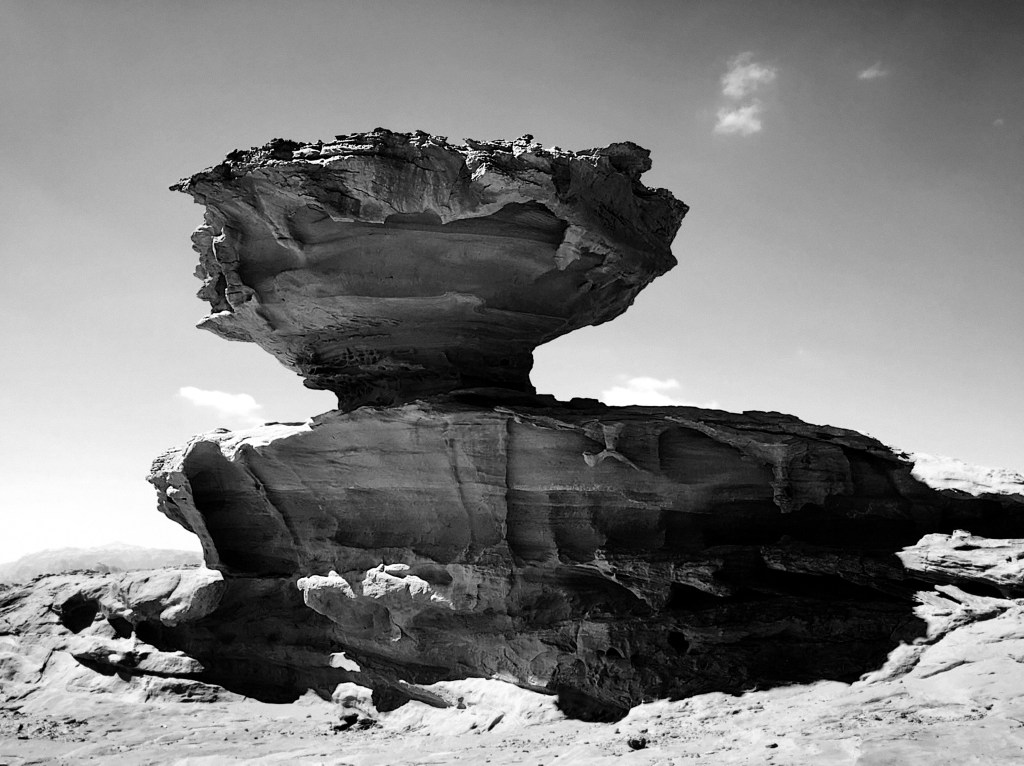
Hiraeth won the Second Place Award in the 2025 Leopold Bloom Prize for Innovative Narration, judged by Michael Nath.
My eyes are closed. I am in my body. My eyes open. It is morning. Early. I am awake. I know where I am, when I am. I am in the cottage in the Welsh countryside. I am in bed. I am facing the wall, lying on my side.
I do not roll over. I cannot move. Behind me, she is sleeping. I cannot see her, but I know she is there. I can feel the warmth of her close to me. I know she is there. I could move closer, but I cannot.
I can see the bedroom wall, the bedside locker. Bare morning light creeps into the room. It is early.
I do not move.
I am in my body; I cannot move my body. She is asleep beside me. I will fall asleep and wake again in an hour’s time when a noise from outside wakes us. We will wake, we will barely wake, roll into each other’s arms and fall back asleep.
I can do nothing. I can say nothing.
Even if I could it could be too late, but if I could, I would speak.
I start to lose this moment and find myself slipping away as I sink back into sleep.
In 2009, Professor Stephen Hawking hosted a party in Cambridge. Sending out invitations after the event, for any future time travellers to attend.
No one comes.
Now it is bright. I stand in front of a tree with seeds in my hand, a moment of minor transgression. We are not meant to feed the birds. Attached to the tree, just above the squirrel feeder, is a notice to not feed the birds. It is late summer, there is plenty of food, but we agree, before going to bed, we will feed the birds.
She’s gone up to bed. As soon as I leave out some seeds I will follow her.
I am taking some seeds from the squirrel feeder. I am doing this when I should be doing more. I’m leaving food for the birds, when I should be dragging her out of the cottage and into the car, driving to the nearest hospital.
She isn’t just unwell. She isn’t experiencing some sort of abdominal issue. She has cancer. she does not know this yet, but she has cancer.
I am leaving out food for the birds because this is what I do in this moment. Behind me in the cottage she is going upstairs to the bedroom.
I try to push against myself. I try to be anything but chained to this moment where all I do is leave out seeds for birds, when the countryside is full of food, when I should be racing to a hospital, insisting they ignore the previous diagnosis and test for cancer instead.
But all do is what I do. All do is feed the birds.
In an extra from the 2010 DVD release of Charlie Chaplin’s The Circus (1928), footage from the premiere outside Mann’s Chinese Theatre in Hollywood shows a woman walking across the frame with a mobile phone held up to her ear.
Proof of time travel, the internet screams.
But any mobile phone in 1928 will have no signal to connect to.
It is brighter still. Sand stretches out before me. I feel the warm sea air against my face. I know where I am without looking up. I’m sitting with my back to the low dune above the high-water mark on the beach. Below me the sand gently slopes to the sea. Behind me, and the dune, the marram grass, and the car park, is the forest park we’ve spent the afternoon in. She’s sitting beside me. I try to turn my head, but I can’t, because I don’t in this moment.
Between my feet I’m screwing the flask down into the sand to stop it toppling over. We will drink from the flask again before we leave, finishing the last of the peppermint tea to accompany the peaches.
She is beside me.
I can’t look at her because I don’t, not yet. I can’t say what I should say because I don’t say what I should say. I can’t say she’s wasting her time worrying about what she’s eating because of some intestinal or digestive issue, it’s worse than that, much worse.
This moment is no better than the last. I need to be earlier than this.
Also in 2010, a photograph from the 1940s circulates online showing a crowd at the reopening of the South Fork Bridge, near Gold Bridge, Canada.
Attracting attention is a man dubbed the Time-Travelling Hipster. Wearing a pair of sunglasses, a printed t-shirt, and carrying something like a modern camera, the man looks very different from the crowd around him.
In fact, the man looks more like a character from La Jetée.
However, those favouring the time travel hypothesis ignore the oblivious reaction of those around him, expressing no surprise at his appearance, because everything the man is wearing is available at that time, from the sunglasses to the camera. Idiosyncratic though the man is in his choice of wardrobe, there is no reason to suspect him.
I’m sitting in a park overlooking a river. It takes me a moment. I have my mobile in my hand. It’s dull and overcast, but dry. In front of me a slow, heavy, barge passes.
I know where I am. Her apartment building is behind me. I’ll leave the park, cross the road, and down the side street to her entrance. When I do she’ll be waving at me from her window on the third floor. I’ll see her and pretend to turn around and walk away, just for a laugh.
I know when I am now. This is far too early.
On my mobile, which I’m putting back in my pocket, is a message from her not to come up just yet. I’m early. She’s not finished cleaning. I say don’t worry, don’t make such a fuss. But she says no, she wants to finish before I come up. It’s my first visit to the new apartment, she’s very houseproud.
I’m too early. I’m too early to see her, and I’m too early to say anything to her.
What could I say, if I could. I try to take the mobile back out. I push. I concentrate. That will be a start. Just break one thing and everything will break. Just do something new and I can tell her.
Tell her what? Tell her what’s going to happen? Yes.
If I convince her, if I scare her enough, and it will scare her, what can they do.
Yes, they can run the tests, yes they can identify the markers for cancer, but what else.
Can they operate now, operate on what, what is there to find now even if they do look?
I push against myself, but nothing changes. Another barge passes upstream, and the drunk at the next bench over gets up and unsteadily leaves the park. Just as they did at the time. Just as they do. Nothing changes.
Imagine time travel, and time travel tourism becoming a thing, just think of the possibilities.
The engineer in the family can see the pyramids being built, the writer, the premiere of Hamlet. The artist can sit in the French countryside observing Van Gogh, the musician, listen to Bach adding the final touches to the cello concertos. For the celebrity fans, see just how beautiful Cleopatra is in the flesh, or meet Granuaile.
As for the historians, the sky’s the limit. Ancient Greece, ancient Rome, the great cultures of the Americas and Asia. In Ireland alone, from Newgrange to the Battle of the Boyne, from the ancient Celts to the GPO. A lifetime of questions answered, all for the cost of a two-week cruise.
This, now, is my earliest chance to do anything. That is, the first time I see her after she tells me she’s been feeling unwell. I ask if she’s seen a doctor, she has. The doctor thinks there may be some abdominal, or digestive, issue. The doctor is wrong.
I’m parking outside the railway station; her train will arrive any moment now, to bring her to the cottage.
I know what happens now.
I’m at the wrong exit. I’ll enter the station just as the train pulls in. I’m at one end of the platform, the passengers disembarking at the other.
There is no whistle, or billowing steam turning everything into shadow. There are no black and white figures, no men in hats and trench coats, no women elegantly dressed, daubing smuts from their eyes.
She’ll be ahead of me; the roaring of the diesel locomotive drowning out any chance I’ll have to call her. I’ll reach her as she’s about to leave the station.
I should put her back on the train. I should find the nearest hospital and take her there immediately.
I should have told her not to come, imploring her to go to a hospital and not leave until she’s been properly examined. I should tell her time is of the essence and there isn’t enough to be spending it with me, but even if I could, it may already be too late.
I’ll catch up with her, I’ll take her bag, and we’ll walk back, passing the train, now thankfully quiet, to the car park, because this is what we do.
I’m already stepping out of the car, as I always do in this moment.
But face it, you’ll go watch dinosaurs.
Set everything else aside. Put away the history books.
You’ll go watch dinosaurs.
I need to open my eyes.
I know where I am. The second I become aware; I know where I am. I know where I am and when. It is the morning I leave the cottage. I have to get home; to get back to work. She will stay on for another day. She’s already set herself up with a little office, her laptop and papers, at the little table in the porch.
We sit together on the little sofa. We sit together wrapped around each other. This is not a goodbye. This is not a final parting. It is, but neither of us knows it. This is her sitting with her legs across my lap. This is my arms around her and her arms around me. This is my cheek to her cheek. This is me kissing her face in the silence of the cottage. This is me sitting with my eyes closed. She is too close for me to see. Sight means nothing at such distances. This is about touch.
I say nothing, she says nothing either. But I say nothing.
I try to break from this moment. I try to open my eyes. I try to open my mouth. I try to shout.
If I cannot break out of this now, here, touching her, actually touching her. If I cannot find the strength to break out of this moment now it will be too late. It may already be too late.
This is us alone together in the cottage for one final moment before I have to leave.
But we are not alone.
The cancer sits here too, like an unwanted child.
But how long before it all turns into its own atrocity exhibition? For everyone in Shakespeare’s Globe, how many more trail Cromwell around Ireland. For everyone watching the construction of the Taj Mahal, how many prefer the Jallianwala Bagh massacre. From the lives in Machu Pichu, the arrival of the Conquistadors. From the founding fathers of the United States, the slave plantations. How many squeeze into The Cavern to watch The Beatles, compared to the throng in Dealey Plaza. The Titanic slipping beneath the ocean, the charnel house of The Somme, getting the best seats to watch the approaching jets on September 11th. And the death camps, the death camps, how many spend their trip recording as the trains are unloaded, and the terrified are led to destruction, as easily as piling off a coach to take photographs at a local point of interest before being whisked away to another.
No, this is no good. This is such a nothing moment. I am in the cottage, but at this moment, I am packing the bag before we leave for the forest park. This is no good.
We have a flask of peppermint tea; we have some peaches. It will be a bit of a hike to the beach.
She’s upstairs, she may be in the bathroom, at this moment she’s increasingly self-conscious about the number of times she needs the bathroom. But she says she’s feeling fine.
I know she’s not. I know we shouldn’t be here.
I try to speak. I try to drop one of the peaches. If I could start with an unconscious action, fail to hold a peach properly, I could break it. If I can break it I can say something. If I can say something I can do something. If I can do something I can get her in the car and get her to a hospital. I know how much time is left. I know it may not be enough, even now. But I know the chances are better than leaving it until later.
I hear her moving about upstairs. Why this moment. Why not one when she’s beside me. Why not one when I might be able to see her, that could make breaking this easier.
I hear footsteps approaching the top of the stairs.
I hear a voice, my voice, ‘I have everything if you’re ready to go.’
These aren’t the words I need to say. These are the words I say. I can’t even manage a slight inflection, a stutter or hesitation. I say the words as I said them.
I can’t get out of this.
Ultimately you can’t interfere. Commonly called The Grandfather Paradox, the idea is that if you travel into the past you can’t change anything (you cannot travel into the past to kill your own grandfather, because you would then not have existed to travel into the past to kill your own grandfather). You cannot stop September 11th; you cannot kill Hitler. You cannot change the tide of a battle, or save people from Vesuvius.
Nor can you travel back before human history on a dinosaur safari. To accidentally step on an insect, to break the stem of a plant. Any action, no matter how inconsequential it might seem, and you return to a world without cormorants, or blue whales, or humans…
All you can do is watch.
I am alone. I am in my car. I am alone in my car parked on a quay in Dublin. It is raining. I do not know when this is. I have her purse in my hand. I know when I am now. What use is this moment, why can’t I do anything, why can’t I change anything?
The hotel is around the corner. The hotel we checked out of this morning. I’ve just returned from dropping her to the airport. Pulling up at Departures she realises she’s forgotten her purse. I say I’ll collect it. She has everything she needs to travel, passport, money, her keys to get in when she gets home. But other cards, work ID etc., she’ll need them all later.
The purse is waiting for me at the reception desk.
I remember this now.
But this is too far back.
I still can’t see her. I still can’t get to a moment with her. I still can’t say or do anything but what I said or did.
I pick up my phone from between the seats. I unlock it and prepare to ring her. I may not be able to control this much longer. I select messages. NO. I select her name. NO. I text,
I have your purse. I’ll stick it in the post.
NO. I try to move my fingers. I have the phone open in front of me. There is nothing to distract or interrupt me. I know this moment. I am alone in my car, and I can message her. But I cannot. I am alone in my car, and it is starting to rain, and I have her purse and I can just type a message to tell her, to tell her something, to tell her to ring me urgently when she lands. I know this doesn’t happen, but if I can make it happen I can break this.
But I close my phone. I cannot.
But would you care, would you care about the paradoxes, or consequences? Forget the dinosaurs, or the great moments. Forget Shakespeare, Cleopatra and all the others.
To relive a moment from your own life. To experience a happy memory once again. To see the face of someone you lost.
To stop them dying, what would you do?
To hell with the consequences, the paradoxes or the universe tearing itself apart because of your actions.
To see them alive again…
NO. Time is running out. I’m in my car, in the queue to board the ferry. In the queue to board the ferry to go home. Which means I just left her half an hour ago. NO. Which means I was just talking to her. NO. Which means she’s having a cup of tea. Which means it’s late. Which means she’s feeling a little unwell, as she has been, but in a few days she’ll start to feel worse. Which means by the end of next week she’ll be feeling even worse and call an ambulance. Which means she’ll be admitted to hospital, and she’ll never leave. Which means in a little over three weeks she’ll be dead. NO.
Which means I’ve seen her for the last time. NO. Which means I see her one more time, when I’m collecting her laundry in the hospital, and she comes down from her ward because they lose it. She comes down from her ward, a wheelchair for a walking frame because she’s so weak. And I see her, and I don’t recognise her at first because the cancer has taken so much from her so quickly. And when she turns to walk slowly back up to the ward and I’m at the security desk because visitors aren’t allowed any further, and I’m promising I’ll track down her laundry and make sure it’s all washed and dried and returned to her tomorrow, and all I’m thinking is she shouldn’t be out of bed, but I never see her again, because the day after they move her to the ICU, and a few days after that she dies. I never see her again.
NO. Now. Here. Here I’m in my car. Half an hour away I could be collecting her and telling her to grab her bag and driving to a hospital and insisting they do more tests because the fucking doctor who thought it was a fucking intestinal issue was fucking wrong and I could stand there roaring that they have to do the proper tests because it isn’t an intestinal issue, it isn’t fucking IBS. It’s fucking cancer.
But I don’t. I don’t because I can’t. I don’t because all I do is what I do. All I do is message her to say I’m at the ferry with plenty of time to spare. And she responds, saying let me know when you get home, saying talk to you soon.
And I am here by myself in my car in the afternoon sunshine, with nothing to do but wait. But time has almost run out.
I scream. I say nothing. Nothing comes out of my mouth. I do nothing. I SCREAM.
In a world where time travel exists, it can only exist in certain, very defined, circumstances. The universe cannot tolerate the ramifications or paradoxes arising from package tours traipsing around Jurassic landscapes, or idling in Dealey Plaza, or outside the GPO.
For time travel to work, it can only work on an individual level. The only past you can observe is your own. The only way you can travel is as a consciousness, travelling back into your own body at a specific moment in your own past.
You can relive your greatest joys, but only as you saw them then.
You can relive your greatest heartbreaks, but only as they unfolded at the time. You can change NOTHING.
Time travel can only exist as a means of assuaging your own fears of forgetting, of augmenting your own memory. That is all.
Not this moment. This is too late. No. Why here? Something has gone wrong. I don’t understand this. Something has gone wrong. I’m in the wrong moment. I’m too late.
I’m at home, alone. It could be that day. It could be the day after. It could be any number of days after. I’m at home, alone.
She’s dead.
I’ve possibly just found out, though I knew it was coming. I sit alone. I sit alone, at home, in the same chair I sat in waiting for her to message me. In the same chair I sat in waiting to hear her tell me how she was, how she was feeling, what was happening. I sit in the same chair hoping she would message me. Asking me to bring her in some fruit purees because she can’t eat the hospital food. Asking me to bring her in a pair of slippers because she wants to try to move about. Asking me to bring her in some sports bras that zip up the front because she has difficulty putting underwear on. Asking me to bring in lozenges for her dry mouth. Asking me to do some laundry for her. Asking me little things because little things are all I can do. Little things are all I can do on the outside because visitors aren’t allowed, and I can’t bring her flowers or a bunch of grapes like a cliché, the best I can do is a card that folds out into an imitation bunch of flowers, and I wish her well because words are falling apart. Because words are losing all meaning all I can say are rubbish little things that say nothing. because she’s ill. Because she isn’t getting better. Because it’s cancer and it gets worse. Because she dies.
First broadcast on the BBC in 2008, in an episode of the Horizon documentary series called, Do You Know What Time It Is?, Professor Brian Cox explained that one possible postulation of Einstein’s Theories of Relativity, and the discovery of space-time, is that, as time is simply another dimension, all time that has, does, or will exist, has always existed. That what we perceive as the passing of time, is in fact our own progression along an existing dimension.
If we think of our lives as a journey along a path, the path we walk on now, the path behind us, and the path in front of us already exists, all that changes is our progress along that path. Like the path, each moment of our lives has, does, and will, always exist.
As H.G. Wells put it in The Time Machine (1895),
‘There is no difference between time and any of the three dimensions of Space except that our consciousness moves along it.’
Maybe that’s as good as it gets.
All those moments we cherish or regret still exist, we can no longer experience them outside of our memories, but they exist, and are as real as these words before you.
There may be no heavenly choir, no clouds or wings, but every moment that matters, every smile, every touch, every kiss, exists, has always existed, and will exist forever.
Maybe that’s as good as it gets.
Colm O’Shea is the author of [Untitled]: A Meditation, a work of experimental nonfiction (LJMcD Communications 2024). His short fiction has appeared in gorse, Winter Papers, The Stinging Fly, Vigilantia (Chroma Editions), Sublunary Editions (Firmament), The Aleph, and 3AM Magazine, among others, and has been broadcast on RTE Radio. An essay was also published in The Tangerine. He was one of the inaugural winners of the Irish Writers’ Centre Novel Fair competition in 2012. He won The Aleph Writing Prize 2019.
Photo Credit: Elise Racine is a creator, scholar, and activist based in Washington, DC, whose multidisciplinary practice spans photography, digital art, collage, mixed media, and poetry. Her cross-media investigations delve into the intricate relationships between humanity, technology, and both natural and constructed environments. In doing so, they delve into themes of power, representation, visibility, memory, identity, knowledge, repetition, and ritual. She has exhibited/published her work in the United States and internationally, most recently in “The Bigger Picture” (Beta Festival 2024 and MTU Gallery, Ireland), “Unearthing” (Sims Contemporary, New York City), and Superpresent’s Winter 2025 Issue on Secrets and Mysteries. Upcoming shows include “Digital Directions 2024” at the Maryland Federation of Art’s Circle Gallery and “Figures 2025” at the CICA Museum (South Korea).
 L'Esprit Literary Review
2 responses to “Hiraeth”
The sadness of this story pokes through the clouds of his past experiences with his wife’s cancer. I feel the pain of his experience, his love of his wife, and the utter despair. The use of time travel highlights our past regrets that linger in the mist.
Neil Weiner
nweiner@usa.net
LikeLike
[…] Hiraeth […]
LikeLike