L’Esprit Literary Review Issue Seven Featured Writer
Short Fiction
Verschollen
I left the man at Alexanderplatz for a different man who said we should drink some Marillenschnaps and forget who we were. But his mention of the apricot brandy brought to mind a terrible autumn in Wachau some years before, and I had not gotten over that time with V, who I presumed was now dead. V was a Polish academic in Poznan. He had taught aesthetics and lectured on Chwistek and Tatarkiewicz, though he secretly despised both. I had translated some of his poetry for a magazine in West Berlin, as it was. And V wrote to me after he read my translations and offered several points of correction. I didn’t write him back. It came as a surprise, then, when a second letter arrived. V explained that he had a philosopher-friend who said his summer house in the Wachau countryside would be free. V was desperate for an urlop, a break from his students and their complaints about the brusque nature of his seminars. There would be wine, he gushed, and good food. In one passage, in his poor German, he repeated the phrase about everything being Platonic. No touching. No sex. No romance of the mind or body. Disappointed at his insistence, I agreed to meet him there anyway, and I took leave from the library a few weeks later. We met at the train station in Spitz. V was older than I had assumed. Sixty, at least. Yet I found his grayish skin and portly belly somewhat attractive and fatherlike, and I laughed to myself about my love of Freud, though his theories of the unconscious mind were all nonsense. V spoke of my felt hat and the brain that it kept warm. It must have overheated, I said, when I translated your poems. V tapped the brim of my hat, and we shared one of his Popularne cigarettes as we waited for a taxicab. A particularly sullen driver sped us through the valley, past idyllic hamlets and terraced vineyards, and dropped us at the end of a dirt road. The summer house was closer to a wooden shack, yet it bore a view over the Danube and for that I was glad I had come. We downed three bottles of Grüner Veltliner that first night and talked in an uncalibrated mess of German, Polish, and English. There was much for us to say about Communism and Solidarity and the future of Poland, the Polska Rzeczpospolita Ludowa, as it was then. V was despondent, unable to think past the iron grip of Jaruzelski, and so I talked about life in West Germany and how such a life, such an existence, would soon be his. V’s face brightened, and he suggested we share the house’s only bed, which we did, Platonic meaning nothing and everything at the same time. When we had finished, V held me, our bodies attuned, and I could smell a forest mushroom odor under his arms, which I went back to many times over the night. At some point in the early hours, I woke to the earthy sounds of his sleeping body. His chest rose and fell with the temperament of an old man, which I found oddly comforting. I looked around the bedroom, which was attached to the redbrick kitchenette and small living room, and lost myself for a moment in the illusion of married life: A pair of agricultural peasants, sometime in the Middle Ages, making do with the surrounding verdant land. When V awoke, he barely acknowledged me, and he staggered to the toilet to urinate. I noticed quite quickly that his mood improved after eating, and so I shopped early each morning at the little grocery store and fed V until he would talk to me. Our circadian rhythms fell into the same pattern, and for the next few days V and I swam naked in a shallow bend of the Danube and sunbathed on a river beach, then we ate rustic lunches of soft cheeses and rye bread and smoked meats. In the afternoons, I rambled through the vineyards by myself as V worked on a book—something to do with the aesthetics of the countryside. The nights were always us sitting under the front awning of the summer house and discussing the inconsistencies of North American psychoanalytic theories and sipping from our large glasses of Marillenschnaps. I was surprised that V was so well-versed in this area, particularly in the work of Ralph Greenson. V’s voice fell, almost to a whisper, as he explained that he was actually interested in one of Greenson’s clients: Marilyn Monroe. I laughed, and he went silent. Then he drank some more and moved on to Rilke’s letters, remarking upon the necessary desire to write poetry, a divine calling in itself, and the elevation of poetry above all else. We would talk about such things for hours, and not our own lives, until the mosquitoes forced us inside and we played cards and then collapsed together in bed, our limbs interlaced Platonically once again. And this is how it went for a while. I found a sense of inner peace in our life there, a simplicity of basic human need—such a thing I did not possess in West Berlin. I could not imagine living again in the city, amid the dirt and the people and looking out onto the Wall and to the men I knew who had been deported back to the other side. For who was I aside for a lover of men? A lover of books, perhaps, though the weight of so many in the library had left me exhausted and dimmed my own literary aspirations. And so it came about that one night, instead of cards, V drew out a copy of the poetry magazine and prodded words on the page. Something akin to a trove of errors and mistranslations. I argued back in Polish, which he dismissed, so I kissed him. V leaned away and declared that he was not a poet and that I should read nothing else of his. He lit one of his Popularnes and closed his eyes to smoke it. I went outside and walked through the vineyards to the Danube, drawing in the expanse of dark water, an end to my thoughts. I dove in but the water was cold and rejuvenating and I floated down the river a little way, staring at the night sky. Then I swam back to the beach and headed up the embankment. At the summer house, V was asleep in bed. I stripped off my wet clothes then sat at the kitchen table, a blanket over my shoulders. I smoked the rest of his cigarettes while I watched the heavy rise and fall of his chest. Perhaps I wished, then and now, that V had been a kinder man, open to the vicissitudes of my thoughts. But I said nothing, for what could I say to a lifelong bachelor? He left before light, and I woke to the absence of him. This man, philosopher, lover. Gone from my life and any type of future we may have shared. Perhaps that is why, all these years later, I went with the different man to the café-bar and sunk many shots of Marillenschnaps and whispered to the different man very late at night that I did not know who I was anymore.
First published in the Oxford Review of Books.
Acousmatique
Alina, stop lying about the buzzing in your eardrums. When you said that you couldn’t hear me on your phone, I didn’t think you would make up an ear infection, or spider eggs hatching inside pockets of ear wax, or the early symptoms of acoustic neuroma. Your excuses for avoiding a conversation about our future, for seeing each other once again, for making our sounds, are all too transparent. I saw you with Luis, or Jake did, or his friend Simon. There’s a picture on a cellphone, of you and Luis in a Stumptown vestibule. He has his hands tucked into your back pockets, groping your denimed ass. At least this is what Jake says, in his text, transposing the words of Simon. And who knows if this is what exactly transpired, but I don’t know because you won’t talk to me anymore. Before you cut me off, you said you loved the sound of my accent, the softness of a Savannah drawl up here in the city, a voice that you first caught while you walked the High Line. “Where you from?” you said, eyeing my Basquiat T-shirt. I told you Crown Heights, but you wanted to know my origin story, where I attended school, which of my art professors I’d fucked. Then you asked if I had any upcoming shows. I explained that I gave up making physical art years ago, and that NFT bullshit wasn’t for me. I leaned over the barrier and stared at the traffic below, and then I made you do the same. “I make sonic densities,” I said. I held out my recorder. You seemed concerned about the cheap device. “It’s about the distortions,” I continued. “The imperfections of the ear canal. We never hear everything.” You said you got it. You mentioned Tzara and Kostelanetz and other poets you had learned outside of your MFA program. I laughed and said I would show you. We ubered to Crown Heights and stopped at a bodega for some smokes and a sixer of White Claw. In my studio, you drank and smoked through one of my pieces, bemused by the rattle and crank of the mall escalator I’d recorded and then slowed down. “It just sounds like background noise,” you said. I voiced the idea of post-cochlear art, the rethinking of sonance and its constituent parts. You laughed, called me John Cage, then realized that I was serious. We lay on the concrete floor to feel the vibrations, and I played the piece again, your hand on my chest. You sent someone a text before we fucked, I recall that. A vicious swipe of your finger. Maybe that was directed toward Luis, or a pre-Luis, a Ben, a Noah, a Jesse—it’s hard to keep track of all the men you know. They must remember you, though: the grinding fuck, the shouts for more, the primal grunts, the love of Jesus, or at least his name. My studio became site-specific. You’d listen to my latest ambient capture and then we’d fuck hard on the concrete. Until you didn’t want to anymore. I assumed you were sick or busy with your poetry. But Jake, via Simon, said you had dismissed me as a sad loner with a SoundCloud account, that when we had dated you needed to be in a K-hole just to tolerate me. Alina, you spent all your time at my studio unwriting the poems about your father. Sometimes you talked to me about the issues that you were having with him, that the two of you couldn’t communicate. And perhaps this is what it’s all about, the meaningless noises we utter just outside of ourselves, and the soundwaves not coming back.
First published in Banshee.
Christopher Linforth is the author of four story collections, including the forthcoming Very Short Lives (JackLeg Press, 2027) and Directory (Indirect Books, 2027), and the award-winning The Distortions (Orison Books, 2022).
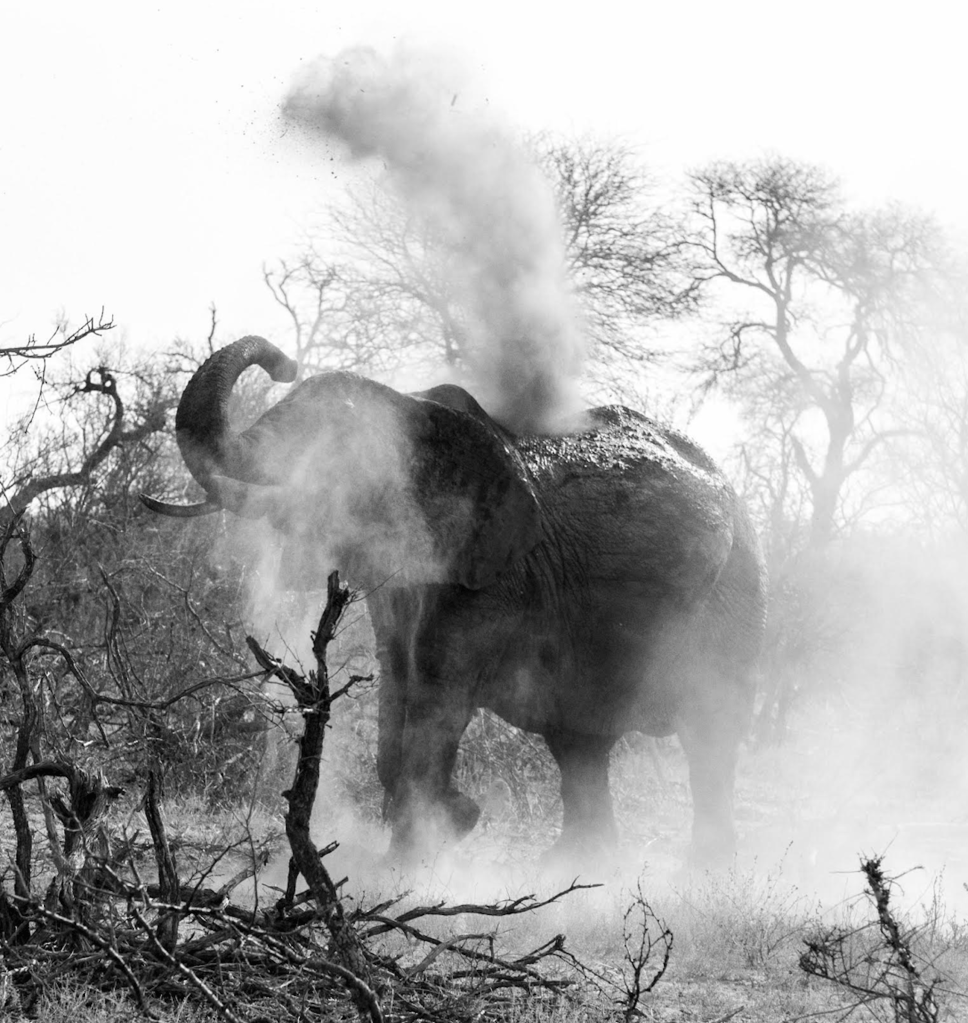
Photo Credit: Peter Carellilni is a filmmaker, writer, photographer, and SAG actor based in NYC, whose work has been featured in publications such as Travel + Leisure, Bruxelles Art Vue, Mythos Magazine, and Kelp Journal. He is currently a Pushcart Prize nominee for 2026.
 L'Esprit Literary Review