M. Allen Cunningham
Short Fiction
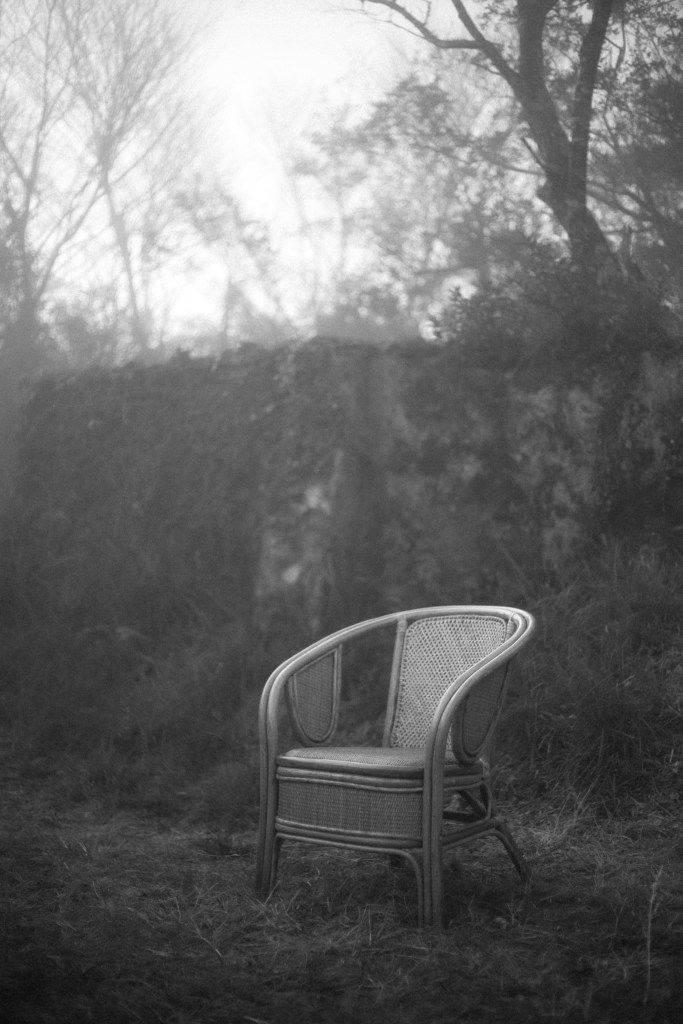
Lionheart won First Place in the 2025 Clarissa Dalloway Prize Prize for Short Prose, judged by Diane Josefowicz.
Diane’s citation:
“Lionheart” dazzled me from the outset for its ingenious premise, a biographical investigation of Virginia Woolf as glimpsed through the point of view of her husband, Leonard, a person nearly lost to history, overshadowed by his wife’s fame; but who was himself a towering figure, a prolific writer and indefatigable editor, who also, of course, ran Hogarth Press with Virginia. “Lionheart” offers a picture of the man and of the marriage, tenderly exploring even the places where he could not follow her. Formally the piece is a slam-dunk: the hybrid form, mingling poetry, fiction, found fragments, and essay, is a beautifully capacious container for what is, in the end, an epic love story, worthy of its brilliant principals.
What I want now to do is to saturate every atom, wrote Virginia Woolf in her diary.
I mean to eliminate all waste deadness superfluity
Waste
deadness
come from
the inclusion
of things
that don’t belong
to the moment 28 Nov 1928

Imagine: Leonard Woolf wakes in a swirl of birdsong at Asheham.
(1915) (is it?)
Remember the little brown sparrow in the garden calling all day for its mate from a perch atop V’s writing lodge —
and it could not know that Leonard had buried the mate the night before
But we’ve taken matters in hand, thinks Leonard Woolf waking now
Yes, he’s taken the matter in hand — and the matter now is the wellbeing of his own mind despite the strains and terrors in Richmond: V’s ongoing madness.
He must keep his head about him (if only for her sake) so he’s come down here to rest, to recuperate at Asheham.
And he’s had tumultuous dreams: tortuous dreams which now, while waking, he can’t quite reconstruct (but there’s a soldier in the garden)
He’d found the mate the night before: a small pottage of feather and bone at the lip of the fishpond, its eyes eaten out — and he’d buried it under the gingko biloba.
In his ears the singing.
It is haunted, this Asheham house. That they’ve known all along and everyone who sets foot inside takes it for a matter of fact.
But birdsong envelops the house every morning and so he wakes to birdsong now —
a brightness in his eyes that riotous swirl in his ears
Everyone who steps inside takes it as a matter of fact, this haunting
doors and shutters shifting even in absence of wind —
he hears some shutting now even while waking —
the house alive and pulsing the house a beating heart
and the figures that materialize and lean over the bed as you sleep: they’re seeking
a treasure left behind a treasure they’ve forgotten or lost —
V wrote it into a story:
“Sound asleep” “love upon their lips” Stooping, holding their silver lamp above us, long they look and deeply Long they pause Wild beams of moonlight cross both floor and wall and, meeting, stain the faces bent the faces pondering the faces that search the sleepers and seek their hidden joy “Here we left our treasure—” Stooping, their light lifts the lids upon my eyes …
Leonard Woolf opens his eyes again.
The wind made those shutting noises surely
but so often there seemed no wind at all
(but no he doesn’t live at Asheham anymore)
(and V is away)
(and the year?)
A wind seemed to hum through the cavernous crematorium in Brighton.
(after 1940) (that’s it)
Leonard Woolf alone paced the reverberant halls in the crematorium.
A stony place all concrete no paint no color no whitewash
just the gray and the gray and the gray
the flint and granite
the heat the furnace
but somehow too the soft whistling of wind now brings him back
to his sultry house in Jaffna, aswarm with flies, ascutter with
cockroaches, with small lizards thronging all the lamps
and broad fans turned overhead in relentless heat
and outside was the buzz and roar of jungle Ceylon …
He’d survived his Ceylon years — seven years: the functionary’s labors, the tedium.
All the visions are now dreamlike (is he dreaming?)
the half-swallowed tortoise bulging in a crocodile’s throat
and the hanged men turning in the air
and the jackal dancing over moonlit carcasses in the jungle
and in the villages the natives come down from the hills in rags,
their limbs inflamed with pustules
He’d survived the Ceylon years — oppressive heat, frequent illness:
vomiting in a swamp vomiting into his sheets vomiting from a saddle in the swelter vomiting into a washbasin while a green lizard watched him from the wall
And for years V also survived survived her madness came out of her madness again and again
And they had the press …
Leonard Woolf waking now to the scuffle and chitter of birds the hum of wind
begins to recall what year it is (after 1940)
Yes it is after 1940 and the war is underway (and there’s a soldier in the garden)
He begins to recall his circumstances (he’s back in Bloomsbury) (but Bloomsbury is bombed) (Bombs bury) (has there been another blast?) (a blow to his head)
(is he flat on his back?) (is he on the ground?) (that brightness in his eyes — is it sun?) (the blinding shimmer of the blast?)
But he’s seeing a picture yes like a picture he sees their first days as printers: he and V and their joyful absorption in the dining room — Hogarth House — the dining room outside the city — in Richmond it was they sorted the type into trays, they set the type on the stick, they locked the type in the frame and inked the plates and pulled every page by hand (following the little manual) (teaching themselves) (learning on their own) their fingers blacked and the table runner stained — they were taking matters in hand by god their hands absorbed the skill they’d relieve V’s teeming brain in the intervals the intervals of her writing (but his own hands shook too much to set the type) (so he watched her to learn the process) (V seemed a natural) and they would bring out her work themselves her books they could do her books on this little press wait not wait not to hear from the world wait not to be heeded wait not to work no none need acknowledge
and V thrived for a long time after, V thrived V worked V in her writing lodge her papers about her and her bottles of green ink and the trances she underwent in that garden room Monk’s House garden that room a portal to the palace of her consciousness V lionhearted at work in her room

Leonard Woolf lies blinking waking up
His mind is trying to gather the birdsong gather the wind and put these in their places.
Those are sparrows they are fluttering overhead and singing
Are they inside? Are they outside? Is he in a bed or upon the ground?
what’s this blow to the head?
And what was that life with V? they lived it together …
yes even when their roof was torn away
now he remembers how they came up from Sussex to salvage what they could driving through Bombsbury the bombed streets when the Blitz was new a terrible dream they might just be dreaming Bombs bury
Bloomsbury and
Mecklenburgh
then combing the wreck of Mecklenburgh for hours
Wrecklenburgh
then driving their Singer home to …
to Sussex to Monk’s House and carrying stacks of V’s diaries in the boot
in their boots? no boot of the car
(and now V is away)
(no)
(gone)
(she is gone)

From a swirl of birdsong and brightness Leonard Woolf on his back awakens.
No glass and all the windows boarded: broken ceilings and the sparrows coming in to flutter on rafters overhead singing
Still some light sneaks through the rafters where birds scuttle
scuttle and
sing
each one a singer
the Singer: they drove the Singer through Germany (1935) a Jew and his English wife at large in the Nazi heartland were they both mad?
They were headed for Rome (to visit Nessa who was summering there) but Leonard had heard Hitler on a broadcast from Nuremberg and wanted to see for himself the conditions in Germany No one discouraged him He shared his plans with a few London diplomats Avoid Nazi parades or rallies was all they said, you’ll do fine An associate secured him a signed letter from Prince Bismarck’s London embassy: All German officials are to show the distinguished Englishman Leonard Woolf and his distinguished wife Virginia Woolf every courtesy…
so they went unafraid feckless and their talisman in the end was Mitz least likely of all — Mitz their pet marmoset no larger than a squirrel
Mitz traveled atop their luggage in the Singer’s back seat, or sometimes on Leonard’s shoulder as he drove and the German border guard was so smitten with Mitz that Bismarck’s letter was irrelevant so they drove ahead from Holland
soon traveled through towns festooned with swastikas streets plastered with huge notices — Die Juden sind hier unwunscht up a deserted Autobahn manned every twenty yards with Nazi gunners And then outside Bonn the Singer came into the dead center of a Nazi parade and they were motoring slow through roaring crowds the crowds heiled Hitler and waved blood-red flags in Leonard’s face He steeled himself, gripping the wheel but again Mitz drew the attention — soon Nazis young and old were pointing and fawning by the thousands so the unmolested foreigners motored along

Leonard Woolf is awake at number 37 Mecklenburgh Square (that’s it)
He’s living in the wreck alone and Virginia is gone
And already today though he’s only just awakened he’s retelling himself their story their improbable story Hello Darling oh but my Mandrill, Mandy, you are gone and still this war is raging and I lie on my back in the hollow of this German bomb-wreck our onetime London home now a shell for bird shit and wind
That was the blow to the head: losing her
losing V
a blow to the heart
For weeks and months it numbed him this numbing fate inescapable
(has he yet regained sensation?)
(he checks himself)
(still no saying)
(In the Jewish tradition the mourner is regarded
as a temporarily marginal figure, almost as
a pariah, because the blow that he has sustained
exempts him from full and responsible participation
in society. He is too hurt to focus. His mind is dimmed
by his anguish. He awaits the restoration of stability.
-Leon Wieseltier )

Time and rest, the doctors always said
Their one refrain: time and rest
And medicines had some effect some of them sometimes
Chloral, for one, V did not mind even at her worst, she never fought the Chloral — or so the nurses told him and V, lucid, once described Chloral for him (or did she write of it?) the white liquid with a sweet taste, she called it, and: a mighty Prince with moth’s eyes and feathered feet.
Hard to bear the memories of V at her lowest
Leonard’s immense and brilliant Mandy.
These days still stunned, still numbed he sorts through her diaries
leafing through their life together this narrative lately closed
Home again, V writes in 1935, as they come back to Monk’s House from their strange journey through the convulsive heart of Europe & how queer as we drove up there was Pinka’s basket & she had died yesterday: her body was in the basket. Just as we were saying that we would see her in a moment.
He’d forgotten that Poor Pinka Sweet spaniel Pinka: their gift from Vita several years before.
At first Leonard had not wanted Pinka unnerved as he was by V’s liaison with Vita — fearing its toll on V’s mind and emotions
But soon Pinka became (for him and V equally) deeply important
They shared and treasured her and he found in Pinka (atheist though he was) something almost godly
About Vita and V (their friendship, their intimacy, their interludes alone at Long Barn, or at Monk’s House while he was away in London, or during the seven days they spent together in Burgundy) Leonard never sought to learn more
Vita and V were a fact
and he knew the nature of the fact
and that was enough
but this fact brought new worries about V’s wellbeing: her mind her emotions
When V was away with Vita he longed for her presence and wrote her lonely letters
and also he knew the nature of the fact and also he wanted happiness for her
and also he never doubted her love for him
He and V had fashioned their own life together, shaping from their circumstances a love that fit this life. And maybe Leonard starved sometimes, but V never deprived him.
And V also had her hungers and Leonard knew how to nourish her.
Together they were tender and generous, and Vita did not (could not) change this.
He knew V and she knew him as deeply and secretly as any married pair.
Sex was a matter they’d comfortably settled (and accepted it would never be solved)

We walked home from Lewes across the marsh, writes V on 10 October 1940,
How free, how peaceful we are. No one coming. No servant. Dine when we like. Living near to the bone. I think we’ve mastered life rather competently.
By then the raids had started and they would watch the planes from the Monk’s House garden planes roaring in circles over the Downs planes sawing toward London planes booming and gunning planes swerving down in the fields and then a slamming splash of dark smoke …
If it were not treasonable to say so, writes V two days later, a day like this is almost too — I won’t say happy: but amenable. I want to look back on these war years as years of positive something or other. L gathering apples. …
On 17 October she writes:
A perfect day … A red rotten apple lying in the grass; butterfly on it, beyond a soft blue warm colored down and field.
Later that month after the first bombs hit Bloomsbury — after 52 Tavistock Square is destroyed and Mecklenburgh wrecked, she writes: The vast ideas that float are never caught.

He was searching, of course — Leonard Woolf realized it — he was searching for clues of some kind.
What language ran in her mind in the final months? what line of logic did she follow to her death? what words shaped her sense of finality?
And now he remembered, through some dim chain of distant association, the old piyyut, the recitation known as Unetaneh Tokef, which Jews are called to speak on Yom Kippur, on Rosh Hashanah.
On Rosh Hashanah it is inscribed
and on Yom Kippur it is sealed:
how many shall pass away
and how many shall be born,
who shall live and who shall die,
who in good time, and who
by an untimely death,
who by water and who by fire …
who by water who by water

In her diary on 3 November she writes of the river (long a favorite subject)
Yesterday the river burst its banks. The marsh is now a sea with gulls on it.
It comes over in a cascade: the sea is unfathomable.
He’d forgotten this: the Ouse in flood that year, its embankments bombed and how the rising water seemed to make an island of their house and garden.
Two days later she writes:
The haystack in the floods is of such incredible beauty. When I look up I see all the marsh water. In the sun deep blue, gulls caraway seeds: snowberries: atlantic flier: yellow islands: leafless trees: red cottage roofs.
Oh may the flood last forever.
Those words fell hard and sank in Leonard’s heart.
Oh may the flood last forever.

Leonard leafed back a month or so:
Behind me the apples are red in the trees. L. is gathering them. The elm tree sprinkling its little leaves against the sky. Why try again to make the familiar catalogue, from which something escapes. (2 Oct 1940)
A bomb dropped so close I cursed L. for slamming the window. (29 Sept 1940)
The river high; all softly blue & milky: autumn quiet — 12 planes in perfect order, back from the fight, pass overhead. (21 Sept 1940)
Raids over Brighton this afternoon. Hornets (our own) swarmed over my head on the marsh. Sheep frightened. (15 Sept 1940)
And here was a soldier in the garden (17 September).
We found a young soldier in the garden last night. “Can I speak to Mr. Woolf?” I thought it meant billeting for certain. No. Could we lend a typewriter? Officer on hill had gone & taken his. So we produced my portable. Then he said: “Pardon Sir. Do you play chess?” He plays chess with passion. So we asked him to tea on Saturday to play. He is with the anti aircraft searchlight on the hill. Finds it dull. Cant get a bath. A straight good natured young man. “Sorry to break into your private life” he said.

Fully awake now, his mind turning, Leonard Woolf sits up at the edge of his narrow bed in the Mecklenburgh wreck.
His socked feet drop to the floor: grime and dust and tiny pebbles of debris that the birds swat down from the rafters every day.
Beyond the broken wall he can hear water running down the stairwell.
That soldier: another thing he had forgotten Sheppard, he was called (Leonard is almost certain) Yes, Ken Sheppard.
He came back for tea a few days later and they played their promised game of chess
(it carried Leonard’s thoughts back to the colonial Fort in Jaffna Jaffna where, some evenings, he would sit on an old Dutch veranda with a civil service colleague and a chessboard the sea sounding just beyond view Then as now, his hand tremored as he shifted his pawns)
Sheppard brought back V’s portable some time after that.
The water is running down the steps
Leonard Woolf needs to light a lamp the windows all boarded the daylight meager
It is 1942 and V is ashes ashes Leonard buried the ashes under the elm at the edge of the Monk’s House lawn, the tall elm they’d named Virginia, standing beside the one they named Leonard.
(Often down here, she wrote of Monk’s House, I have entered into a sanctuary; a nunnery; had a religious retreat; of great agony once; and always some terror)
that blow to the head and heart
and V in the river
(always some terror: so afraid one is of loneliness: of seeing to the bottom of the vessel)
he’d wandered the drafty gray corridors of the Brighton crematorium alone
a man stunned a man numb from a blow to the head to the heart
(seeing to the bottom of the vessel. That is one of the experiences I have had here in some Augusts; and got then to a consciousness of what I call ‘reality’: a thing I see before me; something abstract; but residing in the downs or sky; beside which nothing matters)
V’s bedroom sat apart behind its wall, the single door opened only to the garden.
She would keep a bell beside her bed as she slept.
She knew he would answer if she rang and so often he’d done just that.
In all their years he had answered (how many times?)
(beside which nothing matters; in which I shall rest and continue to exist. Reality I call it. And I fancy sometimes this is the most necessary thing to me: that which I seek.)
and her footfalls lifted flickers from the grass
the marsh the mud and stones in her coat
the birds would float if air alone would hold them
a great hand must fling them to get them started
she thought to fling her walking stick
but paused instead to plant it in the mudbank: a flag, a marker …
What was this life? this unabashed light their days interlocked and passing
and always he came when she called
V, lionhearted in waking and sleep
the water is thickening on the stairs flowing louder now
and the birds cacophonous are circling above the rafters
always always he came when she called
the narrow river received her, awkward in her clothes, the weighted pockets pulling
(she’d turned back the week before) (she’d arrived home dripping to tell Leonard she’d fallen in a great puddle)
To Nessa she’d written: I’m certain now that I am going mad again.
It is just as it was the first time I am always hearing voices and I know I shant get over it now
She’d finished her new book not long before
Between the Acts, it was called
But in all these years every book’s completion had left her on the verge, and now
she found herself there again, marooned in the outer dark,
unable to swim back this time
and there was the war the destroyed houses the encroaching blackness of invasion the planes, the constant planes roaring above planes were sharks and persons were minnows
All I want to say, she told Nessa in the letter, is that Leonard has been so astonishingly good, every day, always. We have been perfectly happy until the last few weeks, when this horror began. Will you assure him of this?
now she was in
and a fishhawk passed above
and its silver shoulders flashed
Dearest, said the letter she’d written Leonard that morning, the letter she’d left him to find in her workroom, I want to tell you that you have given me complete happiness.
No one could have done more than you have done. Please believe that.
Leonard Woolf’s hands tremor away, even upon first waking.
He stands up and his motion frightens the birds into flight.
Swirling upward, upward as if someone has flung them
they escape through the open roof.

Since 2002 M. Allen Cunningham’s writing has appeared in many journals and magazines, including The Kenyon Review, Glimmer Train, Tin House, Epoch, Inkwell, Boulevard, Alaska Quarterly Review, Poets & Writers, and The Oregonian. He is the author of several books of nonfiction and fiction.
 L'Esprit Literary Review