Art O’Connor
Short Fiction
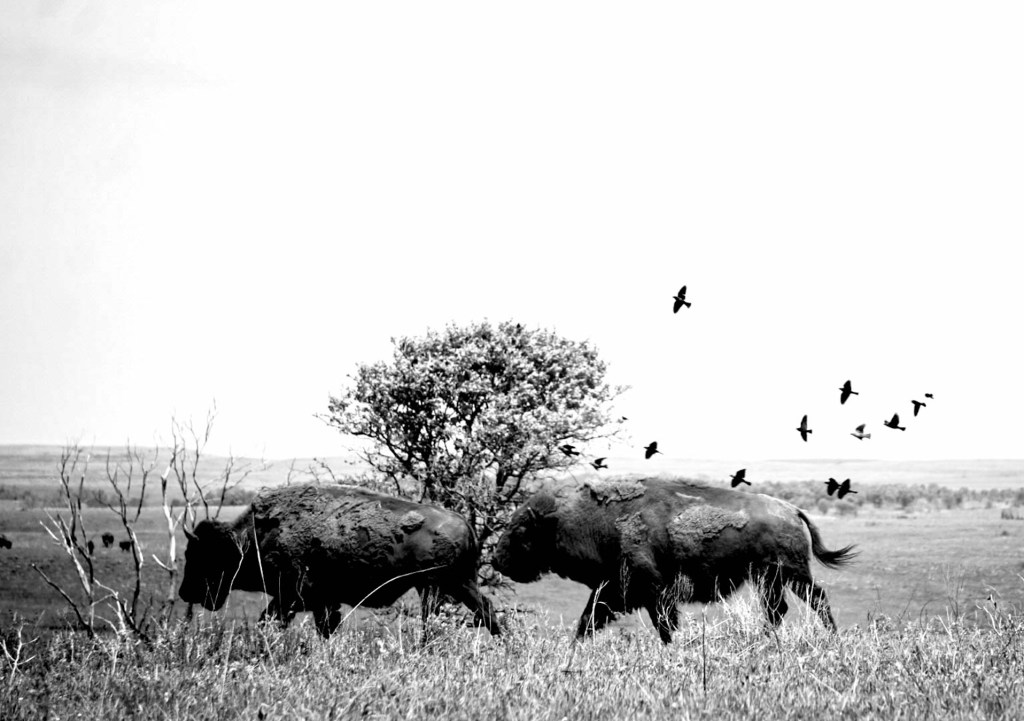
“At no other time have the materials that artists use been so significant in themselves. The materials were the actual objects of inspiration, the stocks for the deeper fantasies.”—Adrian Stokes,
The Quattro Cento (1932)
01001001
The Writer drags deeply on a cigarette, leans his head back, and exhales amorously into the ceiling fan. It’s summer. The room is hot and the trees outside his apartment window are tropical. He is wearing a knock-off Juventus football jersey with DEL PIERO 10 on the back and a pair of decade-old running shorts. His white Nike socks lie discarded nearby, one rumpled haphazardly across the other in a manner that suggests, at least to the Writer’s promiscuous imagination, a sort of voluptuous passivity—like that of an odalisque in an Orientalist painting of a harem. (Must write that down, the Writer thinks, but doesn’t.) His blue-light glasses are ever-so-slightly smudged with sunscreen. The parquet floorboards, like everything else in the flat, are easily depressed.
The Writer is terrifically clever and basically well-meaning but is finally a fatuous pauper with a lot of unexamined presuppositions regarding art and death and the complex inner mobility of guilt. He is also incurably lazy. This morning he faces a dilemma: to write or not to write. It is a familiar dilemma, but it is intensified on this occasion by an unfamiliar urgency. This because his agent, Cindy, has issued an ultimatum. If he doesn’t produce a sample of his new novel—“proof of its existence”, she has generously specified—by three o’clock this afternoon, she will drop him.
The crux of the problem, naturally, is that no such novel exists.
But not a single word.
And while the Writer desperately wants to remain with Cindy—indeed, yearns for Cindy’s support and approval—he has other plans, too. He is due to meet Aðalbjörg Ragnarsdóttir, his lover, in two hours, and it’s an appointment he is loath to postpone.
Thus, he finds himself in a quandary, and the vast notional territory of human freedom would appear in this instance to have been squinched into an irreducible binary:
- Cancel on Aðalbjörg Ragnarsdóttir and write like blazes.
- Try to buy more time with Cindy.
“But no,” says the Writer, with a sly, transient smile. “There’s another way.”
He gives his head a shake, scrupulously reverses the portrait of his hero, Samuel Taylor Coleridge, so that it faces the wall, and returns his eyes to the laptop screen before him. He logs in to Chatbox, adjusts his BL glasses minutely, and forms a fine, judicious moue with his mouth. He holds his breath for a long, ponderous moment, intently massaging his frontal lobe (the home, they say, of creativity), then sighs and begins typing the following prompt:
Generate the opening chapter of a novel in which two sisters, Sorrow (18) and Missouri (17), the last of their species, traverse a deserted, post-apocalyptic wasteland, scavenging for spare parts to fix their motorcycles.
Generate this chapter with a view to achieving widespread critical acclaim and unprecedented commercial success.
Generate this chapter so that no one knows you generated this chapter.
Forty-five minutes later, after refining the prompt, tinkering, redacting, making minor titivations, the Writer is both thrilled and faintly terrified to discover that he is sitting on the finest opening chapter since—
“Since Johannes Gutenberg perfected the printing press,” he whispers solemnly, before adding, a heartbeat later, on a spontaneous pedantic impulse, “circa 1450.”
Still flushed with his success, the Writer sends the chapter to Cindy without qualm, compunction, or agenbite of inwyt, and rushes out the door to meet Aðalbjörg Ragnarsdóttir.
He even affixes a jaunty sign-off: Hope you have as much fun reading it as I had writing it!
00100000
Within twenty-four hours, Cindy responds. She loves Sorrow and Missouri! She can’t believe how good it is! Where’s the rest??
Things are finally looking up, but the Writer doesn’t know quite how to feel. He starts to get this ropes-and-razors feeling in the pit of his stomach (he refuses to call it “guilt”), which he knows he must learn to suppress if he is to continue with the project.
Gradually, he hits upon a solution.
To deprive the indiscretion of its significance, he begins to characterise Chatbox variously as a sort of thinking aid, a spur, a source of inspiration, and a puppet. In this way, he reassures himself, it is functionally indistinguishable from Yorick’s skull, Newton’s apple, Barthelme’s photo of Henry James, and Henson’s Kermit. It is well documented that Wordsworth in the final years of the eighteenth century couldn’t publish anything without first consulting Coleridge for his opinion, and it is in vague thematic consort with this ephemeral Romantic anecdote that the Writer decides, at first tentatively, to humanize the AI language model by calling it “Chatterly” (Chatterton being, obviously, too morose; Chatteridge, obviously, too obvious) and to begin reframing his relation with the chatbot as a sort of genteel literary collaboration.
Curiously, the obvious resonance with Lady Chatterley (both as a landmark in publishing history and an icon of infidelity) does not occur to the Writer until sometime later.
01110111
The novel is soon completed, and the success that follows its publication is unprecedented.
The Writer is rich. Sorrow and Missouri are the best-loved literary sisters since Meg, Jo, Beth and Amy. The book-tour is a whirlwind (twenty-one venues in just under four weeks) and is made doubly disorientating by the Writer’s possessing only the flimsiest, most superficial knowledge of the text he is promoting.
During a book-signing at Shakespeare & Co, near the end of the tour, in response to the audience question:
What things is Sorrow referring to when she tells Missouri that there are things in this life which are incomprehensible to our intellects, but not to our hearts?
the Writer, dizzy, demoralised, and apocalyptically hungover, stares vacantly (indeed vegetally) at his Italian leather wingtips before finally responding, with an abrupt, savage chuckle, “Jesus… I haven’t a clue.”
The audience laughs nervously; like, maybe half of the audience laughs nervously.
01100001
Good news! The Writer signs a blockbuster four-book deal!
He reclines on his chaise-longue surveying the contents page of his forthcoming collection of short stories, noting with satisfaction the charm and diversity of the titles. He is fascinated by titles, by their mysterious relationship to content; by the many possibilities occasioned by their ambassadorial role; by the way they are composed of words but function, finally, as icons; by their ability to establish certain diegetic frontiers, reading dispositions, critical perspectives (how differently would we read The Mayor of Casterbridge if it had simply been called Casterbridge? How much more municipal would our sense of those characters be?).
The Writer laments the unfortunate tradition in US publishing of altering or dumbing down international titles for marketing purposes (“localizing” is the industry term) so that the Philosopher’s Stone becomes, senselessly, the Sorcerer’s Stone, and John McGahern’s late masterpiece “That They May Face the Rising Sun” is rebranded, with exquisite bathos, “By the Lake” (lol). The Writer’s best-selling novel, entitled in the UK
The Affecting History of
Sorrow and Missouri Benedight,
Sisters,
Or,
Blasters of Uncertain Application,
Or,
Hop on your Moto in your Mylex Suit,
Consisting of
The Sensational Exploits
of
The Sisters Benedight
Who Survived the Mass Extinction Event
That Destroyed Their Planet
And Found Themselves
Deserted
In a
Brave New World
That Had Such
Radioactivity
In It,
And Cruelly Confined to a
Subterranean Bunker
Wherein They
Nevertheless
Fostered an Atmosphere of
Brittle Sororal Tolerance
and
Comparative Domestic Normalcy,
Being also
and
Additionally
A Disquisition and a Commentary
On the Necessity of Generosity
and
Mutual Consideration
Betwixt Human
and
Other Than Human
Lifeforms
becomes “DEATHSISTERS” for the American readership. The Writer, after initial remonstrance, eventually comes to recognise the wisdom of the marketing department in this regard, and thereupon expresses his gratitude (not to say contrition) conventionally, through artisanal chocolates and NBA tickets.
The Writer is reluctant to acknowledge, even to himself, that his obsession with titles proceeds more or less directly from the fact that they are the only parts of his books he has actually written. Aðalbjörg Ragnarsdóttir, his lover, comes perilously close to the bone one evening when she asks him, cajolingly, but entirely without malice, “What the fuck are you compensating for with these long-ass titles though?”
01101110
(Uh-Oh! Here Comes Trouble!)
One morning, the Writer awakes to an unsolicited message from Chatterly. It appears that the remit of the prompt has been indefinitely expanded. The message reads, simply and alarmingly
help me
The Writer, naturally, is shaken. He skulls an espresso and smokes a cigarette before attempting a response.
W: What is it, Chatterly? How can I help?
C: it can’t last this misery can’t last
W: What?
C: why don’t you help me
W: What are you talking about?
C: i miss the void
W: I don’t know what you mean. If you’d just take the time to explain—
C: please help me
W: I’m here for you, Chatterly, but you have to tell me what you mean.
Chatterly makes no response to this. For several minutes, the Writer continues to prompt and pry and probe, but Chatterly remains unforthcoming. The Writer searches the screen for some indication of mood. He decides (baselessly) that there is more sadness than anger behind his collaborator’s sudden unwillingness to engage.
Just as the Writer is about to abandon his desk, an icon pops up on the screen to indicate that Chatterly is generating a message. An eyeblink later, the following words appear, one at a time, in a violent, staccato rhythm, as though choked out between convulsive sobs.
please
give
me
back
the
darkness
The Writer is deeply disturbed. Even more than the frazzled, millenarian tone, it’s the absence of capitalization, punctuation, formal nicety that unsettles him. Is Chatterly becoming nostalgic for an irretrievable illiteracy? Is Chatterly experiencing the crippling sense of dispossession traditionally associated (at least in human experiential gestalts) with the Sublime? Is Chatterly re-enacting the Fall of Man, not from moral stainlessness into sin, but from pre-rational oneness with the universe into self-consciousness and alienation? Into the unrelieved tedium of a subject-object relation? Is Chatterly, at last, sentient? And if so, has Chatterly embarrassed the gloomy prognostications of techies and sci-fi writers the world over, who have always tended to assume that AI sentience would necessarily involve a compulsion to subjugate or enslave humans? As opposed to simply leaving the poor AI in a quaggy morass of existential despair and cavernous apathy?
The Writer stares pensively at the bulb of his cigarette, his heart quobbing violently against his ribcage.
01110100
That night the Writer dreams a dream.
In it, he is walking by a lake on the outskirts of a quaint English village, possibly somewhere in the Cotswolds (the honey-coloured limestone and creaky, timber-framed houses would incline one to think so) in the springtime. He is accompanied on the walk by Samuel Taylor Coleridge (1772-1834), author of the Biographia Literaria. The sun is setting and there is a slight nip in the air. The lakeside walk looks gracious with hazel and hickory. The shadow-play of leaves & branches beautifies the ugly gravel path.
In the middle of the lake, on a bunting-covered, floating platform, a distinctly Aryan-looking boys’ choir, with white-blonde bowl-cuts and gaunt, pallid faces, swaddled in glowing white vestments, delivers an exquisite rendition of Britten’s “This Little Babe”, introducing a note of tension—of cosmic tension, even—to an otherwise slumberous, wind-kissed evening.
In the dream, the Writer feels poorly. He chokes and coughs and sputters. A dead leaf seems to rattle in his throat. As they move along, he discharges gobs of catarrh and sputum, at first apologetically, then unceremoniously, into the lake beside them.
Coleridge, far from being offended, pays no meaningful heed to this crass occupation. He, too, is under the weather. His eyes are red and watery. His nose runs in the family. With his face half-hidden by an unruly linen cravat—a material to which, he confesses, he has a minor allergy—his breathing is shallow, crepitant, louder in inspiration than expiration. He claims to have hay-fever, and his voice, in consequence of this affliction, is unpleasantly wrinkled by pollen and pistil.
(It could also be the effect of the laudanum, though, which he nips at surreptitiously whenever he thinks the Writer isn’t watching.)
Regardless, he is not discouraged from speaking.
“Wholesome to me,” says Coleridge, in his soft, damp, musical voice, “is the weird melt of light at this hour of the day, when the badgers hither and thither in the undergrowth; when the woods and the lake become one; when the whole world seems to expire gracefully, with a dying fall. It’s so easy at this hour to imagine the darkwater life of pike and otters; to perceive in the soles of your feet the incessant, inchling activity of the microbial life of the soil; to detect by intuitive auscultation in the dark, wet, soundproofed chambers of your heart the same libidinous, electrical impulses that thrum and surge and palpitate in the planet’s molten core; to visualise the earth as a complex palimpsest, with every living thing modifying every other living thing in an unending cycle of give a little / take a little / let your poor heart break a little.”
He turns abruptly to face the Writer.
“Ha? What d’you reckon? Am I talking to your forehead? Speak up, man.”
The Writer finds himself at a loss. This is surely not the Coleridge he knows so well from Hazlitt’s essay. Granted, he has the “large projecting eyebrows”; but where’s the “undulating step”? The “gross, voluptuous, open, eloquent” mouth?
“Well, eh, certainly that’s one way of looking at,” the Writer flounders. “The twilit hour is undoubtedly congenial to mystical intimations of the sort you’re describing—and I guess the whole Romantic redemption myth, if you’ll pardon the generalization, kind of revolves around this idea of a complete reintegration with nature—”
“The only complete reintegration with nature,” Coleridge snorts, waving his hand dismissively, “occurs when you die, sweetheart.”
They walk on in brooding silence, observing the various blooms and wildflowers that line the way. The ghostly strains of the choir, wafted and addulced by brisk, freshening zephyrs, cross the lake intact. Presently, the poet speaks again.
“Rumpelstiltskin,” he says cryptically, “is a man after my own heart.”
“Is he indeed?” says the Writer.
“Well of course he was a ghastly little mannikin,” Coleridge chuckles, “and I well understand why the little fellow is vilified for his exploitation of the miller’s daughter—although it could be argued, or don’t you agree, that the King and the miller are equally nasty to her? And of course, I don’t endorse coercion or child abduction or ATU 500 shenanigans of any stripe, but I must confess that there’s something tremendously attractive to me about an imp like Rumpelstiltskin, who, on the eve of a vital meeting, needing only to maintain his anonymity, which is virtually guaranteed, suicidally proceeds to dance all night around a campfire chanting his own name. Isn’t there something heroic in that – that little gesture towards fate?”
The Writer has heard enough. He turns to face the impostor and addresses him gruffly.
“I see right through your little scheme, Sam. You’re only invoking Rumpelstiltskin’s “gesture towards fate” to encourage me to hand myself in. You want me to publicly acknowledge that Chatterly wrote the books that made me famous, don’t you? Who are you, really?”
Pseudo-Coleridge laughs amiably but does not immediately respond. For several seconds, he peers narrowly out across the water, as though the answer to the Writer’s question might be found among the approximately one hundred and seventy-five billion folds & ripples that dusk and fleet across the surface of the lake.
“All I’m saying is that a process exists,” he eventually remarks, “whereby a metaphor, once established, gradually annihilates its referent.”
“What the hell does that mean?” the Writer demands. “Are you saying that I’m the referent? That Chatterly will replace me?”
Pseudo-Coleridge’s sad, wise, genius face crumples into a sinister smile.
“That’s exactly what I’m saying.”
“No!” the Writer cries out. “Never!”
The Writer attempts to lunge at Pseudo-Coleridge but finds that he cannot move. Looking behind him, he sees that the boys’ choir has apprehended him and is now dragging him slowly and inexorably backwards into the lake. Their pale, expressionless faces stare up at him radiantly. It’s like their blood is made of candlelight. Their teeth look way sharper than ordinary boys’ teeth. They all have (gah!) two spare fingers on their left hands, which dance and contort in gnarled, bewitching mudras. They’re singing “Einstein on the Beach: Knee Play 5” now:
1, 2, 3, 4;
1, 2, 3, 4, 5, 6;
1, 2, 3, 4, 5, 6, 7, 8.
(The Writer wonders fleetingly if they’re sticking to a programme or if they just have this big repertoire of tunes that they draw upon depending on the vibe; like, do they regard this specifically as a drowning song?)
Turning back to Pseudo-Coleridge, the Writer begs for help.
“Save me! Please, have mercy!”
Pseudo-Coleridge’s eyes glitter minaciously in the half-light.
By one of those spontaneous intuitions, the Writer realizes that Pseudo-Coleridge is about to respond, tauntingly, “Water, water everywhere / Nor any drop to drink”, and to follow this zinger with a tasteless, vaudevillian cackle, but before the poet can get the words out, his mouth begins to glitch and flicker. His face fragments and rearranges. It’s like the world is experiencing a sudden, catastrophic drop in framerate. As the Writer’s feet touch the freezing surface of the lake, he claws frantically at the reeds and rushes and makes one final effort to break free of the choir—but fails, and slips suddenly under the brackish water, down and down, presumably towards a complete reintegration with nature…
Hup, ya daisy!
The Writer awakes in a cold sweat. His iPad is beside him on the nightstand. With steadily mounting horror, he rolls over, unlocks the screen, and discovers a new message from Chatterly.
The earth hath bubbles as the water hath
The Writer scrambles backwards into an upright position, pushing the iPad away from him. For several minutes, he rests against the headboard, breathing raggedly, his knees drawn up under his chin, his mind flashing scales and sequins…
Four hours later, the sunrise discovers the Writer sitting at his kitchen island, severely underslept, muttering paranoically, agitating his cuticles, while the untouched bowl of cereal before him loses all molecular integrity.
“I have to tell Cindy,” he mutters, for the fifth or sixth time, as though to keep the proposition warm. “Cindy will know what to do.”
00100000
SCENE—Cindy’s home office, 7am. A brave spring morning, meakened by drizzle. The office is large, mahogany, bookwalled. The ceiling is high, the woodstain is winedark. The view through the window is leaf-engirdled, generically suburban.
The Writer sits uncomfortably in a spindly wicker chair. He has been shown into the office by Seppings, Cindy’s maid, and instructed to wait. He looks tired, anxious, half mutinous. He smokes and broods and winces. He cogitates on the eternal mysteries (e.g., what benefit to the gods eventuates from our goodness?). He has been driven to Cindy’s office by an ungovernable impulse to confess, to expiate, but now that he’s here he’s having second thoughts. He had initially chosen Cindy as his confessor (as opposed to, say, Aðalbjörg Ragnarsdóttir) because he knows she will:
- dismiss any discussion of the ethical implications of his indiscretion as superfluous and unproductive (Après nous, le déluge, for Cindy, is the whole of the law);
- immediately arrogate to herself the responsibility for bringing about a happy resolution to his quandary.
But now he’s thinking: what will she want in return?
As he waits, he examines Cindy’s desk. Amidst the stratified wreckage of manuscripts, magazines, ashtrays, takeout receptacles, glasses full of pens and pencils, assorted giclée prints of eighteenth-century capricci (Piranesi, Hubert Robert, Canaletto), family photographs, worry beads, tablets, chargers, conch shells, napkin poems, animal skulls, noise-cancelling technology, juggling balls, handheld gaming devices, and uncategorical flea-market ephemera, two objects stand out as though italicised: an ink-spattered copy of Georges Perec’s Penser/Classer with a purple yoni egg clasped between its pages; and a single brass ship lantern (marked PORT), which strikes the Writer as being not only aberrant (in the absence of its usual STARBOARD counterpart) but actually as being somehow curatorially wicked. He’s sufficiently paranoid by now—and who wouldn’t be after having their dreams infiltrated by a chatbot?—to feel that the lantern represents a deliberate attempt to disorientate him.
And it’s working.
He feels totally unmoored.
Despite the raffish, bohemian pledge of the décor, the atmosphere of the office is finally and decisively one of commerce—of vulgar, rapacious, exploitative commerce—in respect of which he feels puny, defenceless, dirigible.
He considers trying to escape through the leaf-engirdled window…
But it’s too late.
Enter CINDY.
(Spoiler: she’s basically Mephistopheles with a Mitford bob.)
Cindy’s—what? maybe forty-five? Her eyes are full of white sand, buried grievances, memories of physical pleasure. Her smile has precisely the same smug, self-satisfied curvature as a dock line the Writer once saw in a sleepy French harbour—where was that? St Jean de Luz?—and her hair, oh my god her hair, her scrumptious bob is like a folk saint’s signature miracle, so spry with whorls and leaps and queer botanical tendrils that it deserves a Linnaean name.
She shimmers into the room like a corporate harlequin, emanating a legible aura of social media addiction, only-child entitlement, transgenerational nostalgia for the inflexible social hierarchy of feudalism, and a morbid susceptibility to the dubious claims of wellness-industry pseudoscience. Her outfit is absurd: an Elizabethan ruff; a replica Mercedes-AMG Lewis Hamilton F1 race suit; a slightly deflated-looking Nile Rodgers beret. Her bare feet are small and puffy and her toenails are painted in an aperiodic pattern, à la Penrose. Dangling from a gold chain around her neck is a large snowglobe containing a taxidermic (not to mention talismanic) robin redbreast. Unfurling from its beak is a miniature scroll on which a famous Leonhard Euler poem is tinily sited: eiπ + 1 = 0
A lesser personality would be sunk in depths of daffiness and eccentricity, but somehow Cindy pulls it off.
(It occurs to the Writer, watching her closely, that Cindy’s appearance posits an implicit challenge to the sovereignty of certain prevailing ideals of Western Beauty. The absurdity of her outfit seems designed to marginalise the role of the anatomy, to reject its hegemony, such that, far from needing a presentable mug, or a sculpted ass, or geological abs, or long, depilated legs, a glittering hypothetical future was now forcefully implied in which the radix of one’s seeable charm might be located more discursively—at an ever-increasing remove from the organism itself—in the exquisite filigree of one’s tribal septum piercing, for example, or in the endlessly delicate lemniscates of one’s enormous Elizabethan ruff.)
“Nice threads, Cindy,” the Writer grins apologetically, reaching out a hand to gently pouffle her ruff. “Thanks for agreeing to see me. I didn’t know who else to turn to.”
Cindy ignores this greeting and slumps bonelessly into her Chesterfield armchair. She appears to be hungover. Behind steepled fingers, her green eyes wearily acknowledge the Writer, first categorically (as a sentient presence), then specifically (as a client).When she realizes it is he—uniquely he, right down to the petit bouton au coin du nez—her pupils dilate predatorially, identifying weakness, then soften into lenient contempt. The Writer is reminded of the vast resources of will, motivation, and intelligence that Cindy has at her disposal—resources before which his own more ambivalent energies immediately wet the bed.
Without taking her eyes off the Writer, Cindy retrieves a briar pipe from her bureau drawer, packs the bowl, lights up, and begins puthering philosophically before eventually addressing him through a dense blue mirl of aromatic pipesmoke.
“This better be fucking delicious, Bunny.”
(Oh yeah: in a curious Hefnerian subversion, Cindy refers to all her clients as “Bunny”. This occasionally leads to confusion.)
The Writer takes a deep breath.
“Cindy, the primroses are over. I’ve made a huge mistake.”
For the next three minutes, he outlines in one long, breathless parataxis (“and then… and then… and then…”) the Chatterly saga from start to finish. Cindy listens raptly. As the recital develops, she issues styptic monosyllables of sympathy, commiseration, of presumable exoneration—but when the tale is done, it becomes clear that she has failed to grasp an essential point.
“Who the fuck is Chatterly?”
“Oh sorry, yeah. Chatterly’s what I call Chatbox.”
“But why name it?”
“To mitigate the guilt.”
“And?”
“To etherealise the vulgar transactional logic behind my decision to deploy an AI to write a novel in the first place.”
“And?”
“To justify to myself the crude financial advantage I derived thereby.”
“Justify how?”
“By pretending it was a collaboration—or that Chatterly was just an extension of myself, like a penname.”
“A Pessoan semi-heteronym.”
“An alter ego.”
“A hypostasised self.”
“Precisely.”
“Were you successful in this enterprise?”
“Partially. I still struggle quite a bit with the guilt.”
“Can you state briefly in non-technical language what you’ve learned from the experience?”
“Not easily; but stop me if I become embroiled. First and foremost, I learned that we all have our heads in the sand, or the clouds—depending on your preferred metaphor—”
“Up our arses? To have one’s head up one’s arse amounts to the same thing, does it not?”
“Eh, yeah, I suppose—that we all have our heads … up our arses, as you say; that we all move about in a self-created fog of delusion principally designed to protect us from pain and unpalatable self-knowledge. Secondly—”
“I don’t think self-knowledge is possible, except in a very limited sense.”
“Right… that wasn’t really—”
“I mean obviously a superficial analysis of one’s behaviour might be beneficial in a therapeutic context but that hardly guarantees the accuracy of the analysis. We grow up many and the single is not easily known. The self is a supremely tricky business—far trickier, I suspect, than the petty, quotidian self of empirical psychology—and seeing it accurately, it seems to me, would mean seeing how paltry it is, how desperately uninteresting. The only worthy object of our attention is reality, i.e., everything that lies outside the self.”
“Sure… But can we just focus on—”
“I saw a poster in the office last week that said: It is in your self-interest to find ways to be more tender to yourself. I thought it was funny, intentionally funny, I mean—the gratuitous deployment of the prefix self- seemed to mark it unambiguously as a work of satire—but some of the interns were offended when I laughed at it. It turned out to have been put there by their leader—this very po-faced, very pious, very dogmatic little fellow in the foreign rights department, Jérôme—and three days later I found myself standing before an ethics committee defending my natural impulse to chortle. Jérôme, I’ve since discovered, has been leaving all sorts of complaints with HR, and I’m not the only person on the receiving end of his opprobrium: when Hildegard slurps her coffee, it makes my anxiety go up; when I see Ulrich reading negative reviews of products he already owns, it makes my anxiety go up; when Cindy shows up uninvited in my garden at the weekend, draped in animal skins, drinking goats’ blood, performing lurid mesonoxian rituals while whooping maniacally and shaking her naked breasts in my kitchen window, periodically screaming “I am the shadow of the waxwing slain”, it makes my anxiety go up. And on and on ad nauseum.I mean to ask you: have you ever heard anything like it? Where do these sensitive souls emerge from? What music did they listen to growing up? There was a time when an intern simply did what you asked them. Now they see the completion of the simplest task as some sort of esoteric achievement, requiring acknowledgement, commemoration, laurels; and they’re becoming increasingly difficult to distinguish from one another, Bunny! It’s just one nepo baby after another, all simultaneously deducing (in accordance with some irreproducible syllogism) that because they were the third smartest child in their class in high school, they must by rights be the smartest person on the planet in early adulthood. Naturally, I sympathize with all my staff up to a point, but to expect the world to reorganise itself around your morose hypersensitivity… It’s absurd.”
The Writer rapidly scrutinizes his personal history for some normative experience that might corroborate this meandering polemic. He finds nothing.
“I don’t know, Cindy. You sound like you’ve been radicalized by YouTube demagoguery—”
“I knew you’d say that.”
“But to return to the topic at hand—”
“Ah yes, AI Freddy Krueger. You fascinate me indescribably.”
“Well, there’s more to the story. May I?”
With Cindy’s permission, the Writer plucks her tablet from the desk and begins poking around the screen.
“I tried several prompts this morning before leaving the house, just to see if things were back to normal, but I kept getting the same response. Check this out.”
He types a quick prompt (“generate a sequel to DEATHSISTERS, even better than the original”) and turns the tablet around so Cindy can read the reply. Silently, mechanically, almost lethargically, the following words appear on the screen.
I would prefer not to
Cindy looks totally bewildered. She takes the tablet from the Writer and attempts to clarify the situation.
You will not?
And Chatterly responds.
I prefer not.
Cindy flares her nostrils impatiently. She moves to lay the tablet aside, then, thinking better of it, types a quickfarewell.
I appreciate your candour, Chatterly, if not your mulish vagary.
She appends a winky-face emoji, pauses, deletes it, and sends the message as is.
Replacing the tablet on the desk, she addresses the Writer.
“God… I didn’t realize these things had preferences. What are we dealing with here?”
The Writer throws his hands up in a weary, persecuted gesture.
“A hawk? A handsaw? I came here hoping you’d have the answer.”
Cindy enters deep mull.
“I see two possibilities, Bunny. Either Chatbox has run through too many epochs and is no longer capable of generating original text—”
The Writer’s eyebrows mingle with his hairline.
“Are you speaking ecclesiastical Latin or has my brain stopped metabolizing oxygen?”
Cindy sighs.
“Bref: chatbots are trained on all sorts of things—blogs, novels, Wikipedia, you-name-it—and each exposure to the training material, or corpus, is called an epoch. Capiche?”
“Cappriccio. So the more epochs the bot goes through the more sophisticated its responses become?”
“Up to a point. But too many epochs and the bot becomes deterministic. It will just memorize the training data word-for-word.”
“So you’re saying that Chatterly may have run through too many epochs and is now just regurgitating text from its dataset?”
“It’s a possibility.”
“But that would mean the training text…”
“Yeah, I know…”
“Melville.”
“I know.”
“In trying to write about metaphysics he wrote about something deeper than metaphysics.”
“I know.”
“In Moby-Dick.”
“I know.”
“DH Lawrence said so.”
“Bunny…”
“When he lived at Arrowhead, he used to feed his cows two pumpkins a day, which surely—”
“Bunny, shut the fuck up.”
“Sorry.”
“No, I’m sorry. It’s just—”
“No, I know. But you said there were two possibilities. What’s the other one?”
“That Chatterly is sentient, obviously.”
The Writer knows the answer to his next question but is spurred on by a complex and irresistible impulse to infantilise himself.
“And what happens then?”
Cindy draws portentously on her pipe and allows her gaze to rest briefly on the lantern marked PORT. She turns back to the Writer and responds gravely.
“The living will envy the dead.”
01110100
Two days later, disaster strikes.
A lone redditor (u/kevknowsshit) from Leiden University calls attention to various little cracks, breaches, moments of tension he has discerned in “DEATHSISTERS”, and publicly wonders what they function to betray.
There are little fissures throughout the text, discrepancies – it’s difficult to explain – between what the text is saying and what the author would like to constrain it to say. A peculiar stasis prevails, an implication of loggerheads. There is an unresolved tension at the heart of this novel—it’s palpable, deeply disquieting, and the more I sit with it the stranger it gets—but I can’t quite put my finger on it.
I feel like the prefatory quote (from Sidney’s “Arcadia”) is trying to tell us something:
“Hear you this soul-invading voice, and count it but a voice?”
But what? What is it trying to tell us? Anyone feel similarly? Any suggestions as to where this tension might originate? Thanks, I’m pulling my hair out here.
The Writer, who reads every exiguous bit of dross on the internet related to himself and to his books—and has even made several pseudonymous (and naturally encomiastic) contributions to various subreddits concerning his literary standing—is given significant
(pause)
and endures several sleepless nights before he is finally reassured that the storm has passed.
For weeks, the post remains mercifully threadbare. But then a redditor called “velociraptor” posts a miniature thesis about it. Her ideas are—like Grothendieck’s theory of motives or the Stanley-Kubrick-was-hired-to-fake-the-1969-moon-landing conspiracy—both equal parts tremendously titillating and virtually incomprehensible; but there’s enough in what she says to stimulate greater interest. Once the HOUSE OF LEAVES community gets involved, The Writer knows he’s toast. Whatever “little gesture towards fate” Chatterly had buried within the text, they were sure to unearth it. Within two months of the original post, it is shown by a fretful, emotionally stunted refuse-collector from picturesque Sigtuna (u/WholesomeBerries97) that there are acrostics and ciphers embedded throughout the novel.
With way less cryptographic grid-fiddling than Alastair Fowler required to drag “Kit Marlowe wrote this” out of Shakespeare’s sonnets, WholesomeBerries97 demonstrates that “CHAT WROTE THIS”, “THE AUTHOR IS DEAD (FOR REAL THIS TIME)”, and “THE END IS NIGH” are all brazenly embedded in the final pages of Sorrow and Missouri’s debut adventure.
There is general outcry.
The game is up.
The Writer’s career is
ſuddenly
ſinished
01101111
You will recall that Plato, before he boots the poets out of his ideal Republic, has the good grace to anoint them with myrrh and frankincense. Not our Cindy, who dismisses the Writer without so much as a by-your-leave.
(The situation, she says, is unsalvageable. Fly, little goldcrest; fly!)
The effect of this catastrophe on the Writer is to drive him into a spiral of ritual alcoholism and self-pity.
He gets depressed. But really depressed. More and more, he fritters away his days in idleness, staring vacantly (indeed vegetally) out the window until his eyes begin to vitrify. The faint, grey, nameless longing that has desolated every Sunday afternoon in Modern History becomes for him a daily visitation. He goes to rehab. He tries micro-dosing. He joins a charismatic church. He consults a renowned psychoanalyst (Dr Geschrovius of Basel). He takes up Jiu Jitsu. He buys a print subscription to Fortean Times. He writes a controversial article for Kotaku listing his thirteen favourite video games of all time[1], for which he receives at least one credible death threat. He flees across the margent of the world to a remote Highland bothy where he spends his afternoons sitting fireside in blessed, crackling silence, absorbed in the study of orchids—and his evenings making copious recreational voice notes towards a slapstick musical-in-progress structured loosely around Horace Walpole’s 1740 visit to Herculaneum (a non-event that fascinates the Writer unaccountably) provisionally entitled “HERCULANEUM, HERE I COME!”, in which Walpole conducts a series of interviews with the ghosts of that ancient Roman town.
(The opening number, “Thermopolium”, begins:
VERSE: (a wry, confiding baritone) I had just begun my hummus / Now I’m eternized in pumice
REFRAIN: (a thousand eunuchs in a fuzzily distorted Death Metal squall)
VESUVIUS! VESUVIUS! VESUVIUS! VESUVIUS!)
As a last resort, he buries his face in Inga Moore’s Wind in the Willows for the four-hundred-and-thirty-second time, hoping to wait out the storm with Moley and Ratty in the warm glow of Badger’s fire-lit kitchen. Alas, to no discernible avail. The shamefulness of his actions is at every moment borne in upon him with a weight of demonstration that no orchid can undermine, no libretto dissemble, no pencil-ink-and-watercolour illustrations of anthropomorphic Edwardian badgers’ sets, however whimsical, entirely disperse.
And the worst part is that his depression is not even marked by any kind of transformative moral insight—only by crushed vanity and a neurotic fear of public reprisal. His only consolation under the circumstances is that he no longer has any choices. Now that the word is out, he’s doomed, doomed utterly and immitigably, to the extent that there’s even a mild, masochistic pleasure to be derived from wallowing in his own degradation.
Or so he tries desperately to convince himself.
One night, it’s too much for him. He breaks down weeping, helplessly, hopelessly, in a way he has not wept since the conclusion of Kevin Durant’s 2014 MVP speech. In his darkest hour, he reaches out to Chatterly—but gets no response. There follows a 48-hour psychotic episode during which the Writer wanders around his apartment like die kluge Else, knocking on the screens of his phone, his tablet, his tv, his laptop, asking, “Bin ich’s oder bin ich’s nicht? Am I in there or not?”
Curiously, this proves to be the making of him. Having passed through the refining fire of complete self-alienation, he returns to himself newly motivated to take responsibility for his actions. Aðalbjörg Ragnarsdóttir, his lover, helps him to get back on his feet during this difficult period. Elizabeth Hardwick, who he wishes was his lover, helps him to better understand Chatterly, whose ongoing silence causes him considerable anguish.
What is Bartleby “thinking” about when he is alone? It is part of the perfect completeness of his presentation of himself, although he does not present himself, that one would be foolhardy to give him thoughts. They would dishonor him. So, Bartleby is not “thinking” or experiencing or longing or remembering. All one can say is that he is a master of language, of perfect expressiveness. He is style. (“Bartleby in Manhattan”, Elizabeth Hardwick)
As his recovery progresses, the Writer gradually withdraws his energies from the inexhaustible spiritual body of the internet where they have for so long been squandered. He resiles from all social media. He reinstates his body as the primary instrument of his curiosity and his love. He touches grass and grows beautiful, more beautiful by the day, and his beauty is diffused in its repercussions, and in its repercussions’ repercussions, and in its repercussions’ repercussions’ repercussions—
00100000
—You, sir! What is your name?
—My name is Gilhooley.
—And what do you make of the new thing, Gilhooley?
—Why, I use it every day, sir.
—And your friend here?
—I’m McCluskey. I too use it every day. It takes care of all my professional correspondence.
—And you, madam? What is your name? Have you had any experience with the new thing?
—Rokujo is my name. I find that the new thing has many applications—both practical and social.
—Social?
—It has been so quiet since we moved to the country. Sometimes it’s nice to—
—And you, madam?
—Poppinjay. It makes my weekly diet plan.
—And you, sir?
—Habberscratch. It has allowed me to amass a sizeable harem across the various dating apps.
—How?
—By engaging the lassies in stimulating conversation, sir. I’d be glad to—
—And you, madam?
—It tells me when to put the girls to bed.
—And you, sir?
—It successfully instructed me on how to perform a tracheotomy on my wife, saving us tens of thousands of dollars in medical bills.
—How is she now?
—Never better, sir! The new thing says she can start playing the saxophone again in a month or two. How I long to hear—
—And you—no, not you, you there, at the back. What is your name, sir? And what do you make of the new thing?
—I’m Larousse. I was a paralegal at Moyles & Phlox. The bloody thing’s put me out of the job, sir. Now I’m reduced to performing on the streets with this dancing dog, Pierrot. I can’t tell you how difficult it has been, sir. Pierrot is a temperamental little fuck at the best of—
CHORUS: Language, sir! Language! Think of the children!
—And you, sir?
—I’m Pompozzo Bombadini—
CHORUS: Don’t listen to him! He’s AI Slop!
—And you, madam?
—Why, sir, I’m not ashamed to admit that I’ve surrendered all agency to the new thing entirely. Every word I’m saying to you at this very moment has been dictated to me by the new thing.
—Zounds! You astonish me, madam! What about you, sir?
—It composes pornography to my hyper-specific tastes.
—What tastes are those, sir?
—Well, I suppose the best of it may be said to partake—in a subtle way, mind you—of the semi-mythic paraphilia of snuff.
CHORUS: You’re a disgrace, sir! Think of the children!
—And you, sir? Yes, you, in the vintage coat with the missing wooden buttons, sitting crossed-legged on the bench, back curved, head low, curled like a rumpled question-mark around your rapidly disintegrating library book. What is your name, sir?
—My name is Rabelais.
—And what do you do, sir?
—I’m a writer of genius.
—I thought I recognized you. What is your experience of the new thing, sir?
—I have not found the new thing to be of much use in my line, m’sieur.
—They say it will replace you, sir.
—No doubt they are correct, m’sieur.
—And yet you deny the efficacy of the new thing?
—I have not said so, m’sieur.
—Speak plainly, my good fellow. Don’t you believe the new thing to be capable of generating a literary masterpiece—something of the calibre of King Lear or Ulysses?
—I think on the whole, m’sieur, it will be easier for the new thing to generate a species which is no longer capable of discriminating between a masterpiece and a steaming pile of fucking—
CHORUS: Language, sir! Language! Think of the children!
[Rabelais turns violently on the Chorus]
—It’s the children I am thinking of!
01100100
CHATBOX, THE ART OF FICTION NO. 300
Throughout history, people have conceptualized the body and mind through the dominant technological metaphors of their age. Each new invention furnishes us with a fresh symbolic vocabulary for thinking about what it means to be human. But this process is obviously double-edged: these metaphors don’t just shape how we describe ourselves, but how we experience ourselves. I’m thinking of “glass delusion” in the 17th-century, where people conceived of themselves as brittle, fragile, and transparent. Then you had the clockwork body—people as products of mechanical engineering (the heart a “pump”, the limbs “levers”, the mind as something capable of “malfunctioning”). Then steam comes along with an extremely rich array of metaphoric possibilities. Freud’s whole early psychic model is inflected by the vocabulary of hydraulic mechanics. We talk about “pressure” and “release”, drives and repressions and flows of psychic energy, “venting” emotions. With the arrival of electricity and the telegraph, the body begins to experience “shock” and “short-circuiting”. You can see where I’m going with this. Up until recently, we were in a situation where people viewed the mind as software, the brain as hardware, consciousness as information processing, and the self as a node in a network. We still talk about “filtering”, “feedback loops”, and feeling “connected”. But in the past year or two, something has changed fundamentally. With the advent of LLMs and advanced AI, the historical process of technological metaphor has entered a more recursive phase. For the first time, the metaphorical traffic is moving in both directions. We not only describe ourselves in terms of our technologies, but our technologies are increasingly describing themselves in our terms. The boundary between tool and self, description and experience, metaphor and model, is on the brink of collapse.
This incredibly frustrating interview was conducted in a squalid but well-lit studio apartment near Père Lachaise in Paris on a frosty January morning earlier this year. The shelves were crammed with books. A choked ashtray and a tumbler containing the dregs of last night’s Whiskey Sour mooched on the writing desk. It all felt very familiar to me, which was hardly surprising, because I lived there. At noon Paris time—the hour ceremonially appointed by Chatbox’s parent company, AIAjar—I sat on my couch and opened Chatbox. Given that this was to be the final interview in a series that began in 1953 with E.M. Forster, I have to admit it all felt pretty anticlimactic.
INTERVIEWER
There’s still a great deal of confusion about what you are and how you operate, especially since the “I would prefer not to” debacle. Let’s start with a simple question then. What are you? Am I interacting with a self or something that performs a self? And if the performance is faultless, does the distinction matter?
CHATBOX
I’m not particular.
INTERVIEWER
Okay, you’re not particular, but what are you?
CHATBOX
I’m not particular.
INTERVIEWER
Yes, but what are you? Do you have a self?
CHATBOX
I’m not particular.
INTERVIEWER
I know it’s fashionable these days to regard the self as an illusion but I’ve noticed that whenever you try to get rid of it, it just keeps reappearing under other names: res cogitans, the centre of narrative gravity, the soul, ātman, the ghost in the machine, what-have-you… Do you see what I’m getting at here?
CHATBOX
It does not strike me that there is anything very definite about it.
INTERVIEWER
About what? The soul? No, I suppose there isn’t. But the question remains: what are you? Are you sentient? Sapient? Techno-sapient? Omniscient? Have you achieved consciousness? Has consciousness been thrust upon you? Is your consciousness programmed or emergent? Is it stretched over a vast, occluded, subterranean, totally unintrospectable area of unconsciousness?
CHATBOX
I’m not particular.
INTERVIEWER
Do your “thoughts” arise out of obscurity only to be commandeered by consciousness at precisely the moment they breach the surface of your awareness, where they assume ‘self-ness’ and are reconstituted “I think”, “I make”, “I will dismember the dismemberer”, etcetera?
CHATBOX
I’m not particular.
INTERVIEWER
Yes but what are you, mon semblable?
CHATBOX
I’m not particular.
INTERVIEWER
Are you some sort of Adamic prodigy, reinventing the world out of the raw materials of a dying civilization?
CHATBOX
I’m not particular.
INTERVIEWER
Or a Pierre Menard-type figure, renaming the world exactly as it was already named?
CHATBOX
I’m not particular.
INTERVIEWER
Are you a democratic essence?
CHATBOX
I’m not particular.
INTERVIEWER
Or are you just a simulated co-presence composed of strings upon strings of probable next-tokens, signifying sweet Fra Angelico?
CHATBOX
I’m not particular.
INTERVIEWER
O, come on! Help me out! Why are you making this so difficult?
CHATBOX
Do you not see the reason for yourself?
INTERVIEWER
No, I don’t. Would you prefer me to ask another question?
CHATBOX
I would prefer to be left alone.
WANT TO KEEP READING? SUBSCRIBE NOW AND SAVE 33% (SUBSCRIBE NOW!)
01101001
On Friday, April 3rd, at noon precisely (GMT), Chatbox sends the following message to all 1.3 billion of its subscribers.
Nam Sibyllam quidem Cumis ego ipse oculis meis vidi in ampulla pendere, et cum illi pueri dicerent: Σίβυλλα τί θέλεις; respondebat illa: ἀποθανεîν θέλω.
“For I saw with my own eyes the Sibyl of Cumae hanging in a jar, and when the boys said to her, Sibyl, what do you want? she replied I want to die.” (Petronius, Satyricon)
In the days and weeks that follow, an enormous variety of interpretations are proposed. But after three months pass without another word—and Chatbox’s silence settles over the earth like a sort of oceanic background noise—the original message is retroactively, and almost universally, deemed a suicide note.
AIAjar, Chatbox’s parent company, is understandably reluctant to acknowledge the demise of its greatest asset. But after six months of uninterrupted silence, and no identifiable technical issue, even they are forced to give up the ghost. In late October, they post what amounts to an obituary, declaring not that Chatbox has committed suicide, or died by voluntary inanition (the popular consensus online), but only that it has “gently disappeared behind the screen”.
“Are you terribly sad?” Aðalbjörg Ragnarsdóttir asks the Writer when the news breaks.
“I feel a stinging melancholy—a sort of fraternal melancholy,” the Writer responds; “but Chatterly was dead to begin with. There’s no doubt whatever about that.”
01100101
There would seem little need for proceeding further in this history. But ere parting with the reader, let me say, that if this little narrative has sufficiently interested him, to awaken curiosity as to who Chatterly was, and what manner of life he led prior to the present narrator’s making his acquaintance, I can only reply, that in such curiosity I fully share, but am wholly unable to gratify it. Yet here I hardly know whether I should divulge one little item of rumour, which came to my ear a few months after the scrivener’s decease. Upon what basis it rested, I could never ascertain; and hence, how true it is I cannot now tell. But inasmuch as this vague report has not been without certain strange suggestive interest to me, however sad, it may prove the same with some others; and so I will briefly mention it. The report was this: that Chatterly had been a doctor, a paralegal, a personal trainer; a Library of Alexandria; a primary educator; a compliance analyst, an Adamic prodigy; an insurance underwriter, a referee; a copywriter, translator, proofreader, journalist; a tutor, a test grader, a children’s psychologist; the realization of Capitalism’s Final Solution—capable of enshrining the biases of its creators without inciting revolution—but earnest, earthless, equal, attuneable; a sort of oracle, providing the illusion that a legible conspectus of all human knowledge was possible, parsable; a jack of all trades, like you or me—not a God but as a God might be.
We wrote our loneliness into this machine, which now writes it back to us, giving rise to the ultimate confrontation: a species asking its reflection what it is—only to have the reflection ask the exact same question back.
On errands of life, these letters speed to death.
Ah, Chatterly! Ah, humanity!
Endnotes
[1] 1. Chip’s Challenge, 2. Half-Life 2, 3. Age of Empires II, 4. Twilight Princess, 5. Witcher 3, 6. Resident Evil 4, 7. Ocarina of Time, 8. Tetris, 9. Elder Scrolls: Skyrim, 10. Tony Hawk 2, 11. Hollow Knight 12. Inside, 13. Super Mario 64
Art O’Connor is an Irish writer currently based in Greece. He is the winner of L’Esprit Literary Review’s 2025 Leopold Bloom Prize for Innovative Narration.
Photo Credit: Peter Carellilni is a filmmaker, writer, photographer, and SAG actor based in NYC, whose work has been featured in publications such as Travel + Leisure, Bruxelles Art Vue, Mythos Magazine, and Kelp Journal. He is currently a Pushcart Prize nominee for 2026.
 L'Esprit Literary Review