Kristen Keckler
Short Fiction
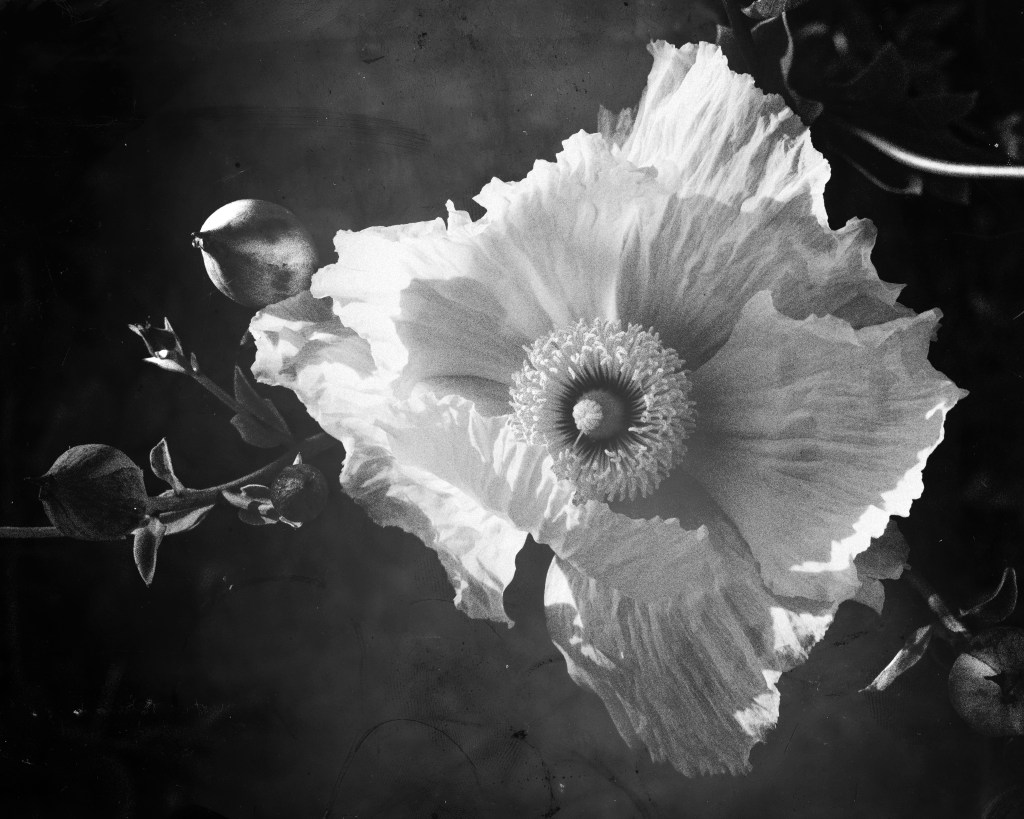
They met at an academic conference in San Antonio. She’d gone for the eco-rebel poet but happened to catch his biodiversity panel. She’d bought his book, and one of Anna’s grad school friends had introduced them. Ted had taken a keen, instant interest in her, asking about her own work as if she, too, were well-published, which she wasn’t, in case you counted zines like Hollowhoochie Monthly that featured her fledgling poems—she was a critic, anyway, or wanted to be, obsessed with Emily Dickinson.
She felt herself blushing at Ted’s attention—he possessed some serious mojo, a sexy mix of confidence and nonchalance. He was a head taller than her, had a large forehead, a regal nose, and wore his thick hair—bark-colored, streaked with gray—in a ponytail. They wound up sneaking off for drinks in a country music bar on the River Walk. Then, buzzed off margaritas, watching the boats glide under bridges glittering with year-round Christmas lights, they kissed.
After what felt like wading through a cave of honey, Anna broke for air and said, “Um, you’re a good kisser.”
“Ha! I haven’t made out with anyone in a decade,” he joked—or was he serious? Something flickered in his dark eyes as he took her hands in his. She tilted her head.
“I don’t usually do this,” he said. “I mean, never have.”
“You mean pick up grad students at conferences?” she asked.
“Do I seem like the type?” he asked. “Wait, don’t answer!”
“Kinda,” she laughed.
“Most of my groupies are Audubon Society nuts,” he said. “You’re really lovely. Beautiful,” he said. “Am I being cliché?”
They’d come out for a smoke, and she was still holding the pack of American Spirits, so she lit one, took a drag. As they passed it back and forth, he said, “We can just walk? Enjoy this shitty, faux-Disney, man-made excuse of a river? I mean, only if you want to.” In his grin she could see the silver glint of two molar fillings. She tossed the butt into a bin.
They kissed again—smoky, tequila-ish deliciousness.
He told her he rented a studio apartment in the college town where he taught and that his family—wife, one kid—lived two-and-a-half hours west in a Pennsylvania farmhouse; they leased some land to renegade Amish. The situation was ambiguous enough that for the first few weeks they exchanged texts and calls, she wasn’t sure if Ted and his wife were technically separated. (They weren’t.) When he offered to fly her to New Orleans, Anna waffled, “I don’t know, I can’t miss any classes,” and they went back and forth, until she thought, why the fuck not?
Soon he was flying her for long weekends in anonymous hotels in cities he had speaking gigs: Boston, Baltimore, Charleston. He paid for everything, emailed plane tickets, whisked her from airports in rental cars. He lectured about biodiversity and coastal habitats (really, he was a bird man)—was a rockstar in Baltimore, not so much in Des Moines, where he later joked, “The farmer up front looked like he wanted to impale me, like I was scarecrow meat.” And she’d said, “Well, good move giving him a free book. I saw him showing it off to his buddies.” Anna was floored by how nerdy Ted was, like an Encyclopedia Britannica with a beautiful cock. And she loved how he asked her to read poems—hers or anyone’s—to his voicemail so he could listen on his travels through earbuds.
She was in her second year of graduate school at a state university, studying poetry. Dickinson fascinated her most—her raw, veiled hunger, the sort of “bold, eco-feminist reclusivity” of her art. (Her professor had starred that phrase on her paper.) Anna, too, could hole up for days in her second-floor efficiency that looked out on a backyard of bamboo. She’d decorated the built-in shelves with thrift store macramé, postcards of botanicals, glass bottles, geodes, and sugar skulls. When Ted came to stay, she fetched him in her Bronco gas-guzzler, a hand-me-down from her father. “Meet my personal contribution to climate change! Dad named her Sasquatch. I call her Bronchitis,” she said, and Ted laughed.
“So, what do you consider yourself again? A vegan-vegetarian pescatarian?” he asked her at the grocery store, where he loaded the cart with goodies to fill her cupboards. He cooked elaborate meals—explained the difference between savoy and napa, chanterelle and cremini. And they ate, drank wine, and made love on her futon. He kissed her entire body, teasing her until she pushed him inside her, an erotic slow dance that lasted half the night—he put her past lovers to shame. Was it because he was older (14 years), or did they have some rare, pyrotechnic chemistry, or had she never been fucked properly?
In between visits, their phones became extensions of their hands, ears, mouths. He sent her gifts via snail mail: a painted owl; a bluejay feather; seashells he found during his field work; a small amethyst pyramid—all of which she added to her shelf. He sat across from her at the coffee shop in her mind, always at the corner of her thoughts if not front and center. In her head, she expounded upon their calls, when they chatted about science, politics, and writing, something they’d heard on NPR. He’d told her about his son, age eight, who was “a soccer dynamo, superhero-in-training, but allergic to everything.” He mailed her a drawing his son made—an anatomically accurate spider, its mosaic-like web traced with fluorescent markers, “Liam” printed at the bottom. Anna felt a soft affection for this kid she’d never met. She called to thank Ted for the drawing and that got him talking about his wife, a renowned potter—who was also mentally ill. The current diagnosis was schizoaffective disorder.
“What does that mean?” Anna asked.
“It means she needs to stay on her meds.”
“And when she doesn’t?” Ann prodded. She had him on speaker while touching up the ‘Fiery Flamenco’ polish on her toes. She returned the brush to the bottle, dangling her feet off the futon, listening intently.
“She refuses to have a cell phone—because, well, brain tumors. And when she ‘forgets’ to take her Seroquel, starts ranting about the CIA bugging the farm. Due to her expertise in Persian pottery.”
“Oh my fucking god. You’re serious right now.”
“Yup. She brought Liam to this holistic specialist. Okay, I was supportive, but came home to find our couch on the deck! She’d concluded he was allergic to its stuffing.”
“I’m so sorry,” Anna said.
His wife needed his health insurance, and Ted needed her to be stable for his kid—with the help of their Brazilian nanny. These were the facts. Anna started crying, just a little, from the reality check, and knew he could hear.
He convinced her it was not something they could solve on the phone, or that night, and, for a moment, his voice had cracked, too.
Anna had a fellowship to teach one class (Freshman comp) and TA another (Poetry Survey), and sometimes she wished that Ted could see her teach, when she drew her students into a discussion that left her dissecting their finer points afterward. She could imagine his “professor persona” from hearing him speak at conferences. He delivered witty, off-the-cuff anecdotes like an improv actor, though he’d never been into theater.
She parsed her own life out in snippets and vignettes. As a teenager, after reading about teen cutting in a psychology magazine, she’d tried it, the line of blood blooming on her stomach both shocking and invigorating. She’d only cut a couple of times, maybe a control thing; she still didn’t know. She’d started getting tattoos, dying her brown hair maroon—to bring out her light eyes from her German mom and her tawny skin from her half-Puerto Rican, half-Italian dad. She’d fantasized about sculpting her too-chubby nose into something she designed, saving her babysitting money for a rhinoplasty. She’d curated a scrapbook of noses: celebrities and models she’d cut out of magazines and decorated with crimped ribbon. She wondered where it ended up—in another insecure girl’s hands, or more likely, the trash—and thought she should write a poem about it, but there was already a famous one.
“You’ll write an even better one,” Ted said. “And I’m so glad you didn’t fuck with that gorgeous face. I can’t tell you how ecstatic I am that your face is yours.”
What else? In her twenties, she’d worked at an engineering firm as an editor. She’d dated nice guys and assholes in even proportion; she’d ghosted and been ghosted, broken hearts and had her heart broken, had stretches where she juggled a few lovers simultaneously. Her last ex—funny, struggling screenwriter—had moved to LA. Neurotic, needy, immature; he’d reminded her of herself. She had been applying to graduate schools and it seemed too risky to relocate for a guy with no clear plan. But he’d landed his dream job plus a blonde attorney, and she’d been miffed, though she had no right to be. In her twenties, she wasn’t afraid to let relationships go, but now nearly thirty-two, was beginning to realize that her peers had paired off like birds, into their own happy or co-dependent nests.
Where are u?? Ted texted one evening.
In bed, w the dildo u bought me…
Romantic Depot, she added.
OMG, I’m soooo hard!!
Jking, she replied.
She sent a photo from an Aquarium they visited, a map
saying: “You Are Here.”
Pedro and Pearla, he shot back, the two they had watched.
Grading marathon w/ Lucy at café. Fav line ‘People have died
since the beginning of time’ lol, she texted.
Still hard.
Conjure commercials about abused animals…
Narrated by Sarah McLaughlin, she added.
Damn, that worked. Love you, penguin girl!! xoxxo
In Ted’s cellphone contacts, she was “Jerry,” which she sometimes found funny—as in Seinfeld—and other times weird. “Okay, say your wife picks up your phone and finds soft porn from Jerry,” Anna challenged.
“She won’t. She doesn’t touch it. The CIA. Honestly, she doesn’t care what I do.”
In a late-night conversation from the farm, in his office in the converted barn he’d shared photos of, he said something that made her ask, “Wait, do you sleep in the same bed with her?”
He paused. “Yes, but it’s a huge bed, and there’s—believe me—nothing going on in it. She wears masks and earplugs, builds forts of pillows,” he explained, and she cut him off, “Oh, okay. Just checking.”
A few days later, he texted a pic of a guestroom he’d started sleeping in, nightstand piled with poetry books she’d gifted him, the caption: where I dream of you.
Anna kept mostly to herself, though went out with the other TAs—whiney professor wannabes who thought highly of themselves and jockeyed for their professors’ favor (and maybe she was a little that way, too)—every Thursday to the dive bar across from campus. Some of them would’ve recognized Ted’s name had she dared to utter it. She’d been practically celibate during her first year, and had hooked up once, with the heartthrob musician TA well before he bedded a line of other TAs. She quickly learned: do not shag anyone in your department!
One time, in a restaurant in Atlanta, she and Ted had bumped into one of his former colleagues, and he introduced her as his “Research Assistant.” She’d held out her hand, smiled primly.
In Denton, after mid-day Bloody Marys, they perused a used bookstore and strolled around the town square with big coffees to shake off the buzz. Outside an antique shop, he called the nanny to speak with his son, and Anna eavesdropped for a few moments—birthday party with live reptiles—then wandered among the vintage stuff. When he was home, he was hands-on with Liam, on duty full-time to give his wife (and nanny) a break: soccer games, batting cages, movie nights, arcades. He was like that bird he told her about, the Great Snipe, (Gallinago media), a species that could cover 4200 miles nonstop, that could seemingly be everywhere and anywhere at once.
When he found her after the call, she was admiring a porcelain cat figurine with a compartment to store pills, earrings, tiny things, which he surprised her with that evening as they lounged in bed at a Ramada. She snuggled against him like she was a cat herself, legs tucked under her knees, stroking his freckled shoulder, his hair.
She was a good friend, daughter, and student, but she’d committed acts that could incite spirals of self-loathing—including being his mistress—which she confessed only to him. Maybe his questions were a sort of truth serum, or maybe, because he was a scientist, he knew how to frame them. Spooning in the dim hotel room, she told him about her abortion at age twenty-two—a choice that still gutted her. And how she and her high school friend, Kasie, used to steal Kasie’s father’s painkillers—for cancer. Kasie’s idea, and Anna had gone along. “We’d gobble them down with wine coolers, watching those Scream movies,” she said. Remembering it still put her teeth on edge: the bitter taste of chewed-up tablet, a heady detachment that had made ordinary things beautiful.
“Stealing a cancer patient’s meds, wow,” Ted said, not judgmentally (he’d done worse, like drunk driving through the 1980s). “But you’re such a goody-goody, I’d expect you to fess up,” he said, kissing her neck.
From the nightstand, she picked up the book, Disappearing Destinations, she’d found in the bargain bin at the used bookstore earlier and flipped through it—Ted was familiar with most of them.
“Let’s visit every single one, before they go away!” she said, and he promised to take her to the loveliest almost-extinct coastline, wherever the hell it was. “I’d build a hut on stilts with my bare hands, just to watch it with you.”
She wondered, what would vanish first—these places, or them?
A weekend in mid-spring, nine months into their affair, Ted rented a cabin on Cape Cod. He was researching the sustainability of barrier beaches. They ate bowls of steaming chowder and took long walks on the beach, bundled up in parkas. The sky was overcast and the water a steely green-black, frothing at the shore littered with bones of driftwood, placentas of seaweed. They held hands through their gloves and came upon a partial carcass of a small shark.
Poking at it with a stick, Anna mused that it looked like scraps of tires, saying, “Reminds me of a Love’s Truck Stop. On the way to OKC.”
“Didn’t we make out there?” Ted asked.
“Nah, that was Tulsa,” she said. Then she asked, “Do you still love her?”
“I’m in love with you, totally and voraciously,” he said.
“But do you love her?” she asked, watching the waves spit foam.
“I love her as the mother of my kid,” he said. “And as a friend of twenty years. But as far as any romantic feelings for her, no.” He etched Anna’s initials in the sand with his toe. “That was a long time ago.”
What a strange world they were all born into, where the rules of love were so prescriptive and constrictive, shaped by religion, obligation, government, the tax system. She wiped a glove across her watery eyes. “Tell me about the piping plovers?” she asked, because they (Charadrius melodus), too, were doomed, and because she liked the way he told it with an awe that could be mistaken for hope.
Later, they sat close at a bar. He studied the menu in his drugstore reading glasses. “My girlfriend is a vegan-vegetarian-pescatarian, so what can you recommend here?” he asked the bartender. The word “girlfriend” echoed in her head like the Matthew Sweet song. Maybe she really was. He’d met her friend Lucy, and she’d met one of his oldest buddies, John, and both accepted them as a couple, as if they were another fact.
He often left bird books behind in her apartment, and procrastinating grading, she read about their habitats, distinguishing features, and calls. Color, size, wing bars, bill shape, eye rings, head markings, feeding behavior. In the field guide to mistresses, she wondered which she’d be: little green bee-eater from India? Monk parakeet, purple swamphen, Moluccan cockatoo, laughing gull, black-capped chickadee? Would her whistle be a single note or three?
Over the phone, after a few whiskeys, he said, “When you graduate and decide where you want to get a job, we’ll buy a little bungalow or condo. And fill it with books and Buddhas and fancy pillows, all that girl stuff.”
“And cats?” She knew he wasn’t a fan. “And you know I want a baby. Someday,” she added, cautiously.
“A girl,” he said, a tinge of wistfulness. “Not that I don’t love my son more than life itself, but I always pictured myself as a girl dad. I hadn’t thought about having another kid, but wouldn’t say no. Sorry if that sounds, like, vague.” In the silence that followed, she felt her heart trill like a bird cupped in her hands. He seemed so sincere that she wanted to believe him. He would make a good girl dad. It seemed that it could be possible, this hard, intense, knotted thing they could somehow get through together.
Ted had gone to his in-laws for two weeks in August and couldn’t talk much, only when he made an excuse to run to the store for a forgotten ingredient or stomach medication—“They give me heartburn.” Maybe it was that her pipes backed up and left sludge in her bathtub, and it took her slumlord four days to get someone to fix it while she had to shower at the campus gym. (Ted worked as a plumber after college; he would’ve fixed it, lickity split.) Or that she had not been chosen as the Editor-in-Chief of her department’s literary journal—the guy who beat her out, with his trite villanelles about Texas football, had more experience with InDesign. Though these things had nothing to do with her married boyfriend, she couldn’t help but resent, selfishly she knew—Ted spoiled her silly—that he had been unavailable because he was with his wife’s family to talk her through them.
When they finally did connect, she offered curt replies, and he mansplained that maybe she was experiencing PMS? He was partly right—he seemed to have a sixth sense for her cycle. “Oh, go fuck yourself to Indiana,” she snipped, and he laughed, “What’s in Indiana?”
“Precisely,” she said.
He promised to take her to Miami over Thanksgiving to make it up to her.
A couple weeks later, she called the landline at his farmhouse mid-afternoon—she’d Googled the number. Maybe she was curious or wanted to hear the voicemail message, but she was surprised when his wife answered, “Hello?” Her accent was girlishly suburban, not the voice of an art history PhD or paranoid psychiatric patient.
Anna freaked, and noticing a pamphlet on her desk, said, “Um, I’m calling on behalf of the Bill Branson campaign,” she paused, “for council member,” hoping they had those in Pennsylvania.
“I’m sorry, but I’m about to walk…”
Anna interrupted her. “No, I’m the one who’s sorry. This is my first call, and it feels intrusive, bothering folks. I wanted to get involved because our planet is on its deathbed.”
His wife’s voice softened. “It’s okay,” she said. “You can practice. Tell me about this guy.”
“Well, he’s for stronger environmental regulations, to protect groundwater from fracking. Um, he supports a higher minimum wage, more bike lanes, community compost stations…” she prattled on. “Are you familiar with the Green party’s platform?”
“I’m a registered Democrat,” she said.
Anna quickly wrapped it up with, “It’s not easy being green, but remember Bill for change!” She hung up, her heart hammering.
She wanted to read into the fact that his wife hadn’t said, “My husband votes Green Party,” though that meant nothing; perhaps she was cautious about offering information to strangers. If his wife looked up the name, she’d find the hippie-populist running in San Marcos and write it off as a misdial.
After this call, Anna’s perception of Ted’s wife shifted, like she was simply a nice person with some issues, clueless to her husband’s double life. She felt guilty—she didn’t want to hurt anyone—but then fell back into her half-baked justifications. Like, with all the people in the world, it seemed only logical for two (or more) people to love the same man or woman. She was reading Michel de Montaigne’s essays for an elective, and found a Dickinson poem titled “Montaigne” that began: “How happy is the little stone / that rambles in the Road alone.” She thought that’s what they were: stones. Nothing was permanent, everything was temporary, except, maybe, for rocks. Burrowing down a Montaigne rabbit hole, she came across “On Some Verses of Virgil.” Something clicked when she read: When he purports to be in love with another, and works all he can to obtain his desire […] on which he had rather a disgrace should fall, his wife or mistress, which of their misfortunes would most afflict him?—the answer, of course, was his wife’s. Wives usually won. (Except, perhaps, in her own fantasy land.)
One night, she and Ted were talking late. Anna had been out with Lucy—was buzzed, emboldened—and asked, “You’re never going to leave her, are you?” And Ted, usually gregarious and reassuring, was quiet. “It’s complicated,” he started, his voice hoarse.
“You won’t. Just say it,” her tone like an icicle falling from an eave. But he couldn’t, didn’t. She had an 8 a.m. class so said, “I need to crash. Talk to you tomorrow.”
It was two months before Thanksgiving, and the semester was still charged with possibility. Anna tried to pull away, not always answering his calls (but always calling back), leaving texts unread overnight, attempting to concentrate on her own work. Her professor had written: “your poem’s metaphors are obscuring an authentic sense of feeling rather than holding it up to the light.” She was a better critic, anyway, and so sunk her brain into another term paper, examining Dickinson as eco-feminist mistress, digging for clues in Emily’s self-published fascicles—evidence that would take her months to work through. She was comforted by the volumes and notepads spread over her floor: the timelessness of words.
Sometimes she felt stupid for loving a married man. You’re going to wind up fucking alone, she’d think, smoking on her rickety back porch. Or maybe, worse, would be losing her focus—spending time and money on another degree and not totally crushing it. And not making connections because she was traipsing around as Ted’s sidepiece. So, when the journalism major who worked at her wine store—she stopped in often for cigarettes or cheap cabernet—flirted with her, she lingered at the register to chat. They’d been in a workshop together the year before, and he was hot and smart, five years younger, and wrote exceptional feature articles—one, about veterans, was published in a national magazine. He invited her to a honky-tonk and taught her to line dance; she wasn’t good at it but tried. Instead of taking it slow, she seduced him that night, admitting to him afterward, maybe too flippantly, that she had a married boyfriend. The next day he called her and said, “I didn’t realize you were seeing someone, and, well, I felt like you were kind of using me. Maybe to get back at him, or prove something? And I really, genuinely liked you,” he said, past tense.
“I’m sorry,” she stammered, chastened. She hadn’t meant to treat him like a pawn, had liked him, too. He appreciated the apology: no foul, no harm.
He’d called her on her bullshit and was right. He was moving to Galveston in a few months anyway. She didn’t know if she could have fallen in love with him, too, or him with her—and never would.
She liked her beaches foggy, wild, and cool. Her naturally tan skin was inexplicably susceptible to sun poisoning—blisters, rashes—and she felt exposed in Miami. She wore a long-sleeved cover-up over her black bikini and large Lolita sunglasses. She set up camp under an umbrella with her books, watching Ted dive into the waves, his swim trunks clinging to his muscular legs.
In the evening, she wore the peach, freshwater pearl necklace Ted bought for her in Cape Cod, and he touched it as they waited to be seated at the restaurant. They sipped mojitos, listening to Latin music. It had been a year and a few months since that first Riverwalk kiss. Back at the hotel, they made love and then sat on the balcony, looking at the ocean. He reached out for her hand. “You’re awful quiet, Missy, anything wrong?” he asked, giving her that squinty-eyed, trying-to-assess-the-state-of-her-soul look, and she said, “No, just thinking about my family.” She had been daydreaming about a new guy she’d met online who didn’t care about Ted—was confident or ambivalent enough to wait it out. She’d texted him a beach selfie of her face and cleavage, and he replied with a photo of himself in front of his truck. But she didn’t tell Ted this, said it was her first Thanksgiving away from home. She then let herself imagine bringing him to dinner in Connecticut: Ted and Dad would talk soccer and IPA beer, and he and Mom would swap gardening tips, and he and her younger brother would geek out on tech. They’d all pretend Ted was divorced, ignoring that he’d gotten his driver’s license when Anna was in diapers.
The drinks had made her tired—too much sugar—so she told him she was going to lie down, watch some TV, and within minutes, was asleep.
The next day they drove to the Everglades, stopping at lookouts throughout the park. She wondered: “Where are all the birds?”
“The hurricane,” he explained. They drove along a lane surrounded by marsh—murky brush with the occasional dwarf cypress.
On the Mangrove Wilderness Tour through brackish water, Ted draped his arm around her shoulder as the guide explained the difference between alligators and crocodiles. The bay narrowed into a winding channel, with trees twisting upward, their roots like enormous rib cages. Ted pointed out a twelve-foot alligator lounging on the shore, who followed the boat with her eyes, as if she could see how this would all turn out. How, a few years later, Anna will be married with kids—twin boys—to the man she’d been texting on Miami beach, who’ll tell her she deserves someone who’s there for her every night. How she’ll be working not as a professor but for a historical society—in collections, education, programming—when Ted will give a reading in her East Coast city and take her to dinner. They’ll fall into easy conversation, and he’ll remind her of their trip to Big Bend National Park, when he swam across the Rio Grande to buy a geode from a Mexican hawker. Purple fluorite—she’ll still have it, on her fireplace hearth. Rocks: reliable things that lasted forever. “But you didn’t swim all the way across, the guy met you halfway,” she’ll say, as if the distinction was significant, closing her eyes, seeing the jade-colored river. In the cab ride back to his hotel, he’ll start to kiss her, and her lips will comply for a minute, like muscle memory. She’ll think about her steady, good-natured husband and pull away, saying, “Let’s not. Please.”
She’ll think about Ted years after that dinner, when she’ll fall into an affair with a different species of married man, one her own age who she’ll meet at a library exhibit when her boys are ten and her marriage has become more of a family business: a trapeze of needs. Her new lover will have his own tragic wife story, will be more cautious and skittish than Ted, with a dark, pointed humor that makes her cackle aloud at his texts. They’ll tend a physical and intellectual spark like a church candle you light with a long stick—a low, slow burn compared to the bonfire that was Ted. She’ll finally understand Ted’s point-of-view, the position he’d been in with her. She’ll remember reading in one of Ted’s ornithology books that many birds don’t mate for life; songbirds and house wrens and robins often bonded for a single mating season. Birds, she thought, both at the time and much later, made sense. Maybe she was, and had always been, a wren. Or a hummingbird chasing a sweet fix.
But as a young(ish) unmarried woman whose naiveté had been wearing off like perfume, she wanted to enjoy these moments coasting through the Everglades with Ted. Their guide chattered on about mangroves. Being salt tolerant, their vast root systems stabilize coastlines, sheltering thousands of bird and marine species. Ted peered through his expensive binoculars, then offered them to her. There were catbirds, calling from hidden spots, and a great blue heron—more slate gray—perched on a log, still as light. Its neck was bent into a question mark, its wispy feathers like a lady in a flapper dress. When it took off, Anna watched the enormity of its wingspan unfold like something prehistoric and mythical—its eyes fixed on a future only it could see—teetering, pumping, gliding, gone.
Kristen Keckler teaches creative writing at Mercy University in Dobbs Ferry, New York. Her work has appeared in The Iowa Review, StorySouth, Free State Review, Superstition Review, and other journals. She writes with two cats (Phoenix and Miss Kitty) on her feet or lap and collects sea glass, geodes, and sugar skulls.
Photo Credit: Arina Anoschenko
 L'Esprit Literary Review
5 responses to “A Field Guide to Mistresses”
beautiful, poignant, smart writing. Such a voice!
LikeLiked by 1 person
Very exquisite! There was so much vivid imagery. I enjoyed it very much.
LikeLike
Your writing is evocative, and immersive, an it made me despise Ted with all my being. He’s a “bird watcher” scoping out chicks for the farm team. Maybe its because I’ve met too many Annas, or maybe because I feel like “the journalism major who worked at her wine store,” but watching younger woman pursue older men is like watching an alcoholic say, “I’ll just have one.”
“You’re awful quiet, Missy, anything wrong?”: so patronizing. Ted says he would be a great girl-dad, and Anna feels like a trial run.
Charged, symbolic, and great story. Thanks for the read.
LikeLike
Adore this story! Such a fun read. Chillingly familiar. Brava!
LikeLike
perfect
LikeLike