Andy Bodinger
Short Fiction
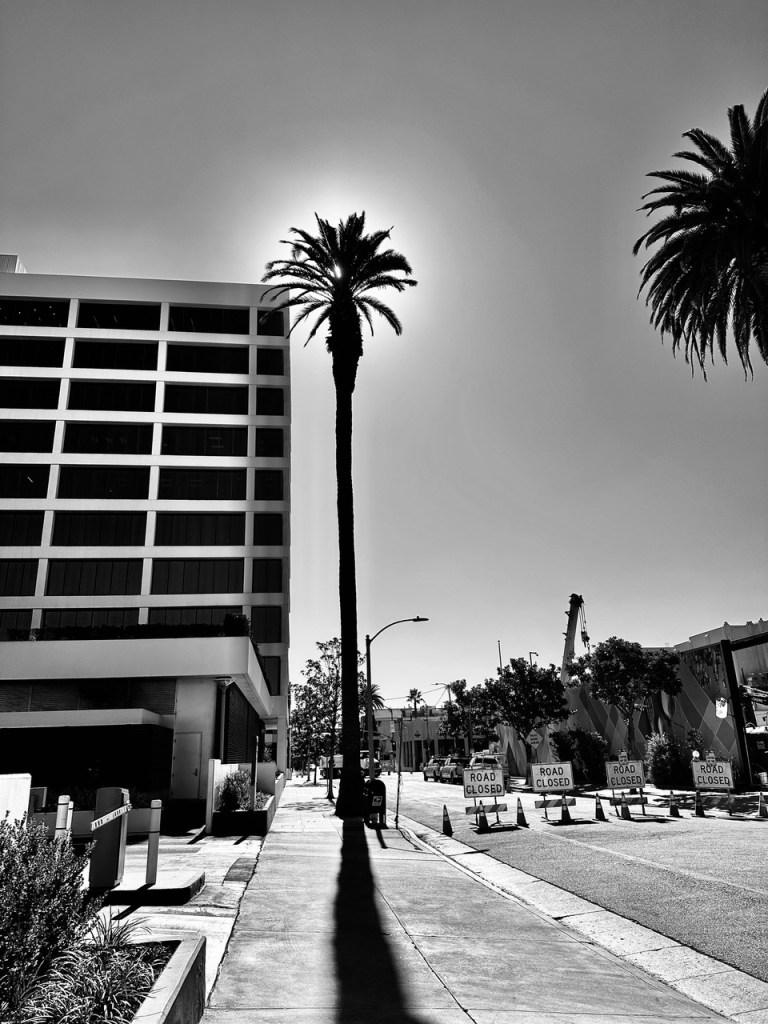
Twilight in the Amphitheatre was named a third-place Finalist in the 2025 Leopold Bloom Prize for Innovative Narration, judged by Michael Nath.
I brought my girlfriend on a date to Art Hoe theatre to see an indie flick directed by and starring a rich girl I went to high school with. She, the rich girl, was known for her straight-A’s, inspiring visual artistry, and lack of tact in mixed company due to the improvised way she used euphemisms, a tendency she publicly claimed was downstream from either feminist rebellion or rebellious feminism. Where normally a young woman may say, I’m going to go to the bathroom when she’s going to replace a tampon, the rich girl would say, I need to replunge a sponge.
I left the theatre excited, talking fast and forefoot striking the red carpeting, gushing to my girlfriend about the stark, uncommunicative nature of the depicted friendships, star-crossed by the emotive, downtrodden palette dotting every scene as one plodded along to the next.
It was like an adult picture book, I said, pronouncing the word with a clear, long A, the way the real adults pronounce uh-dult as add-ult.
You liked it? my girlfriend, always the telluric realist, asked me, shaking her head, hands in her leather jacket. Her hair was shoulder-length, dyed an illusory silver, and her left ear was pierced in five spots while the other was untouched. She had this quality of supreme mindfulness I admired. I mention all this because I took her, my seraphim, for granted.
Come to think of it, I said, what did you think?
She took a breath. Despite the film’s obvious merits, she felt that at the end of the day it was another movie about a loveless, wealthy blonde speaking quizzically about life’s turbulent mysteries, occasionally backdropped with cold humorous asides spoken faux-euphemistically.
All this I needed to hear. It was just an okay movie. My girlfriend was my anchor against the high highs of my daily grandstanding and the low lows of modern life, who had reasoned me out of depression via meditation. Yet as we parted ways from Art Hoe theatre, I began talking to myself, narrativizing my life, resenting how I’ve been a doting, golden-retriever boyfriend, feeling that she was taking me for granted too.
As it turned out, the rich girl was already in the early stages of shooting another film. She called her parents, who called my parents, who called me, asking, is this your moment? Apparently, she thought for a time about who would play the tertiary star, and suddenly, boom, bang, pow (emphasis mine), she recalled me from our little ole Ohio high school, the token straight theatre boyo. When she reached me, she asked, are you up to the task? From what she told me, I felt like I was specially plucked for this role, and I replied oh yeah, I’m down for the task.
I lied to my girlfriend to get out of Dodge. I told her that my sister was sick. She supported me and didn’t ask any probing questions, thus crystallizing my decision to lie because I don’t have a sister and what else didn’t my girlfriend care to know about me? I flew out to LA to perform a lowkey audition in a warehouse with the rich girl and several bored-looking associates as they recorded several lines of banter. In character, I desperately asked the rich girl things like, can I pick anything up for you, baby? Like the whole world, babe? and she would inhabit this bored, ironic persona and answer with things like, I’m terrific as is, baby babe.
After the audition, she told me that she believed we had chemistry. Based on how she tilted her head and looked at me when she said it, I correctly inferred that “chemistry” was like a sort of prop beaker filled with an ambiguous solution that a stagehand placed on set, and over the course of screen testing it spilled over off-set, leaking a liquid trail that we followed into a coffee house a few doors down from a menacing cathedral.
We sat on brown cushioned benches facing one another eye to eye where I called myself the Seattleite, a water-proof tour-de-force, energized by the siren’s call of rain and thunder and served as its gentle servant. We took turns vandalizing a shared blueberry muffin on the table between us until our lips were ripened violet. This flirtation between us could’ve been something beautiful, but before the gears could really get turning the bubble burst. She wiped her lips on a brown compostable napkin and announced she needed to go to the bathroom, her wording exactly, vague and unassuming and polite. This was how I knew she was lying. But what about? Did I not get the part? Was she going to seal me into a pyramid Pyrex scheme? Lying makes me antsy, even my own, and I didn’t give her the time to make an excuse. I left the coffee house while she was in the bathroom and called an old friend from college I knew lived in LA. Back in the day everyone lovingly called him Czechy the Finn.
The reason for her retreat, I later learned, was that she was plunged into a spot of nausea stemming from the inconvenient reality of an unwanted pregnancy caused by a spur-of-the-moment visit with the secondary star of the film she was preparing to shoot, which was called, Twilight in the Amphitheatre. This male lead just so happened to be Czechy the Finn, though at first, none of us knew all the facts: that I knew her, she knew him, he knew me, or that a fetus was burgeoning in her womb, half-elite Americana, half-alexithymic European with eyes as grey as a rottweiler’s sunrise.
At this point, I feel obligated to confirm that none of what I’ve said is strictly true; it’s all the plot of Twilight in the Amphitheatre. Me taking my “girlfriend” to Art Hoe theatre is in the movie. In fact, she was the one who called it Art Hoe theatre, not me. In my opinion, it is just an artsy theatre with a whole lot of feminine pretensions that do not eclipse but at least rival that of its masculine pretensions.
The rich girl, who directed and starred in the movie within the movie we saw at Art Hoe theatre is also the star and director of the movie my character auditions for, who is also the director and star of the overarching film, Twilight in the Amphitheatre, which is also a real film I actually appeared in, though it did almost nothing to boost my career and arguably led to my personal and professional downfall.
In the real world, I never met any of these people before shooting. I don’t know Czechy at all, and that isn’t his real name, but no one in the movie is referred to by name except Czechy. My “girlfriend” is not my girlfriend, in fact, my real girlfriend passed away a few years after the film premiered. And I didn’t go to high school with the rich girl, who was wealthy then and is wealthier now, and she does not speak like she does in the film. She uses euphemisms like the best of us and keeps most of her private life shrouded behind a curtain of directorial intrigue to the point where even Wikipedia cannot deduce her middle name.
But in the movie. I call Czechy, he answers, and we grab a drink at a hollow Irish pub. He’s the male lead playing the nephew to the prime minister of Finland, a dual citizen with a soft pallid babyface and the body of a rough-and-tumble Judo blackbelt as if he were concocted in some lab in Valhalla to be a walking talking glass cannon. We reminisce about college, discussing our long nights and drunken antics, years of skirt chasing and dark humor, and we fist-bump in honor of what once was.
Throughout Twilight in the Amphitheatre, he and the rich girl are in a will they/won’t they situation, and I’m the comedic spanner in the works, expanding the throughline that is their romance into a triangle, and dipping out to smooth it back into a line segment. The irony is that I’m openly trying to cheat, while those two, single, keep their tryst under wraps, a romance comprised of hurried breaths and rendezvous in parked cars.
The next fifteen minutes of the film play out in a sequence of lies, deceit, and confusion until it clicks that we all know one another intimately. The three of us meet at an upscale Olive Garden. We sit in a triangle, and the camera lies pointed upward on a Lazy Susan, revolving between our faces, and savvy audiences infer our objectives.
Czechy, uniquely unperturbed, face absent wrinkles. His motivation is to marry the rich girl and take her away from the dirty streets of LA to serene Helsinki, promising her that she can still shoot movies up there with an all-star Scandy cast.
I lean forward, eyes darting back and forth, grinning, and, if you slow the movie to half-speed, twitching in this minute way as I assess my future, to not let a dark chasm catch me after I leap.
The rich girl is perfectly symmetrical and composed, the only evidence of her insecurity is the occasional quivering of her lips. She wants to be the perfect artist living the perfect life, which is the aspect of the film I sort of relate to, and she, the real-life director, seemed to have nailed it. She’s moved onto bigger projects—a big-budget comedic spy movie for families—while I’m stalemated like a plastic King on a chess board pacing across two corner tiles.
After this scene, the movie undergoes a bout of general time where we jump between filming the faux film and our bustling triangle. The running gag throughout is that every time me and the star are about to get intimate, she experiences a bout of motion sickness and runs to the bathroom. While our relationship dwindles, their relationship blossoms, and eventually I get sick of hoping for her to see Czechy for who he can’t help but be.
In the film. I pack it all in, quit the film within the film, and realize my real love is in rainy Seattle. I call her. The camera reveals my silver-haired beauty (I call her that on the phone in the movie) sitting at a desk by a rainy window, a pile of books piled comically high featuring Nietzsche, Schopenhauer, Vedic Scriptures, and Norse Sagas, and I reveal just how much I love her, that I’m going back to Seattle.
How’s your sister? she asks me.
I’ve cut her out of my life, I respond, and I hang up like they do in movies without saying goodbye.
I get one last meal with Czechy, buying him schnitzel and pretzels at a Bavarian joint because what you don’t know about Europe won’t hurt you. I ask him point blank; do you love her?
More than anything else I love, he replies. Any viewer knows, based on his apathetic attitude and his lack of any real conflict in the film, that his answer doesn’t mean much. After filming wrapped, he moved back to Finland and took on a cabinet position.
Do you love your girlfriend? he asks me in return.
I think for a literal on-film minute, deafeningly silent as the ambiance of the restaurant absorbs the frame, before opening my mouth to monologue.
Once, she asked me to pierce a sixth hole in her ear. I lined up the needle, I applied pressure, but I just. couldn’t. do it. I obviously had the strength to, but my brain wouldn’t allocate the pressure. Have you ever tried to bite off your own finger? Theoretically, I could tear that sucker off, but, in the real world… I tried so hard to be unfaithful, but every attempt was thwarted. We’re meant to be. I could not pierce her ear nor her heart.
In the next scene, I am seated in an airport lobby. I’m looking at a ticket, and when my flight number is called, I stand up to board the plane that will return me to the love of my life.
In the scene after that, the rich girl is sitting in a chair in the waiting room of an abortion clinic, leaning forward and resting her elbows on her legs like she’s benched at a WNBA game, half-looking at the raised television playing the news. The woman next to her is older, presumably there with a daughter or a niece, and is crying into a splotchy handkerchief, apparently experiencing some concoction of fear, regret, and guilt.
The rich girl had been rehearsing for weeks for this moment and her acting is almost method as she grips the wrist of the crying woman like she would a teammate. Her face is sweaty and as sharp as a knife. As if she is the one who performs these procedures, the rich girl speaks to the other woman in this determined voice that trembles into a bassy resonance and tells her in a way that continues to haunt critics and audiences alike, this is how it was always going to be.
The woman narrows her eyes, fully perplexed, and stops crying. The frame pauses as the woman’s face contorts into a circle of flight, fright, and incongruity. Then, the camera dollies to the TV, where a newswoman is reporting on a plane that crashed in northern Oregon, a flight with the same flight number that I had boarded the scene prior, but the rich girl doesn’t realize the implication of this revelation, and never does.
In the real world, I was dating an LA native. I loved this woman. She made it through high school in the LA area sane, ambitious but not narcissistic, and somehow relentlessly optimistic. But because we lived on opposite sides of LA, her with her parents and worked long hours as a UX design artist for a video game company and me running around to auditions and living with five dudes to make rent, we seldom saw each other, sometimes for weeks.
Meanwhile, my girlfriend from the movie who still had silver hair, was newly single. She and I had stayed in touch since filming wrapped, and she was otherwise the same as her in-film appearance—grounded, meditative, vaguely sapphic—my type to a T. She had recently moved to Iceland to soak in the vibes, uploading new tracks to their atmospheric catalog on Bandcamp that have this dithering sonic quality that earned her first album a lot of indie acclaim.
So, the night before my actual girlfriend was to go to the hospital to have a routine procedure, I decided this was the perfect time to propose we open up our relationship. Yeah. I asked her this, the woman whom I wanted to marry and who had held my arm tight during Twilight in the Amphitheatre’s premiere, who whispered to me, you’re the real star and this is only the beginning for you. We had a long argument that ended with her going to bed early. The next morning, she drove herself to the hospital. She was put under. Somehow, she experienced an unexpected allergic reaction and never woke up.
The real world. I haven’t appeared in a movie since Amphitheatre, despite some passing mentions of my decent performance in the otherwise glowing reviews. In the real world, I relied on my now ex-girlfriend for everything. The real world. I betrayed her and anyone with eyes can see that I am a victim of a tragedy of my own making and she is the victim of stupid fucking luck. My film girlfriend suggested I take some time to myself, maybe visit her in Iceland, where she and her band are sequestered as they absorb Iceland’s natural isolation and channel it into their music, living off a sliver of her trust fund.
My ex’s parents were never fond of me but were unaware of our fight immediately preceding her death and thus allowed me to pay respects at her open casket. The morning of I get cold feet because I am nearly drowning in my emotions, barely keeping my head above water, so I go for a walk around the sunny streets outside the cathedral in my pinstripe suit. I must’ve been on autopilot because I wound up in the same coffee house as from the film, and in the cushioned chairs I flirted with the rich girl was a bronzed couple who recognized me instantly from Amphitheatre, said, hey, that’s him! to which I said, hey, this is the place! and it’s like a switch was flipped. I was a zombie, and then I wasn’t, instead, I was pure, unadulterated, buzzing light.
They told me that they were world travelers, and had seen my movie in Panama. They were eager and never broke their open-mouthed eye contact. They thought my character was hilarious.
Yeah, I prefer comedic roles, I said, laughing. Oh, the director? We stay in touch, I told them, lying. What about that ending? Yeah! What about that ending?! And we carried on this way, and I began to feel a confidence brew in my chest, an endless affability I could bring as an actor.
Then they asked me how it felt to be killed off, still staring, still open-mouthed, and I was reminded that we all are parasites hanging like leaves from a cascading mortal coil, that we will one day die, that my now-ex-girlfriend had died, and there I was, up to my neck in it once more, and I downright bawled. When I tried to speak, even more tears escaped, followed by a snotting parade that stained my suit jacket, and admittedly I even, in one brief stainless burst against my black slacks that dried soon after, peed myself. By the time the tears relented such that I could peer behind the veil over my eyes they were long gone.
It took a while, but I managed to get to the bathroom and wiped myself down with a cavalcade of paper towels. I made it to the funeral barely on time and I didn’t lose it completely there either, likely because we were in the middle of a drought and I was severely dehydrated. The couple had mentioned the ending of Amphitheatre, and I thought about it to keep my mind off things, though I’d only seen it once, at the premiere with my ex by my side.
In the last fifteen minutes or so of Twilight in the Amphitheatre, the movie within the movie wraps, and the rich girl and Czechy take a vacation to a non-descript village in the United Kingdom. It’s obvious by her expression that she is head over heels in love with Czechy’s loveable weakling of a face, and his expression looks like it always does.
The sun is setting and they’re ambling around, in love, and just so happen upon a musty amphitheatre surrounded on all sides by dried grass. A brief drone shot of the theatre makes it seem vaguely Roman as if a memorial to itself and the very conception of crumbling. A couple dozen Brits are murmuring in their implacable accents across the stands, and an announcer from the dirt stage welcomes the audiences and introduces the participants in that night’s Britian’s Confessional Festival, where every participant reads aloud from a prepared speech some depressing element of their English lives.
The first confession comes from the mouth of a Londoner who is never shown on camera. She speaks clearly and loudly, and as she talks, day transitions to night and her voice descends into depression. The camera remains trained on the rich girl and Czechy. The star never has to get up for the bathroom because of her abortion, so she is free to gaze into her Finnish lover’s empty eyes and Rorschach them into pupils.
The British woman’s story is as follows: she and her boyfriend flew to Lisbon a few summers back. It was their first time on the continent proper, and they saved years in advance. This was to be the summer that they saw how the rest of the world lived. She, of half-Slavic descent, speaking some French and Russian, was their compass, and he, of half-Han Chinese descent, speaking merely the Queen’s English, helped them make friends.
They hiked their hikes, walked down the narrow corridors of streets, slept in hostels, and caught trains from country to country. They saw pride parades and bar fights, spurious strangers making out in Parisienne alleys and the painful jeers from Polish stadium stands to black footballers, red hot vomit on the Berlin metro and the familial close comfort of other traveling youths in hostels as if isolated together on an arctic substation. The camera zooms further on the rich girl and Czechy here, as they begin a career-defining kiss.
Their journey took them into the Baltics and then into Russia, where her language skills gilded them across its railways as far east and then south as possible, where curious locals talked to her and ignored her boyfriend. They then hitchhiked to the abandoned hinterlands on the Sea of Japan near the three-pronged border with China and North Korea. They find the stone engraved in Chinese Hanzi, Russian Cyrillic, and Korean Hangul commemorating the intersection. Meanwhile, in the stands, the couple’s kiss becomes a make-out session, her cheek in his smooth palm.
The Brit’s boyfriend had said, I tried to learn Korean, but I couldn’t keep its little symbols straight, and I called myself the Han-Ghoul of Hangul. Despite the placement of the stone, they were a bit away from the border proper, which is down the road some miles and across a bridge over a river. That’s the ticket to NK, the boyfriend says, which was always their terminus, the place where they would learn the truth about how the other half lived.
He asks her, are you ready?
I don’t think I’ll ever be ready, she replies.
We’ll be okay.
We won’t be.
He shrugged and hiked down the dirt path, grass on either side, gaining ground as she stood idly, watching him until he was lost in the undulation of the hill, and the whole time she never said a thing. She knew if she called him, he’d turn around, but she didn’t. It was like rubbernecking a car wreck, she said.
She waited hours for him to come back, and when it started to get dark, she took shelter in an abandoned building and subsisted on protein bars through the evening. When she came back to the stone the next morning, there was no sign of him. She hitchhiked back to a train line, took the train, booked a flight out of Finland, informed the British government, and there has never been, since then, word of a British inmate in North Korea, no word of his return. It’s as if, she said, grieving, he turned to stone and collapsed into the river.
By the end of this monologue, the star and Czechy are all over one another. He has taken off his jacket, and she, her sweater. The crowd golf claps and the camera zooms so far in that the only things real are their hands on each other’s faces and their tongues wagging in acquiescence. Fade to black. The first name in the credits is the director and star. The second name is Czechy’s real name. The third is mine playing the role of the Unfaithful Seattleite.
The funeral. I somehow kept things together. I shook my ex-girlfriend’s parents’ hands and told them how sorry I was for their loss. I said goodbye to her at the casket, where she wore a dress that I had never seen her wear before and had this knowing expression on her face, but otherwise looked vibrant and beautiful. After the service, I texted my film girlfriend, the one with the silver hair, the one ear pierced, the telluric one, and she texted back in Icelandic because she had been practicing in her spare time, a language that has been consistent across its whole history. she bragged, like one endless coiling tail. Within the month, I flew to Iceland on an indefinite vacation, staying with her and her two bandmates in a Reykjavik flat. The first week I was there we rented a car and drove up to see the northern lights, but they didn’t appear. Then winter began in earnest and the sun scantly rose.
The never-ending nighttime was the reason my film girlfriend and her bandmates were there, to fuel their next album, to capture the sheer expanse of isolation as they strummed on the floor of their tiny flat into their headphones. Hot water pipes, heated through geothermal energy, kept the floor comfortable. We wouldn’t leave for days on end. They continued to record and upload music.
One day during the long night we watched Twilight in the Amphitheatre on a laptop to show my film girlfriend’s bandmates how we met. We cooked the only thing we knew how, which was stir-fry, with rice and dissected fish and overripe avocado and whatever vegetables seemed the freshest from the closest grocery store. When we finished eating, one of her bandmates went to the bedroom he shared with the other and closed the door. The remaining bandmate, who had a caricature of Grover Cleveland tattooed to his chest, sat at the kitchen table playing Solitaire like he did most nights. I asked him, why Solitaire? He told me that after a long day, it quiets him, and it had always done that, ever since his dad had taught him how to play. I thought about it and remarked that that’s like most things that interest us, like when I was first taken to a Broadway show, I was silent the whole time, and when they made their music, little of it escaped their headphones and they spoke in whispers, because that’s what our passions do for us, they insulate our minds from the terrifying noise outside ourselves. When he went to bed, it was just me and my film girlfriend. The only light on was the orange dot from the coffee pot and the blue bulb overflowing the bedroom she and I shared.
I was sitting on the floor with my legs crossed and she came over and laid her head in my lap. She asked me to look for organic grey hairs, separate from the dyed ones. This is getting to me, she said. I told her that this was the calm before the storm. Their music would find an audience. It had once, it would again. You’re just an optimist, she told me. She said if they made it through winter and hadn’t found success, she’d give up on music forever.
And then what? I asked.
And then what for you? She replied. I didn’t have anything to say to that. I didn’t have a plan b. We sat for a moment, listening to the other breathe and staying warm.
You know, neither of us was her first pick, right? I almost asked her who she was talking about before realizing that she was talking about the rich girl. I don’t know about you, but someone in casting told me I was her 7th choice. She sat up and tilted her neck back and forth over her shoulders with her eyes closed. She listened to my album at the time when I was still solo. When she finished listening she unplugged her headphones and told me that this was one of the best things she’d ever heard but she would never listen to it again.
I sat there confused for a few seconds, struggling to find the light in something like that. It is one hell of a first listen, offering her the obvious silver lining. To this, she stood up and walked to our bedroom. I’d rather sleep alone tonight, she said, closing the door.
I wanted to protest but knew better. I never told her this, but Iceland made me terrified of the dark. It got so quiet there that my ears would sometimes ring. Often, it’d be a struggle to fall asleep even when I was sharing a bed with her. I curled up on the couch under three levels of blankets, but I could do nothing but hear sounds that weren’t there, like that of an impossible spring drizzle, or the sound of a window pane smashed to bits on the pavement, or the sound of invisible sticks rattling against the metal parameters of a snare drum.
Andy Bodinger is a fiction writer, essayist, and PhD student at Ohio University. He earned his MFA from Oklahoma State University where he was an associate editor at The Cimarron Review. He is formerly an ESL teacher, having worked in The Czech Republic and China. His essays and stories have appeared in Willow Springs, South Dakota Review, and The Pinch, among other places.
Photo Credit: Jennifer Shneiderman is a Licensed Clinical Social Worker, writer and visual artist. Her writing has appeared in many publications, including: Yale University’s The Perch, UCLA’s Windward, The Rubbertop Review and is forthcoming in Kent State University’s The Listening Eye. Her visual art has been featured in Rock Salt Journal, Harpy Hybrid Review, Unleash Lit, and God’s Cruel Joke.
 L'Esprit Literary Review