Nataliya Deleva
Fiction
Editor’s Note: The following is an extract of Nataliya Deleva’s newest project, Your Beautiful Life. Read a conversation with Nataliya, the L’Esprit Issue Six Featured Writer, here.
LIGHT LEAK. HOME, NIGHT TIME – A WEEK LATER
When you lie in bed in the opaqueness of the night, bright, luminous forms loom, as if by magic. Light bananas. That’s what you call them, the shimmering objects floating before your eyes in the dark, swinging from the left side of your vision to the right, then leaping upwards before plunging down again. Like shooting stars, these streaks, these bright yellow shapes, delineate the darkness locked under your eyelids. The lights won’t disappear until you’re able to calm your mind down, and right now you’re feeling too restless. To drift off to sleep, what you need is to smooth the sharpness of the stubborn thoughts by doing something like listening to the repetitive sound of raindrops hitting the window. But the night is clear and it’s not raining.
Annoyed at yourself, you kick the blanket off and, before trudging to the kitchen barefoot, glue your face to the window. A few street lights emit a halo around their bulbs and render the city hazy, mystical, making you feel quietly overjoyed with the aloneness. You take pleasure in the quietness of the room
in the placidity of the moment when the neighbours’ TVs are switched off and their conversations have died down
in the lack of distractions from the outside world, which sketches the confines of your solitude.
In the kitchen, you stretch out your arm to open the top cupboard, where you keep the teabags and your valerian tablets. It’s all about perception, Meera likes to say, so you treat your sleeping pills as herbal remedies, nothing to worry about or get addicted to, hence keeping them in the same place as the tea and cereal boxes. Your only addiction is to the stillness of the empty house. You take a tablet with half a glass of water, then go back to bed and cover your eyes gently with your palms as if to create a protective film from the outside world. The dancing shapes reappear, dazzling, blinding, not letting you fall asleep. You give in. Check your phone. It never works. It makes it worse and you know it, but you’re bored, tired.
You scroll down your social media feed, uninterested in people’s lives and yet digging into their posts drafted with wit, striving for originality. You open the messaging app and click on Jacob’s profile shot: a black-and-white close-up of his face in the style of a prison photograph. It was apparently from some TV ad and he kept it as a joke. His neck looks long. Blowing up the picture on the screen until it becomes pixelated and grainy, with your fingertips you trace the shape of his thin lips, his aquiline nose, his high forehead. Two blue ticks on your last message to him: no reply. Cocooned by his features, you let your thoughts spiral back to your encounters with Jacob. Lately, he’s been snatching every opportunity to chat with you at the Academy. You certainly don’t mind the glances he steals at you every time you bump into each other. The way his eyebrows enticingly arch in a flash and he squints at you as if looking at a bright light, with a cheeky smile. You carry his woody scent long after he’s walked past you in the corridor, like a child tucking away a biscuit in their pocket to savour later.
Scrolling through his messages, you reread the last few, searching for hidden meaning behind ordinary strings of words. Some coy, late-night texts set your fantasy in motion. The one from Wednesday invites you to a dinner with his sister Sian for her thirty-seventh birthday the first Saturday in January. Sian’s partner, Kat, who is a Michelin-star restaurant chef, will be there, the message accentuates, perhaps Geraldine and David, close friends of his sister. And I’d like you to join me if you fancy a delicious dinner and drinks, the message ends. Being introduced to family members, compared and probed against an invisible list of exes, seems a bit too fast, but you accepted the invite, torn between desire and propriety. Although he’s been circling you for weeks, it’s only now that you feel your hesitation lifting.
Drawn to the pockets of pleasure that await you.
The night advances. You place the phone on the floor next to your bed and close your eyes again. Your head sinks into the softness of the pillow; the silky fabric feels gentle and fresh against your face. The light bananas are now replaced by Jacob’s image. Soothed, you drift off to sleep.
VIGNETTES. HOME
Like in jazz, the best improvisations in life are the rehearsed ones.
The plan is: you’re hosting a dinner for Jacob tonight, and you’re fretting about what to cook. Something that will taste both familiar and authentic, revealing a part of your Eastern European heritage without being too lavish. Like a headless chicken, you open cabinets one after another, leaf through recipe books to check the ingredients they require, and in the end decide to make stuffed peppers with mince and risotto rice in béchamel sauce, sprinkled with rosemary and fresh parsley and a handful of roasted cashews on the side, along with baked cherry tomatoes, green salad and tiramisu. It will take hours to make, so without wasting a minute, you head to the nearby market to get the peppers, lemons for the béchamel, lettuce and fresh herbs, and pop to the supermarket on the way back for the mince and the tiramisu ingredients. At home, you keep a bottle of rakia from your Bulgarian grandfather which you find too pungent, and a selection of wines and beers. You spend the whole Saturday afternoon preparing the food, but you don’t mind; it gives you pleasure knowing someone else will get to appreciate your cooking tonight.
You open the door in a black silky top and dark green long pleated skirt, and give the bouquet tucked under your nose a gentle sniff. ‘How did you know irises were my favourite flowers, J?’
Instead of a hug, he takes your hand and kisses your fingers, eyes pinned on yours, and you feel confused by the way he lingers. The act strikes you as formal and intimate at the same time.
‘I’ve got my ways,’ he says with a wink.
He certainly does. You welcome him to the living room, which you always keep clean and in meticulous order since that’s the only way to find what you’re looking for and to prevent you from tripping over items left on the floor.
You discovered this one-bed flat in Hackney by chance, when an ex-colleague of yours moved to Spain a couple of years ago and had to sell it quickly. Chain-free, nice location, affordable price due to the rush to sell. It sounded too good to be true, considering the crazy London house market and the fact that the majority of your friends were still renting, their options to become homeowners shrinking by the minute. Your parents helped and you exhausted your meagre savings completely to pay the deposit, but three months later you were in, painting walls and flipping through interior design magazines in the evenings.
They were jealous, your friends. Even ones who knew you well, who knew you were born to an immigrant mother. You didn’t fit their clichéd view of immigrants, begging for low-paid, low-skilled manual work, grateful for the damp, mouldy flats they rented. Although living in London for over thirty years, your mother still answers questions about whether she misses her home country and whether she’s planning to go back, and she, unsure of where home is, of whether returning means crossing borders or time, just smiles and nods unconvincingly. She’s become accustomed to white British locals searching for the differences between them and immigrants like her, like the contrast between the olive colour of your mother’s skin and theirs. They wouldn’t miss the linguistic make-up giving away her foreign heritage. They’d even point out the meal spiced with summer savory and merudija she would cook for them when she welcomed acquaintances and friends to dinner parties.
Knowing your worth is the most important lesson she’s taught you. You didn’t acquire a comfortable life, didn’t inherit wealth: you studied and worked to earn your money.
‘Hope you’re hungry,’ you say, inviting Jacob to the table in the compact dinette. He’s been quietly observing your flat until now, picking up random items from the shelves before placing them back down.
‘Are you renting?’
‘No. Owning. Well, the bank is. They’re just letting me stay here,’ you say in an attempt at a joke.
‘Looks great. Minimalist,’ he says, approaching the table.
‘Bare, you mean.’
‘Not cluttered like mine,’ he says.
‘Well, I have ideas. But I need time. And money. Most of what you see is props from the film productions in my old job, furniture that was no longer needed.’ Your design inspirations still haven’t materialised and the flat feels like temporary accommodation, but it’s yours, and that makes you feel elated.
‘They let you keep things from the films? That’s cool.’
‘Yeah. I managed to snatch them half price or sometimes for free, depending on how much they were used in the shoot. Practical items I needed but couldn’t afford to buy brand new.’
The walls are all in shades of white, with a statement wall here and there to define and make the space pop. For £30 you ordered a tin of bottle-green matt paint which was enough to cover one of the walls in the living room, the one opposite the windows. A rich, deep green, which you balanced with an abstract-shaped copper-framed mirror and a lampshade in the same honey-like colour. The four-seater IKEA sofa bed, the mustard velvet armchair that leaves a fallacious sense of luxury and speaks to the green wall beautifully, the king-size bed which on some nights feels far too large to offer the cosiness you crave, the coffee table representing a lacquered walnut tree trunk, too heavy to move, so you placed it in the corner of the living room next to the sofa, where it’s barely used. It seems that the only items you’ve purchased yourself are the pots of plants, either hanging or scattered freely across the free-standing bookshelves, also film props.
‘Mm, it smells so good. Please don’t tell me you’ve spent all day in the kitchen!’
‘You think I’d do that for you?’ A pretended sneer in your voice. ‘It’s an easy dish to make, nothing special. Tuck in then. Drink,’ you say in an attempt to conceal your lie, and direct his attention to the alcohol selection on the rack.
‘Oh, yes please. Red wine maybe?’
‘Sure. I think I have a Merlot.’
‘Great, I trust your choice. So, how’s work?’
‘Are you serious?’ you laugh while placing the rounded glasses on the table you’re your fingers wrapped around them. ‘Do you really want to talk about work?’
‘I just want to be sure you’re enjoying it, so you stay with us at the Academy. That’s all.’ He makes one of his naughty faces and clicks his tongue.
‘I’m not planning to leave soon, don’t worry. I love it actually.’ You serve the food and sit opposite him. ‘Siobhan said that the feedback from the short courses has been great so far. She gave me some extra classes. Which is pretty good, considering the bills are up again.’ You laugh and regret mentioning money, so to conceal this add in quickly: ‘I must be doing something right, I guess.’
‘Check you out! Cheers to that!’
You gulp down the wine (a wave of warmth trickles down your spine)
and the way he speaks
and moves his body
and the way he looks at you with eyes lowered and a hushed smile
and everything he does brings you pleasure.
You observe the way he breaks the chocolate after dinner into random-shaped pieces, never following the lines.
‘How Deep Is Your Love’ by the Bee Gees starts playing on the radio, and you both giggle.
‘What is this radio station?’ He slaps his forehead in disbelief, smiling wryly.
‘You can change it if you want.’
‘Nah, it’s cool. I’m just playing with you.’
‘Do you envy the way people used to show affection and be romantic back in the old days?’ you ask.
‘What do you mean?’
‘You know, the whole physical letters thing, the music compilations as a message of love to the one you fancy.’
‘I like the idea, but can’t say I envy them. And now you’re probably thinking he’s one of those very unromantic guys,’ he says.
‘Being a male cliché, you mean.’
‘Oh, come on now. I can be romantic if, you know, if that’s what it takes. How come you thought of that?’
‘This tune took me back to a cassette I came across at my grandma’s last summer. It was my mum’s, actually, a gift from an ex-boyfriend. Named Stephan.’
‘Exposing the Stephan guy some forty years later.’ He gets up and reaches for the radio remote. ‘It must have meant a lot to your mum, though.’
‘I guess so. While he’s probably long forgotten about it. Wait, don’t change it yet. Should we dance?’
‘Erm, dance? Really?’ The startled look on his face makes you giggle.
‘Oh, come on, J. You just said you aren’t a cliché and you’d do what it takes. Just this one?’
He still looks unsure about it and scratches the back of his neck, but you take him by the hands and then place your arms on his shoulders. He enfolds you in his arms gently and starts swaying his body and yours to the rhythm, left to right to left to right. His face almost touches yours and you catch him smiling. You feel the warmth it radiates. Or maybe it’s your face that has become sizzling hot. The music soothes you. You close your eyes. There is no need to look around; you feel him with every cell of your body,
you inhale his scent
and hear his breathing in your ear
and his touch makes you alert and electrified.
There’s trust between you: you trust him to lead, trust him to keep you safe.
You’re almost disappointed when the song ends.
Snuggled on the sofa in the living room with knees gently grazing his, you linger in your conversation long after midnight, over red rum and dark Green & Black’s, and some French music station he found on your radio. Stretch out the meditative state of anticipation as long as you can.
When he holds out a piece of chocolate close to you, you lean forward and take it with your lips. He seems surprised; perhaps you’ve misread his gesture.Before you get a chance to apologise, he lowers his head towards your right side.
‘For the record, I did enjoy our little dance. I’ve never felt the curves of a woman’s body fit mine so well,’ he whispers in your ear, and you aren’t sure how to take this,
and whether it’s enough.
POLAROID.
You didn’t get your build from your mother. She’s always been small-bodied, slender. Never eating more than a few mouthfuls. ‘You’re getting so slim, one day we’ll lose you in the shower and you’ll sink along with the dirty water,’ her dad would say to her, oblivious to the cause of her eating disorder.
Her childhood was blighted by mistreatment from her alcoholic father. She told you once that she wanted to disappear during those early years, which were marked by shouting and neglect. Perhaps, in her endeavour to take up less space, her body had refused to develop and grow, uniting with her desire to hide behind her invisibility: an act of conspiracy.
She only started to put on a bit of weight after moving in with Kyron. Just a fullness that has given her features a soft, mellow look. The appropriate figure for her age: her words, as if there was a set ratio between pounds and age that she ought to obey.
The physical abuse your mother had endured was the reason she fled her home country and settled in London. She was around your age when she relocated; alone in a foreign place, bruised by traumatic childhood experiences. Determined.
Although your mother doesn’t completely abstain from drink, she likes to remind you that alcoholism is a family trait, like an antique bracelet passed down the generations. ‘It’s in your DNA,’ she’d say with that scolding look every time you raised a glass of wine; the excess of spirits was what killed him.
The only excess you’ve experienced in your life so far has been your never-ending procrastination.
What if?
In contrast to your mum, your biological father is tall, large in body and personality. Overshadowing. That’s how your mum describes him. You don’t remember much of him, since they separated when you were four. The only thing you recall is the elegance of his hands: well kept, surprisingly lean compared to his body.
You must have been around six when he last spent time with you. He took you on holiday once or twice after moving to France with his new wife, then girlfriend, an actor from one of the theatre productions he was directing in London, and never visited you afterwards. He called from time to time, sent occasional birthday cards, but these small gestures dried up after a while.
You hate the fact you resemble someone you can’t even recall, but equally you loathe the idea of trying to re-establish contact with him.
The fear?
Of disappointment.
And of striking similarities with the man who abandoned you.
Long before he disappeared from your life, he left a part of himself to always remember him by.
GLITCH. A STERILE HOSPITAL ROOM, TWO PEOPLE SITTING OPPOSITE EACH OTHER
You sensed something wasn’t right even before the ophthalmologist delivered the news. In the darkened room, following a series of tests – bright lights directed at your eyes, and retinal scans – the air felt dense and sticky. The consultant talked slowly, chewing the words like tobacco and pausing after each sentence, anticipating your reaction. You presented yourself as calm and contained, and even managed to crack a joke. This seemed to concern him more than you thought. ‘Do you understand what I’m telling you?’ he kept asking in a hushed but firm voice.
Of course you did. His thrumming speech drilled into your ears and invaded your body, eliciting an ocean of questions, but you stayed still, glued to the leather chair, picking the skin around your thumbs with uncut nails. You needed time to absorb the meaning behind the hollow words. To parse the chunks of information and translate them into something that made sense. Something that wouldn’t define you or your life from that point onwards. You weren’t just absent-minded, inept. All of a sudden your clumsiness had a name.
He gave you a brochure to read at home, booked you in for a genetic blood test the following month and said he’d see you in a year. ‘There is no cure,’ he said, ‘but there are several research projects in progress,’ opening a glimpse of hope to hold on to.
You walked out of his office and found yourself in reception, crowded with people, sitting on chairs or standing nervously, waiting for their tests, results, diagnoses. They looked meek, submissive, their conversations hushed. The space was full of uncertainty, the sound of your unsteady breathing, in and out, the ringing noise in your ears.
‘Are you feeling OK?’
You heard a voice behind you. You were overcome by the impression of your feet melting, and you managed to lean over the back of a nearby chair, an instant away from fainting.
‘Breathe deeply, young lady,’ the voice instructed. A glass of water appeared before your hands. A close-up of a worried female face, crinkled in concern.
Breathe in.
And out.
After a while, you collected yourself. You took the lift down to the ground floor, and on exiting the hospital turned right towards Old Street station. It was pouring, but you only noticed after a while –
after you felt the weight of your wet hair falling over your arms,
the raindrops saturating your face,
the splashing sound your sandals produced when you stepped into a puddle.
Your eyes hurt from the daylight. The brightness obscured the cityscape and only revealed the silhouettes of people passing by, coming into view in a flash and quickly fading away as they hurried in front of you. Their reflections trembled in the puddles. You felt tears forming in the corners of your eyes, blurring your vision, but you didn’t let them escape. Is this how it’s going to be? You couldn’t have answered that question.
You got on the Northern Line towards Elephant and Castle, where you rented a room of a shabby four-bedroom house back then. You locked the door, shut the curtains and stayed. Just stayed with those words: You’ve got RP. It’s short for retinitis pigmentosa. You’re losing your sight.
Losing your sight.
The day shrank into the evening, and dissolved into black.
BLACK & WHITE.
Eyes wide open, you spent the night trying to reassemble yourself, tracing back memories of awkward situations which you’d suppressed: tripping over objects, bumping into lamp posts, feeling insecure in cinemas or nightclubs. Events that signalled your condition like fireflies yet remained omitted. Incidents you had brushed away, convincing yourself it was probably nothing.
In the morning, you phoned your mother after making a cup of aromatic Ethiopian robusta and skimming over the brochure you’d found tucked in your bag, like a crutch to lean on during the call. She answered after a single beep.
‘I had that appointment at the eye hospital yesterday, Mum. Yes, the one my local optician referred me to. No, I didn’t have to wait too long, they were quite good actually. I needed lots of tests. Erm, a visual field test first, where I had to stare at a black screen and press a clicker every time I saw a dot appearing – I didn’t click more than twice, which was concerning for them. Then I had a retinal scan, then something called an electrodiagnostic test, a very bright light showering the eyes, and to be honest, I was worried the light itself would blind me. No, no, Mum, that was a joke. They dilated my pupils, which blurred my vision afterwards, that’s why I didn’t call. Yes, I was seen by a consultant. No, not a junior doctor, he was a professor. Mum, can you stop for a second, please? Mum, listen, I’m losing my sight… Did you hear me? The consultant said I was going blind. It’s something genetic, apparently… Mum? Yes, he was sure. I know none of my relatives are blind. I told him, yes. He said it was possible. It happens when a person’s DNA inherits two copies that carry the abnormal genes causing the sight loss, one from each parent. It’s also written in the leaflet he gave me. That’s what he said, yes. No, he doesn’t know if this would affect my kids. They need to run a full genetic test to know more. Mum, I haven’t had a chance to worry about my unborn children yet. I know, I know you didn’t mean it like that. Nope, there’s no treatment. No cure. I said no, Mum, no laser surgery. It’s not a cataract to remove, it’s my faulty genes killing my retinal cells, the rods and cones! Sorry, I didn’t mean to shout at you. It’s not your fault. Well yes, it’s your genes, but… Mum, please don’t start crying. I’m fine. I’m perfectly fine, honest. The consultant said it would take years, possibly even decades before I go blind. Right now it’s just the peripheral vision that’s affected, and my ability to see in the dark. Yes, I know, this explains everything. Just please stop crying. I’m fine. I promise. I’ll call you again later, OK? Love you.’
This happened seven years ago. You had just turned twenty-two. Joined an indie film company as a film production assistant. Moved out of home. Your beautiful life awaited; the cheesy birthday message from your mum felt suddenly ridiculous.
You let your mother deliver the news to the rest of the family.
You didn’t tell anyone else. Not yet.
GREYSCALE.
In the months that followed, you refused to accept the diagnosis. You pretended you hadn’t heard it. Because if you don’t think about something, that something doesn’t exist. You believed that. There was no need to worry about a condition so slow to develop. By the time you started noticing the changes in your vision, you would be old enough to convince others, and yourself, that this was part of the normal ageing process. Diminishing sight. Cells dying. One day your whole body would die; why bother now, you thought. At twenty-two.
When your beautiful life was ahead of you.
Nataliya Deleva is a British-Bulgarian writer, living in London. Her debut novel, Four Minutes, was originally published in Bulgaria (Janet 45, 2017), where the book received the most prestigious Bulgarian prize for emerging literature in 2018 and was shortlisted for several other national awards. It has since been translated into German (eta Verlag, 2018), English (Open Letter Books, 2021) and Polish (Wydawnictwo EZOP, 2021). Her second novel Arrival, written originally in English, was published by The Indigo Press, UK (2022). Her shorter work has appeared in literary journals and anthologies, such as Stories from the 90s (ICU Publishing, 2019), Words Without Borders, Fence, Psyche, Asymptote, Lunate, Review31, and Granta.
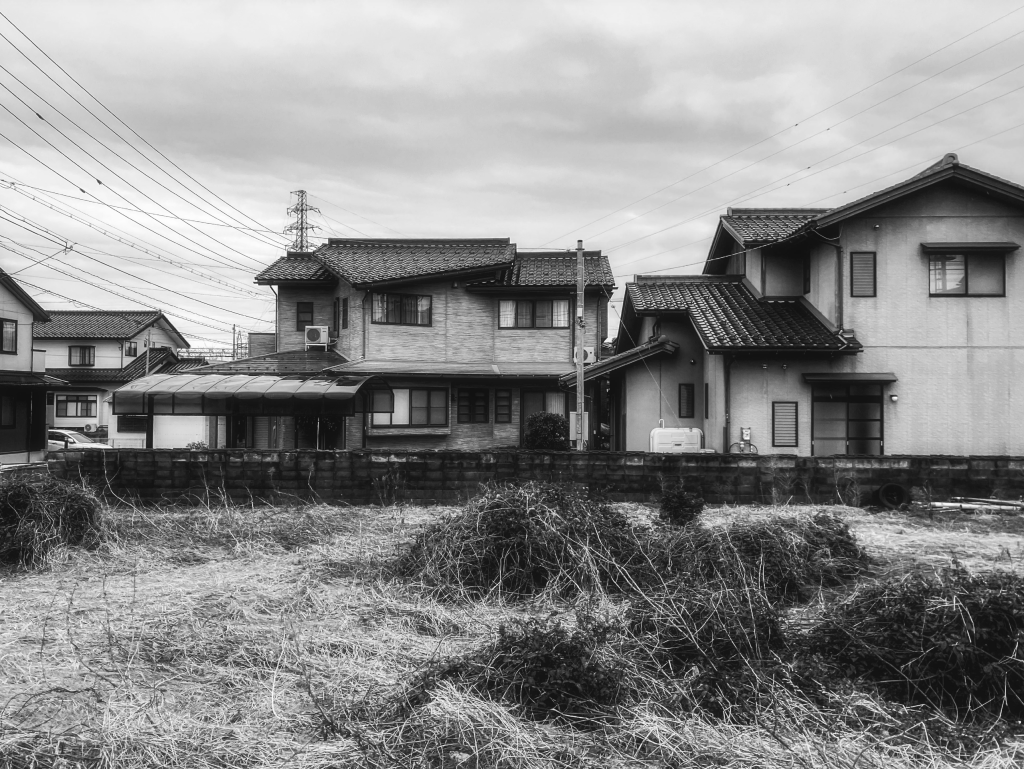
Photo Credit: Jacelyn Yap is a self-taught visual artist who ditched engineering to make art because of a comic she read. Her artworks and photography have been published by the Commonwealth Foundation’s adda, Chestnut Review, The Lumiere Review, and more. She can be found at https://jacelyn.myportfolio.com/ and on Instagram at @jacelyn.makes.stuff.
 L'Esprit Literary Review
One response to “Your Beautiful Life”
[…] A conversation with author Nataliya Deleva about her creative practice, her previous books and her new writing project. Read an excerpt of her latest project here. […]
LikeLike