Joachim Glage
Autotheory
We’ll jump right into it, the way an aphorism does.
One needn’t be Hegel to wonder if contradictions lie at the heart of everything good. At the very least one might hypothesize that all artworks—and all aphorisms, too—have the same contradictory goal: to be lucid and mysterious at once.
In every artwork there is a degree of “unsatisfyingness” which closely resembles the imperfection—the subtle wrongness, the patina, the uncanniness—that one cannot help but glimpse in a mirror. We shall borrow the famous phrase from the Vulgate and say that art is transmitted per speculum aenigmate. Artworks can never finally rid themselves of this enigmatic character—a fact that lay at the heart of Plato’s reflections on art, no matter what crude simplifications regarding mimesis have since stolen the show—which is why there can be no such thing as a “satisfied” artist. Artists, like all narcissists, secretly loathe the very thing that absorbs them: if they cannot keep from gazing (at their works, at themselves), it is because they can never be satisfied with what they see.
Someone in the latter half of the twentieth century—presumably it was Arthur Danto—was responsible for the idea that the avant-garde artists of that period (of whom Andy Warhol was only the most notable example) proceeded more like explorers than like creators: they set out to discover—not invent—what lay on the outer boundaries of art. Whether this characterization clashes with your assumptions regarding artistic production in general may say a lot about how you understand the mystery of artworks; for the question of the origin of a thing is inseparable from that of its mystery, and not since Hegel has anyone really thought that “outer” and “inner” worlds are but reflections of one another.
All art is a mystery to itself. (Or, to put it in more Heideggerian language: Art has itself as a question for it.) Even Virgil and Homer, nestled in their meaningful landscapes and utterly at home with themselves, must have wondered sometimes what in the world they were doing.
Aphorisms and fragments, too, may be conceived as forms of discovery. They are designed to be but well-fashioned raw materials, and not complete works in their own right. One has to wait and see what they’ll do, how they’ll interact with each other. After writing them down the author observes them, like an experiment. (Perhaps there is a hidden sequence into which they will all but assemble themselves; perhaps they interrelate only distantly, or not at all.) As that famous and judicious sentence recited by E.M. Forster (among others) has it: How do I know what I think until I see what I say?
On the one hand, the aphorism is the least dialectical of forms: it necessarily omits the process that underlies it, and by so doing deliberately throws a veil of mystery over itself. (Pithiness, lacunae, incompleteness are, after all, among the cheapest sources of mystery.) On the other hand, because of the way it can come into conflict with itself, and freely affirm contradictory positions, a collection of aphorisms may be regarded as the dialectical form par excellence. For what is aphoristic writing if not a mode of dialectical seduction? Even the loneliest idea, that is to say, if only it is spruced up well enough, can attract to itself its perfect opposite.
And what of the aphoristic and fragmentary style? Is there still a place for it in literary or philosophical writing today? Of course, even if such forms are now doomed to fail (whether because they are old hat or just fatally pretentious), they may at least be like the failures in science: productive in the very way they don’t work. (“I should have liked to produce a good book,” Wittgenstein confessed in that most touching sentence from the Philosophical Investigations: “It has not turned out that way.”)
It is no defect of aphorisms or fragments—not to say of art more generally—that they must operate within well-established traditions: preexisting forms, ready-made references, familiar subject matters, etc. Their very brevity demands this. Tradition is the body (made over and again across generations); innovation is but the miniscule mutation in the genes, the pin-prick in the foot. Paradoxically, such imbalance is what gives artistic novelty its force: it jars us like an imperfection, like a wrong note, like a splinter, like a smudge in the sky.
A wrong note, Emmanuel Levinas said, is precisely the one that rings out and refuses to die away.
A good aphorism, one might say, should feel familiar, even when one finds it mysterious. Call this the Platonic character of the aphoristic: its nature is less that of a complete thought in its own right as the remembrance of a thought. (Jalal Toufic, in a fragment about his own aphoristic writing, speaks of “the familiarity with which language met me halfway in my attempt to meet a new thought dawning on me.”)
The deepest truths must first be adumbrated by myth (A.N. Whitehead, humming a tune from Plato; this melody can be played backwards just as well). All knowledge, while in its infancy, is mysterious (like a legal principle that must be developed in the common law before we can say what it is). Orpheus leads Eurydice out of Hades, but then suffers his fatal failure of nerve—so many meanings here! He was both too paranoid and not paranoid enough. His reality was invisible to him, just as our own worlds are invisible to us. We pay far too much attention to ourselves. And so forth. (How many hidden truths still await us in this venerable myth!)
What is a mystery if not a thing whose cause we do not know? An architect wakes one morning to find a stranger dead in his bathtub, completely naked but for a pair of spectacles (Whose Body?, D.L. Sayers). How did the stranger die? Was he murdered? What brought him to the architect’s house, and how did he get inside undetected? Why the tub of all places? Who took his clothes, and why not his glasses? Who is this dead man? The greater the number of missing causes the more we are baffled.
It might be possible (and perhaps even commendable) to read Aristotle’s Physics—with its great emphasis upon the forms of causation—as a guide to the very concept of mystery. By delving into the ways things are caused, the book inadvertently catalogues the ways they can become mysterious.
Aristotle, the first great detective.
Not incidentally, Aristotle’s four categories of causation—we might now say, categories of mystery—can be organized along the axes of space and time. The “material” and “formal” causes of an object involve the thing unto itself, as if it were isolated and frozen in space: What raw materials constitute the object? What is its design or structure? Then, with the “efficient” and “final” causes, the object is thawed free from its frozen state and rejoined to the living flow of past and future: What prior forces brought the object into existence, and with what consequences in mind? In other words, an object is fully mysterious to us when we don’t know what it’s made of, how it’s structured, what came before it, or what will come after.
But to conceive of mystery in this fashion is to surrender the concept once and for all to the realm of epistemology. Mysteries arise because we lack knowledge of their causes. Under this conception, a mystery can only be a subjective phenomenon.
A mystery to us is just an old joke to God.
But can we not imagine—posit, speculate upon—an objective mystery, a mystery really existing in the universe, independent of our knowledge (or lack thereof)?
Can there be a thing which is objectively mysterious, i.e., a thing with no cause of any kind, and inscribed—however preposterously—into Being itself?
Keep in mind that even the classical idea of God, or “self-causing substance,” would not qualify as mysterious in this “objective” sense (for such a deity still has a cause, i.e., Himself). An objective mystery rather would have to have no cause whatsoever, i.e., it would have to be a mystery to God (or, to put it with a different set of trappings: to Reality itself).
From the perspective of Science, a thing without a cause, a thing that should not be, is always in reality a thing whose necessity we’ve simply failed to uncover. Every particular thing, at least in principle, can be causally explained; nothing happens for no reason! This is an article of faith in Science, and, like any article of faith, you either believe it or you don’t.
An axiom cannot be proven. Science and Religion share in that same source of giddiness.
At the very least, it will be granted that the idea of a thing without a cause does not present us with a contradiction. Logic does not bar us from attempting to imagine it. Indeed, it is quite possible that such “uncaused” objects exist all around us already, we just aren’t aware of them. (And anyway how would we find out?)
Imagine a shape appears in the sky—a dark splotch, let’s say. It has no known cause. One day it’s just there. Cameras do not record it; radar does not sense it. But everyone sees it, it’s as clear as day: a big black smudge hovering in the sky, like a burnt-out pixel. You can’t touch it, you can’t get close to it; it turns invisible to anyone who approaches it; it can only be seen from the ground or from far away. It abides no known laws of physics or optics; indeed there is no explanation for it whatsoever. How would we make sense of such an object? Perhaps we might conclude—if indeed we decide that nothing underlies it, not even a cause—that it is a pure appearance, an appearance as such, and, because in this object appearance and essence would perfectly coincide (there would be no gap between them, it would be the whole nature of the object in the sky to appear and only appear, there would be nothing beyond its appearance, nothing deeper than its appearance), we might also recognize it as a philosophical object par excellence, perhaps even the Kantian Ding an sich, a noumenal object, though one we could see with our eyes: for its absolute truth would be right there, wholly exposed, on its surface. A perfect unity of the phenomenal and the noumenal. And yet, what could be more mysterious than such an appearance? (Perhaps this is one way of understanding what a ghost is, i.e., a mystery that is also somehow the complete opposite of a mystery.)
The traditional mystery surrounding apparitions—ghosts, phantoms, spooks—is ultimately an ontological one: Is the ghost really there in the world, or is it only in our minds, like a hallucination? We can rephrase the question in more strictly physicalist terms: Does a ghost have a body (albeit a rarefied or celestial one), or do we only dream it? (Remember that we see things in dreams, sometimes very clearly, but not with our eyes.) Put yet a third way, now in the language of horror: Can a ghost hurt us? We might go so far as to say that an apparition, if it exists physically in the world, is not really an apparition at all: it’s just another thing, and must abide whatever subtle physics govern it. But if it does not physically exist, if it’s only a hallucination or a dream, if we see it but it’s not really there, then it seems at the very least foolish to be afraid of it. It would be like being afraid of a thought.
But are there thoughts we should be afraid of? At the very least I think we would all agree: Only a creature capable of thinking can be haunted.
It’s been said that God doesn’t play with dice. But that’s because dice, like all games of chance or gambling, requires an element of mystery. And what could be mysterious to God?
If you win a competition thanks to skill, the elation that ensues is typically a form of pride; if you emerge victorious in a game of chance, however, what you feel, because of the attendant mystery, is a species of gratitude. Indeed this is precisely why the winners in games of chance often appear more joyous than winners in games of skill.
Gratitude implies something beyond one’s control, an Other—even if just good fortune itself—to which one is grateful and to which one has been subjected. (One can be grateful for one’s own existence, for example, but not to oneself; the sentence, “I am grateful to me,” does not contain a grammatical error, only an ontological one.) There can be no such “Other,” however, in relation to God; therefore God cannot feel gratitude. And since gratitude is a necessary condition of happiness, God cannot be happy.
If Hell is the destruction of the possibility of gratitude (as I’ve imagined elsewhere in my writing), then perhaps being in Hell can be described as suffering a taste of being God.
Mystery, the unknown, the Other, gratitude, happiness—none of these human experiences make sense when applied to God. But of course we can just as easily conclude the opposite. If mystery, for example, is impossible for God, then mystery, being impossible, is a mystery for God, and therefore possible. (I would insist that this is more than a merely scholastic or semantic paradox.)
Perhaps there are, after all, things that are mysterious even to God. It’s also possible that this must be the case.
Mystery as an ontological concept.
In English (but not, for example, in German), the word “essence” is an accidental instance of onomatopoeia. Its sibilant, breathy texture sounds like what it means. Call this the gassy nature of truth: the way it escapes, slips through our fingers, even though it is pervasive. So much of western thought is directed towards a hissing, sparse omnipresence.
Even a stone has an essence, but hides it. Almost all philosophy, at least as far back as Plato, is built upon intuitions like this one.
One might say: Intuition is knowledge in the form of mystery.
Imagine a philosophical system, as unified and as many-faceted as a cathedral, and written up in a book, though which, perhaps because of its complexity, no one really understands. (Spinoza’s Ethics may be just such a system.) Imagine, too, that this system contains a truth of the highest order, albeit one that no one grasps. Even failing to understand it, readers still would be drawn to the book. We would sense that there’s something there. The epistemological significance of intuition is implicit in this. Much of our knowledge does not know itself, or knows itself only dimly, like a distant memory. Platonism is mysticism; mystery is a way of knowing.
Intuition: a buzzing, a rumor of knowledge. Much as, for Stendhal, beauty was the promise of happiness.
Pascal, second only to Plato (though perhaps neck and neck with Bergson), was the great philosopher of intuition. According to some of the more epistemological bits in the Pensées, the knowledge that I gain from my intuitions (for instance, my certitude that I’m not dreaming right now) need not be subjected to rational proof any more than rational proof need be approved by my intuitions. If reason is unable to verify my intuitive knowledge, then so much the worse for reason. (Hegel would delight in this form of argumentation: History, he says, might not match up perfectly with the moments of the Concept, but that is not the fault of the Concept!) But if there are equally credible ways of knowing that operate independently of one another, then those disparate knowledges, like Emerson’s “moods” that do not believe in each other, all but guarantee a principle which, I would argue, is the mysterious teaching of religion as such: We are each more than one being, and we inhabit more than one world.
The idea that the things around us are utterly pointless, without any purpose or essence, is intolerable to humans and to humans alone. Animals gobble up their surroundings without a second thought (Hegel). Only humans try to convince themselves that meaningless things never existed in the first place. (But is meaninglessness a form of mystery or its opposite?) Religion, Art, and Philosophy are the three deities summoned by humankind to rid the world of all such pointless things, and with them every trace of simple, animal happiness.
Humanity has always been at war with its own contentment. It called forth gods to this purpose.
We err when we conflate the idea of Hell with pain. Indeed, one possible definition of “metaphysics” would be: Any doctrine which proclaims the nullity of suffering. And no idea is more metaphysical than that of Hell.
A child wailing for some silly reason. His pain is real, he feels it, and yet we recognize it as being to some degree illusory (we don’t give the child a sedative, for instance, or rush him to the doctor, as we might if an adult were to wail in such a fashion). Likewise the poor souls in Plato’s cave, writhing and gnashing their teeth because of what shadows do. Likewise we ourselves when we suffer in dreams: our pain is real, we feel it, and yet it is also a nullity: in the morning we laugh at how we trembled, and then, most expeditiously, we forget all about it. All religions at least flirt with this basic idea, i.e., that of the nullity of our worldly pain (and by extension, perhaps, of the world itself).
Kafka: only on this fleeting earth does pain feel like pain.
The Bible, like most sacred texts, is about suffering. Often enough the moral it prescribes is even more bitter than the evil it seeks to remedy. Take the Book of Job, for instance. If one would be truly faithful to God, or so this sublime book says, then one must affirm the terrible proposition: Whatever horrific thing happens to me, I deserve it, it is just. The wisdom of Sirach is a punch to Job’s gut, it would chasten him: “Whatsoever is brought upon thee take cheerfully, and be patient when thou art changed to a low estate.” In this wise, faithfulness to God requires the greatest strength, a strength almost unimaginable: it is what the Bible calls meekness. (The meek are those who are capable of accepting even the most painful destinies with cheer and humility, and none but the strong can do that.) This is the great paradox of the Judeo-Christian religions, their dark secret: they were never meant for the weak.
The weak pray for good fortune. The strong pray for strength.
The blessed and the damned alike—do not pray.
“We suffer: the external world begins to exist…; we suffer to excess: it vanishes. Pain instigates the world only to unmask its unreality” (E.M. Cioran). But we can put this in reverse just as well: for perhaps we are intent on finding that precise degree of suffering that proves the world exists, and then tarrying there. (There is no realism more vivid, after all, than that felt by the mildly aggrieved.) The best way to refute a philosophical skeptic is to punch him once in the nose; a prolonged beating or torture would have only the opposite effect: the world would disappear for him, and so prove him right.
In fear, too, the world comes and goes.
Fear is always of the future, of what might happen. A certain type of paranoid delusion, however, fails to grasp this and says: I am afraid something terrible is going to happen in the past. Of course, if the past hasn’t fully happened yet, and can be changed, then technically it is part of the future. In other words, if time travel were to become a reality, it would create a tremendous unity in time: everything would be thrown into the future. New ontological concepts would have to be invented to describe the infinite revisability of the universe: an ontology without Being, an ontology of the yet-to-be! A mysterious ontology!
If an artwork seeks out complexity, is it thereby hoping to produce mystery, or is it trying to abolish it? At any rate, there is a certain futility that hampers all complex artworks: for no matter how complicated you make your novel or film or symphony, etc., you’ll never get anywhere close to the complexity of the actual world. But if you seek out the simple, if you make everything in the work spare and plain, then in a very real way you can at least get close to the actual simplicity of the world. (But which is more mysterious, the complex world or the simple one?)
(And yet, the mood I receive from Beethoven: The very stars will hear us!)
But is this present text—this halting work, all these fits and starts—complex or simple? If artistic complexity vanishes before the starry sky, then are not all artworks equally simple?
“Real duration is that duration which gnaws on things, and leaves on them the mark of its tooth”—which is Bergson’s way of saying that, in life (as distinct from the abstract forms of the intellect), repetition is impossible. Time makes everything new. Let us add to this formulation—or rather, let us make explicit the principle already implicit within it—the notion that novelty is never entirely without mystery. Whatever unfolds, whatever carries onward, whatever rises up to meet the present instant—in a word, whatever lives—must also be, to some extent at least, unforeseeable. Call it the profuse being of duration, of everything alive. (Mystery is an ontological concept.) The dead, by contrast, revert to monism: the dust to which everything returns is everlasting, and it is changeless, and it is all the same. Death is the absence of novelty, the absence of mystery. Death is like a fever dream, a monotonous ghost; it just repeats itself.
The Book of Genesis appears to establish the principle that the more knowledge we possess the farther we fall from God. By this logic, Hell—like death itself—would have to be the complete absence of mystery. Hell: the opposite of the abyss.
The question is sometimes posed: What happens when we die? And sometimes the half-hearted response is made: I guess we’ll all find out. Of course, if death entails the absolute cessation of our consciousness, then death means precisely never finding out. If death is the most mysterious thing of all, this is why: It happens to everyone, but no one ever finds out what it is.
In its original (German) sense, speculative thought referred to the attempt (always inadequate) to think of reality beyond space and time (e.g., God, the Absolute), or on the very edges of these last (e.g., a thing without a cause). The philosophers have long since abandoned this enterprise. Perhaps now it falls again to religion—and to literature—to drag such things back down to our ordinary world where we can dream about them once more.
Let us proceed, then, unabashed, and speculate, and dream of mysterious things.
Joachim Glage lives in Colorado. A collection of his short stories, The Devil’s Library, was recently published by JackLeg Press. www.JoachimGlage.net.
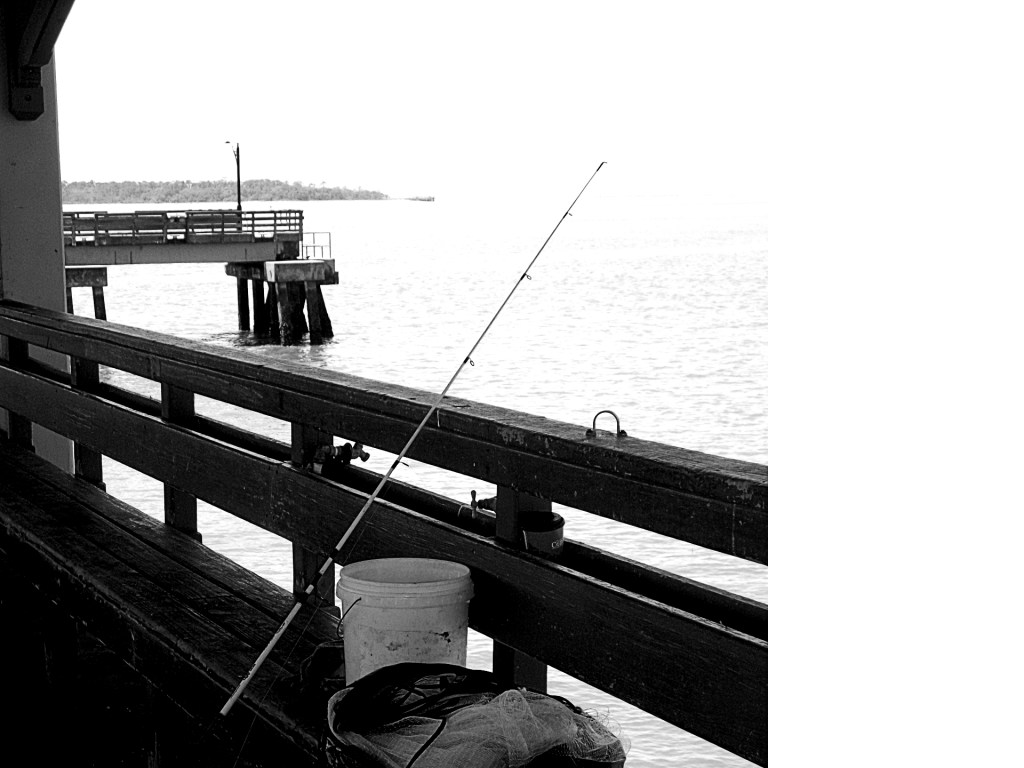
Photo Credit: Michael Shoemaker is a poet, photographer and writer from Magna, Utah. He is the author of a poetry/photography collection Rocky Mountain Reflections (Poets’ Choice) and the forthcoming Grasshoppers in the Field. His photography has appeared in Writers on the Range, Sea to Sky Review, the Denver Post, the Salt Lake Tribune, Yahoo.com and elsewhere. He lives in Magna, Utah with his wife and son where he enjoys looking out on the Great Salt Lake every day. His online photography portfolio is at michaelshoemaker.crevado.com/. Michael has been awarded an artist residency at the Wolff Cottage in Fairhope, Alabama for October 2025.
 L'Esprit Literary Review