J. T. Townley
Short Fiction
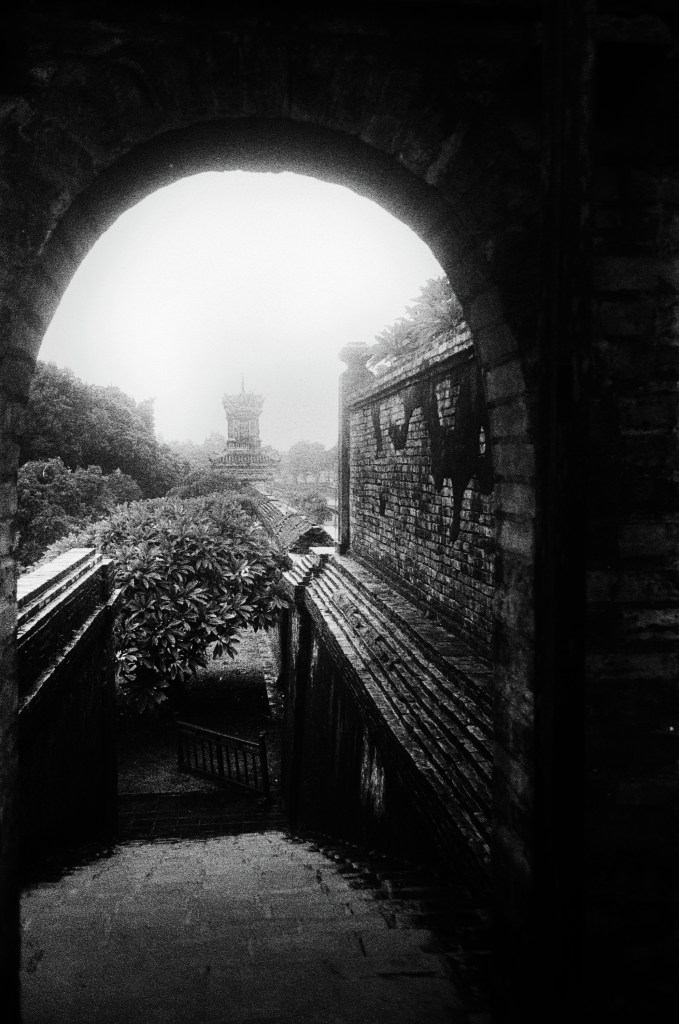
After the lecture, Paul wanders the Latin Quarter, thinking about the letter he received this morning. He was about to go down to the café when he spotted an envelope on the scuffed parquet in front of the door. It might have been his landlord demanding rent, but the paper was too nice. The envelope wasn’t sealed. Inside, a typewritten note: Where can I find a man who has forgotten words so I can have a word with him? That was it. One interrogative sentence centered about a third of the way down the page. Unsigned. Paul folded the letter in half and stuffed it into his pocket.
He stops under the awning of a flower shop to check his notes from the lecture. The professor said much whose meanings failed to register, though Paul grasped the words in the order they were spoken. Now he finds it: What we cannot talk about we must pass over in silence. It makes about as much sense as the anonymous letter. Soon the flower lady shoos him away—with a broom, no less. He can’t blame her. A young foreigner in grubby clothes muttering to himself can’t be good for business.
Paul shifts his shoulder bag and heads toward the river, trying to remember the names of everything he sees: loafer, park bench, daisy. He looks up what he doesn’t know in a pocket dictionary—le moccasin, le banc public, la marguerite—and writes the words down in his notebook. What we cannot say, he says, we cannot think. If that wasn’t among the professor’s pontifications, it should have been.
Stumbling past a sidewalk café, he sees his friends sitting around a table.
Bonjour, says Matteo.
Bonjour, Paul says.
Ça va? asks Gloria.
Ça va, says Paul. Ça va?
Ça va, Gloria says.
Salut, says Luis.
Salut, Paul says.
Would you like to join us? Matteo asks.
We are having coffee, Luis says.
Paul pulls up a chair from an adjacent table and sits. I have coffee every day, he says.
Gloria signals the waiter, who wanders over when he gets good and ready.
One coffee, Paul says.
Let’s all have more coffee, says Matteo.
Café au lait, s’il vous plaît, says Luis.
While they wait, they discuss the weather. It is early spring, and Luis thinks the weather is fine. Gloria still finds it too cold. Matteo agrees. They’re both bundled up in sweaters, though the sun is shining. Paul regrets that it will rain: he read as much in yesterday’s paper.
The waiter returns, clatters cups, spoons, and saucers, then darts to another table.
Café con leche is good, says Luis.
Matteo smiles. Paul winces. Gloria nods.
I always have a big glass of milk when I am sick, she says.
Luis grins, and the two break out in a dizzying conversation. Luis speaks Spanish, Gloria speaks Portuguese, and magically, they seem to understand one another. Matteo seems bored. Paul follows nothing but the words leche and leite. A green feeling washes over him.
He stands, then strolls toward a newsstand. He stops halfway and lights a Gitane with a match. After a long drag, he covers the rest of the distance.
One paper, please.
Which paper? the mustachioed man asks.
Do you have papers in English?
There are no papers in English.
But, yes, there are papers in English.
The man runs two fingers over his mustache, then makes a gesture Paul does not understand.
Paul cannot find any papers in English, so he selects today’s copy of Aujourd’hui.
Merci, he says, dropping the coins in the tray on the counter.
The man scoffs, then goes off-script. Paul suspects he’s saying something rude, possibly even vulgar. But he doesn’t recognize the sounds, individually or in sequence, so he can’t decode the message.
When he meanders back to the table, Aujourd’hui under his arm, his friends all stand to go. The three of them share an apartment a few blocks away. They can walk everywhere: cafés and bars, bookstores and lecture halls at the Sorbonne, where they’re enrolled as international students. They invited Paul to join them in their capacious abode, but he declined. Their apartment is big and bright and has a terrace in back. It’s much nicer than Paul’s dark, cramped garret off a dark, cramped alley in a dark, cramped neighborhood. But their English poet friend David, who pronounces it Ovid, often drops by, usually unannounced, to brag about himself in flawless French. Paul knows if he’s going to get any writing done, he needs his space. That’s why he dropped out of college and moved to Paris.
Look at the time, says Gloria.
We must leave now, Luis says.
Where are you going? asks Paul. Aren’t you having a fun time?
I love to have a fun time, says Matteo.
Now it is time to have a fun time elsewhere, Gloria says.
I was not invited to a party today, Paul says.
There will be a party tonight, says Matteo. I would like to invite you, Paul. I would like to invite everyone.
Will this party be located nearby or far away? Paul asks.
It is a poetry party, Luis says.
At our friend’s poetry reading, says Gloria.
Paul’s gut churns. He knows which friend they mean: Ovid.
Apropos of nothing, he says: I like to walk.
To walk is enjoyable, Matteo agrees.
Look at the time, Gloria repeats.
Come walk with us to our lecture in the lecture hall at the Sorbonne, Luis says. The weather is fine.
The blue sky disappears. The clouds darken, and the sky opens up in a downpour. Paul grabs his paper and bag and ducks under the awning.
I think I will stay, he says.
Then see you tonight, Matteo says.
At the poetry party, says Gloria.
Seven o’clock sharp, Luis says.
At the English bookstore, says Matteo.
Bye, Paul says.
Once the skies clear, Paul ambles toward the river. The warm breeze smells of ozone and pollen. As he approaches the bridge, he watches a pair of vagrants clamber down the steps to the riverbank with a bottle of wine. Pedestrians circulate around him. A few voice their annoyance. Paul slides out of the way, then takes out his notebook and pens a poem. Stumblebums drinking/red wine by the river Seine/cherry trees in bloom.
He meanders toward Notre Dame. Tourists crowd into the cloister. Paul avoids the throngs, strolling around the cathedral, naming its architectural features: stained glass, rib vault, flying buttress. He comes here most days, so he doesn’t need to look them up: les vitrails, la croisée d’ogives, l’arc-boutant. Paul idles in the spring sunshine, pleased with himself.
The scent of flowers leads him to the park at the cathedral’s south end. Near the fountain he spots a vagrant lolling in the sunshine. The man sits cross-legged beneath a fig tree, eyes wide open, a beatific smile on his face.
It is a beautiful day, says Paul.
When the man, who’s draped in a long black robe, doesn’t respond, Paul says:
Very beautiful.
The man doesn’t even glance at him. Paul doesn’t spot any wine bottles. The man’s not passed out. He smells faintly of soap and incense rather than a sweaty, vinegar-soaked sock.
I love spring, Paul says. Sometimes it rains, other times it is sunny. The bird sings, the flower blooms. It is really very beautiful, n’est-ce pas?
Now the monk, who may be meditating, glances up at him. The man who knows what is behind words, he says, speaks without words.
Paul recoils, trying not to gape. Then he slinks away to the sounds of birdsong and blooming flowers.
He kills an hour at a secondhand bookstore, browsing the shelves. The books are in many languages, Arabic and German, Italian and Spanish, others whose scripts he can’t identify. He trains his focus on the French ones. As he flips through an anthology of twentieth-century poets, a piece of yellowed paper slips out and flutters to the floor. Paul plucks it from the tile. It’s a deposit slip for the Banque Populaire, the very bank where Paul banks. On the back of the deposit slip, a handwritten note in blue ink: Language disguises thought. He puzzles for a moment, then returns the book to the shelf. Distracted, still clutching the note, he bumps into several people on the way out. Excuse me, he says. Sorry, he says. My mistake, he says.
Outside, Paul leans against a stone wall. He lights a Gitane with a match and watches the people stream by without seeing them. After reading the deposit slip message again, he stuffs it into his notebook with the letter from this morning. Though he can feel the warmth of the sun on his skin, for some reason he shivers.
Inside the Banque Populaire foyer, Paul plugs his card into the machine and punches in his secret code. While he’s waiting for the machine to process his transaction, he gazes out at the traffic on the boulevard, cars and motorcycles and buses. On the sidewalks, students mingle with businessmen. Young mothers lead their toddlers by the hand. Retirees drag metal carts laden with produce from the midweek market. Just as the clouds darken the cerulean, and the sky opens up in another downpour, a message flashes across the screen: Out of Order.
The machine no longer functions, says Paul, taking his card and receipt.
The woman behind him in line gives him a puzzled look.
Paul steps outside and puts his card back into his wallet. Rain streams down the awning and splatters onto the sidewalk. When he glances at the receipt, he finds an unexpected message in purple-black ink: The meaning is not in words.
When the rain slackens, Paul finds a café and orders a beer. The waiter nods and disappears. Ages crawl by before he reappears and sets an oddly shaped glass in front of him, containing not bière but an emerald green liquid. An anise-and-fennel stink rises from the glass.
I prefer to drink beer, he says, but the waiter’s long gone.
Soon Paul notices accoutrements on the table: a flat spoon, a sugar cube, and a glass of water. He studies them for a long moment. When he feels eyes on him, he glances up. A woman across the room sits before an identical glass of green liquid. She has dark, wavy hair and pale skin. She catches Paul’s eye, then begins manipulating the paraphernalia, laying the flat spoon across the rim of the glass, setting the sugar cube in the middle, then slowly dripping water from the glass over it. Paul watches in awe as the emerald liquor transforms into a milky jade concoction. The woman lifts her glass and smiles. He nods, then sets to work.
At some point, Paul joins the woman, or the woman joins Paul.
I am Aude.
Ode? Paul asks.
Almost.
My name is Paul, says Paul.
Pôle?
Close enough.
The waiter brings a bottle of Bordeaux.
This is your wine? he asks.
She nods and pours him a glass, then fills her own. I like wine very much, she says.
Paul forces a smile.
And you? asks Aude.
I also like wine, he says, though he’s still acquiring a taste for it.
Do you prefer red wine or white wine?
I prefer good wine.
Aude laughs and makes eyes at Paul. He makes eyes at Aude and laughs. They sip wine and fail to notice the café filling with other customers. Aude touches his shoulder, then forearm. Paul finds his eyes wandering from her face to her chest and back.
Soon another woman, this one blonde, approaches their table. Aude stands, and the two trade cheek kisses.
Pôle, says Aude. This is my friend Marie.
Enchanté, he says, kissing the back of her hand.
Ooh-la-la, he’s so charming, says Marie.
Aude pours her a glass of Bordeaux. Marie takes a sip, then says, Aude and I play tennis together every week.
Do you like tennis? asks Aude.
Paul studies them both. I love to play tennis, he says, though he can’t fathom why. He’s never even held a racket. Tennis, he says, is my favorite sport.
What facet of the game do you most enjoy? Marie asks.
Paul ponders. He’s seen tennis on TV, so it’s not completely foreign. Service, he says in English.
Surveys? Marie says.
No, he says, service.
He means service, Aude clarifies.
Ah, says Marie.
I also enjoy service, Aude says.
Lip service, says Marie.
The two women lean together. Aude whispers something in Marie’s ear, and they titter. Now Marie bites her lip and places her hand on Paul’s. Paul smiles back. Aude touches his forearm again. He feels warm and tingly.
We are going to play tennis, says Aude.
After the wine, says Marie, then finishes her wine.
Neither wears a tennis outfit or carries a racket.
Would you like to join us? Aude asks.
I love to play tennis, Paul hears himself say again. But unfortunately, tonight I do not have time.
The women both look glum.
I am going to a party. Would you like to come?
Now their faces brighten.
A party? says Aude.
What kind of party? Marie says.
A birthday party?
An anniversary party?
A going-away party?
No, says Paul.
A New Year’s party?
A Christmas party?
A Halloween party?
It is spring, Paul says. The weather is fine. The flower blooms.
An April Fool’s party?
A May Day party?
A wedding party?
Paul feels buoyed by their giddy enthusiasm. He grins and says, A very fun party.
The waiter circulates among the tables, taking and delivering orders. Accordion music trills from somewhere nearby.
Tell us, Pôle, Marie says.
The suspense is killing us, says Aude.
Paul takes a breath. Smiling, he says, a poetry party.
The women’s faces fall. They trade a glance Paul can’t read. Then Aude says:
We must go now.
But why?
We are late, Marie says.
They stand, shoulder on jackets, and adjust their giant scarves. Before Paul can think what to say, the women sashay down the block, arm-in-arm.
But the wine? Paul mutters. He knows he can’t afford it. Yet when he flips the check over, instead of an astronomical sum, he finds jagged letters in black ballpoint: The limits of language mean the limits of my world..
Paul wanders through the crepuscular light. The smells of crêpes and grilled meat mingle in the warm air. An earthy breeze sweeps up off the river. He tries to describe it to himself but can’t find the words. Paul doesn’t realize he’s thinking aloud, but students and tourists and families making their way home give him a wide berth.
The English Bookshop faces the river. Paul’s early, but he figures he can browse the shelves until his friends arrive. The place is just an old, converted house crammed with books on every subject, from history and biography to philosophy and religion and everything in between. Paul checks to see if they have anything by the philosopher he heard this morning. He can’t exactly remember the man’s name, but with an employee’s assistance, he excavates a copy of The Magical Capacity of Language from a high, dusty shelf.
Before he can crack it open, a familiar voice says:
Bonsoir, Pôle.
He takes a quick glance: Ovid.
Ça va? he asks.
Ça va. Ça va?
Ça va.
The coffee grinder growls. The milk steamer whirs. The scent of espresso drifts back from the café.
Need any recommendations? Ovid asks.
No, I’m fine.
I would be happy to help.
Please do not trouble yourself, says Paul.
It is no trouble at all.
Paul grits his teeth. He should have gone to play tennis with Ode and her friend.
Ovid makes a show of examining the book in Paul’s hand. Then he says: I suggest Bonnevoy’s Thought and Language. More intellectual heft, as it were.
Thank you for the recommendation, Paul forces himself to say.
Ovid chucks Paul on the shoulder. That one is okay, too. You have to start somewhere, n’est-ce pas?
I love to play tennis, says Paul, gritting his teeth.
Tennis? Ovid asks.
If Paul had a racket, he would use Ovid’s head for a ball.
Now his friends, Matteo and Luis and Gloria, appear. They run through the endless cheek kisses.
You are here, says Matteo.
And you are talking to the poet himself, says Luis.
Gloria goes starry-eyed. You are so lucky, she says.
We were discussing philosophy, Ovid declaims.
Matteo nods. I like philosophy.
Me also, Gloria says.
I prefer listening to music, says Luis.
Gloria shifts her weight. He did not practice the piano today, she says.
A momentary lull in the conversation. The mumble of voices from the makeshift stage at the front of the store.
Then Ovid says, Look at the time.
They all glance at their wrists, whether or not they’re wearing a watch.
I must prepare myself.
Good idea, says Gloria, starry-eyed.
See you after the reading, says Matteo.
We will all have a drink together, Luis suggests.
I enjoy having a drink with friends, Ovid says. Sometimes several.
Friends? Luis asks.
Drinks, says Ovid.
Matteo, Luis, and Gloria laugh. Paul, sick to death of the great poet, studies the warped floorboards.
I expect you will be there, too, Paul? says Ovid.
Do not worry, says Luis.
We will all be there, Matteo says.
After the poetry party, says Gloria with too much enthusiasm.
Good luck, says Luis.
Matteo gives Ovid an encouraging okay sign.
Gloria flutters her eyelashes.
Paul, in English, says: Break a leg.
Ovid glares.
They take their seats a couple of rows back from the stage. The crowd seems patchy, but people keep wandering in, looking around, lingering. Is it possible there are so many poetry lovers in Paris?
Paul can’t stop thinking about the messages he’s received today. He wants to sound his friends out, to get their perspective, to see if they can help him understand.
I received a letter today, he says.
A letter? says Matteo.
From whom? Gloria asks.
I don’t know, Paul explains.
You don’t know the person who sent you the letter? Matteo says.
What does that mean? Luis asks.
I like to receive letters, says Gloria.
Me, too, Luis says.
Matteo nods. I would like to receive a letter one day.
Me too, says Gloria.
It was not exactly a letter, Paul explains.
Did it come in an envelope addressed to you? Matteo asks.
In an envelope, Paul says, but there was no address.
Was it delivered by the postman? Luis asks.
I cannot understand how, says Paul.
A woman, a British woman, an English woman in a French scarf steps across the stage to the microphone. In French she welcomes everyone to The English Bookshop. Coffee and wine are available at the café. Please take a seat and get comfortable. The poetry reading will begin shortly.
When she’s finished, Matteo says, What did this letter say?
It was a question, says Paul. Something about having a word with a man who has forgotten words.
Strange, says Luis.
Very, Gloria says.
What do you make of it? Matteo asks.
I’m not sure, Paul says. All day I’ve been receiving such messages.
All day? Gloria says.
I do not understand, Matteo says.
Something to drink? Luis asks, already striding to the café.
Such messages I’ve been receiving all day, says Paul. I’ve been receiving such messages all day. Such messages all day I’ve been receiving. All day such messages I’ve been receiving.
How? asks Gloria.
Why? Matteo says.
I was hoping you, my friends, might know.
Luis returns with four glasses of wine. They each take one.
I like wine, says Gloria.
Wine is my favorite, Matteo says.
They had both red wine and white wine, Luis announces.
This is red wine, Paul says.
Now a different English woman in a different French scarf strides across the stage to the microphone. She says a lot of French words that couldn’t possibly be about his friends’ friend Ovid, words such as intelligent, dynamique, and profond. Yet she follows such blandishments by welcoming Ovid to the stage. Mysterious.
To Paul’s complete amazement, the poems aren’t nearly as bad as he expected. They’re not bad at all. In fact, many of them are even good—despite Ovid’s clownish performance. Paul feels sick to his stomach. Between poems, he swims through the standing-room-only crowd back to the door marked W.C. Why the abbreviation if no one ever calls it the Water Closet?
Paul leans over the bowl, expecting to wretch. He waits for a couple minutes, and when nothing happens, he goes to the sink and splashes his face with water. When he glances up at the mirror, he notices not his gaunt, disheveled appearance but words scrawled across the glass in cherry red lipstick: In the end nothing is grasped because words are not precise. Paul checks the stalls for the scribe, but he’s alone. His stomach churns. He breaks out in a cold sweat.
Just as the waterworks begin, Paul flails back into a stall and drops to his knees.
Although his friends will be disappointed, after rinsing his mouth and wiping his face, Paul eases through the crowd and slips out into the warm night. The streetlights flicker on. The air smells like spring rain and flowers. The sky has cleared, and a sliver of moon shimmers in the inky blue.
Paul trips along the cobblestones, mind blank. He’s almost at the metro station when he realizes he still has the book, the one by the philosophy lecturer. Somehow he carried it out of the store without paying. Paul tumbles down the stairs and hops on the first train. He didn’t mean to steal the book, yet he now he feels a sense of urgency to flee the scene of the crime. At the first stop, he climbs away from the creosote-and-urine stink into the blooming night. As he wanders into the park, the book feels heavy under his arm. Water splatters in a fountain. Voices come to him in indistinct snatches. Night-blooming jasmine basks in the moonlight.
He stops on a bench under an amber lamp and thumbs through the book. The pages may as well be empty for all the attention he pays them. Then at random Paul creases back a page. When he can’t make out the printed text, he repositions the book in the lamplight. There are things that cannot be put into words, he reads aloud. They are what is mystical.
J. T. Townley has published work in Harvard Review, Kenyon Review, The Threepenny Review, and dozens of other magazines and journals. His stories have been nominated for the Pushcart Prize (five times) and Best of the Net award. He holds an MFA in Creative Writing from the University of British Columbia and an MPhil in English from Oxford University, and directs the Master of Arts in Interdisciplinary Studies at Oregon State University. To learn more, visit jttownley.com.
Photo Credit: Phi Phi An is a Vietnamese independent multi/interdisciplinary artist-director-curator-producer-researcher-activist. Since 2011, she has multifaceted herself with echoes—chambers, deep understanding, building, development, reformation and involvement in closely over the stages, the scenes, the spaces, arts and intercultural forms; locally and internationally. A thoughtful way to resurface after a lengthy hiatus passed through fire. linktr.ee/phiphian_official
 L'Esprit Literary Review